

Data Journalism
How CORRECTIV Supports Local Data Journalism in Europe: Q&A with Editor-in-Chief Olaya Argüeso
This project aims to help local journalists publish data stories when they wouldn’t otherwise have the time or money to do it.
This project aims to help local journalists publish data stories when they wouldn’t otherwise have the time or money to do it.

Knowing how to use spreadsheets is a crucial skill, as it allows you to find potential stories in large amounts of data and to think critically about how to use it.

GIJN asked speakers and attendees in the NICAR conference hallways for the data journalism gaps they see and for under-covered topic areas newsrooms can address.

Over the past 10 years satellite imagery has become an important component of data journalism. In the next decade, it will likely evolve further.

Environmental journalists should check out the new database tool Spill Tracker, but should also bookmark these other resources for reporting on hazmat events.

Smaller investigative news outlets have been behind challenging and impactful accountability reporting leading up to the country’s elections.

There were 52 data journalism entries from 22 countries in shortlist for the 2024 Sigma Awards. Here are the top 10 winning projects.

Investigations into what happens on, under, and around the ocean can often be answered thanks to the vast amount of data available online.

There can be confusion among journalists about “mass shootings” data, which leads to wildly different numbers and deeper confusion among audiences.
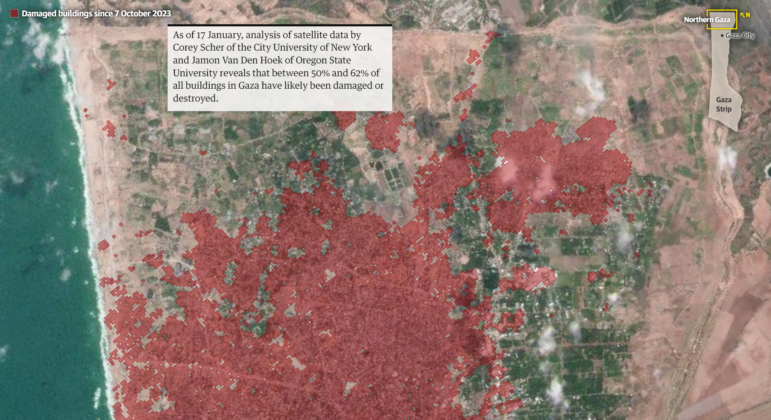
Gaza’s urban landscape has changed profoundly since the start of Israel’s military campaign. Researchers Jamon Van Den Hoek and Corey Scher have been mapping the impact.
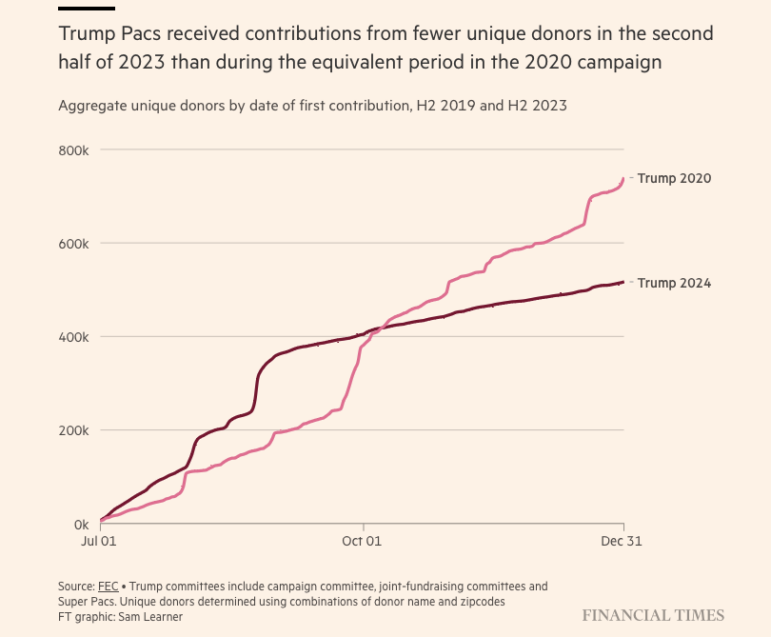
Our column of the best in data journalism also features stories on AI’s ability to forecast the weather, analyzing the Argentine president’s Tweetstorms, and apathetic EU voters.

Data journalist and instructor Paul Bradshaw has updated the Inverted Pyramid of Data Journalism — and brought together resources for every stage.

The investigative data journalist touches on his work interrogating social media algorithms and how reporters can determine what is a worthwhile story to pursue.

Sigma Awards executive director talks with GIJN on how the data journalism has evolved and where it’s likely to go next.
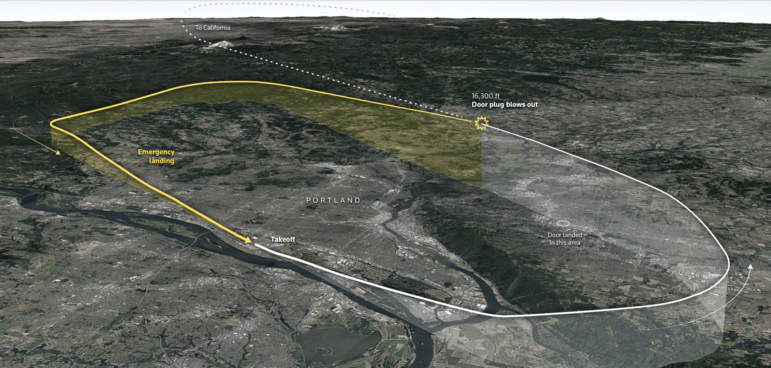
With pieces on the global campaign landscape, airplane accidents, European snowfall, and the toll of the ongoing Israel-Hamas conflict in Gaza.

How the team at Kontinentalist use data and creative data storytelling to tell nuanced stories that highlight the diversity of Asia.

The best of modern data journalism tells powerful stories that test assumptions. At GIJC23, two experts discussed strong recent investigations and what makes them stand out.
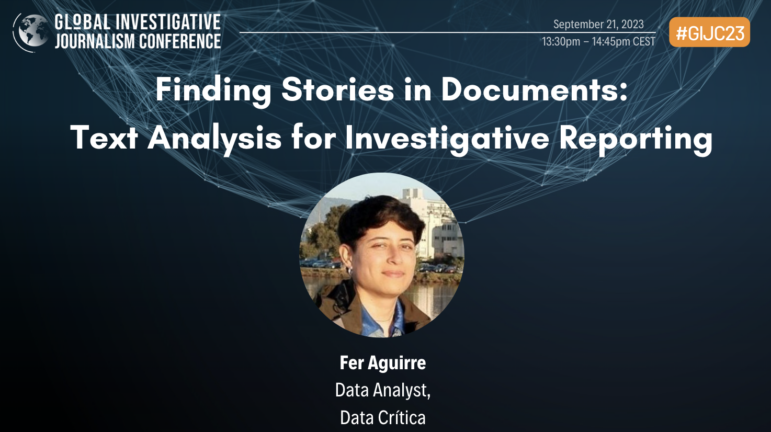
Investigative journalists often face the challenge of reviewing and combining large documents or data in text forms. This can be very exhausting and labor intensive.

What do you do when you don’t get the dataset you need from authorities, or it doesn’t exist? Two experts provided tips at GIJC23.
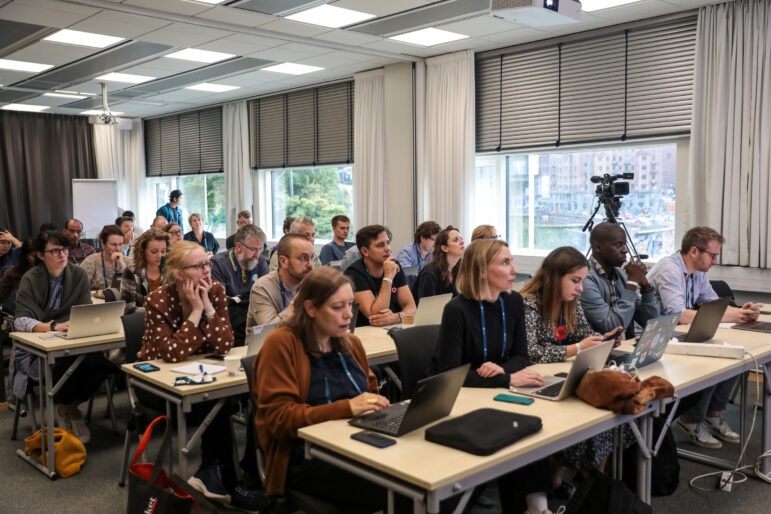
Knowing where to look for data — and accessing it via scraping data from websites — can be a powerful force multiplier for investigative journalists.

Concluding the data track of GIJC23, here’s a discussion on the tools that are coming to the forefront for doing data stories and predictions for what is ahead.

In this introductory session, you’ll learn how to use Google Sheets to do basic analysis — and leave with the ability to do quick data work for daily stories or longer-term projects.

Pinpoint is a powerful tool for converting unstructured data (text and other forms of messy data) into datasets that can be analyzed and used for stories.

At a time of unprecedented attacks on the press, it is critical to understand what impact means, why it matters, and how journalists can increase it.

For this panel, we bring together educators and trainers from diverse environments around the world for a look at the best practices in teaching data journalism.
This hands-on class will deepen your reporting skills by using QGIS, a free, popular mapping program.

Governments and corporations worldwide are quietly deploying AI technologies that can discriminate and harm the most vulnerable members of society.

Think there’s no data in your story? Create your own. Journalists can use polls, physical surveys, documents, or even monitoring devices to create their own data. We’ll give you examples of how these techniques are used and some best practices for doing it yourself. ———————– The Global Investigative Journalism Network is an international association of […]
In 2001 GIJN was born, as investigative journalists from around the globe met for the very first time to share ideas, tips, and best practices to strengthen their reporting in a world where journalism was increasingly under threat.
Today the threat has multiplied, and at GIJN we find ourselves under the same pressures as our member organizations. Most urgently: available funding for investigative journalism has been impacted as some longtime funders who supported journalism in the past are no longer doing so or have closed. Yet our work continues, more important than ever before.
GIJN serves as the global hub for the world’s investigative reporters. Our core mission is to support and strengthen investigative journalism—with special attention to those from repressive regimes and marginalized communities.
We are embarking on our first-ever campaign initiative to help us expand our revenue by the end of the year through individual donors. If you have ever joined one of our free webinars, used one of our free resources, learned a new skill thanks to a GIJN training, or simply believe that press freedom is essential to civil society, we ask you to show your support for GIJN’s work with a donation of your choosing. Called “Friends of GIJN,” this campaign includes a more personalized experience, starting in 2027, for individuals who answer the call to join with us during this unprecedented time.
Truth and democracy are under attack around the world. You can fight back by helping GIJN support investigative journalists with free access to the latest tools and techniques — so they can foster justice and hold accountable those who abuse the public trust.
With a staff based in 24 countries, GIJN works in a dozen languages each day, linking together the world’s most enterprising journalists, offering state-of-the-art training, webinars, tip sheets, and a Help Desk that responds to 2,000+ requests for assistance each year. More than 84% of GIJN’s operating budget goes directly to our program work.
Please make a gift today to support journalists on the front lines of the fight for accountability and human rights.