GIJN Impact News & Analysis
GIJN in 2025, by the Numbers
The year 2025 was a groundbreaking moment for the Global Investigative Journalism Network. Here are some of the key metrics from all of our work around the world last year.
GIJN speaks to Rawan Damen, the director-general of ARIJ, about the impact of Trump’s funding decisions on their work in the Middle East — and how they have adapted to survive.
Given widespread misinformation and climate skepticism, veteran environmental reporters offer case studies and best practices for pursuing impactful topics of climate investigations.
At GIJC25, reporters explained how remote sensing, open source verification, and visual forensics are now central to covering conflicts that are inaccessible or dangerous for journalists.
Journalists have a responsibility to “amplify” the voices of people on the island who want to speak out, says José J. Nieves from news site El Toque.
For refugee journalists who expose criminal networks, cross-border crimes, and sensitive failures within the camp system — safety and security protocols are poorly funded and inconsistent.
Expert follow-the-money journalists have documented how criminal networks now operate, via fluid, decentralized systems that are often indistinguishable from legitimate global commerce.
Despite numerous press freedom threats, Pakistani journalists continue to publish high-impact investigations — and offer lessons for reporters navigating restrictive environments worldwide.
Our round-up of the best in recent data journalism also highlights a deadly train accident in Spain, new migration patterns from Venezuela, and Japan’s nuclear power resurgence.
In 2025, journalists across Africa have courageously reported on illegal activities — and their impact — long after they’ve occurred, and despite attempts to bury this information.
Despite numerous obstacles, journalists from the region continue their investigative work through partnerships, cooperation with civil society, and open source research.
This collaborative investigation brought together international and local journalists to reveal how the Assad regime used a global childcare charity to aid the disappearance of children.
Journalists have used local reporting, open source analysis, and forensic reconstruction to verify events happening on the ground in Gaza, allowing them to challenge official narratives and preserve evidence for future accountability.
Speakers at this GIJC25 session dismantled the myth that offshore finance is inaccessible or unknowable and argued that the real barrier is not secrecy alone, but confidence, skill, and persistence.
Featuring stories from France to Tunisia, Canada to DR Congo, touching on allegations of abuses in the labour chain, corruption, and investigations into gold mining.
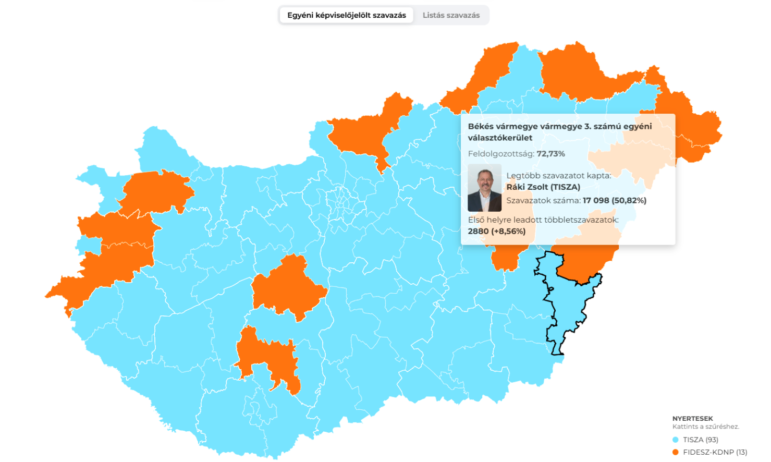
Direkt36 co-founder Andras Petho speaks about how an investigative documentary became a rare viral success, what it revealed about Viktor Orban’s Hungary, and what other small newsrooms can learn from its impact.
This GIJC25 panel discussion surfaced a set of unresolved questions about what investigative journalism can sustainably support — and what it may need to leave behind.
Despite domestic threats to press freedom and power cuts and sleepless nights from Russian attacks, Ukrainian independent journalists continue their work with depth and skill.
Our round-up of the best in recent data journalism also highlights noise pollution in Singapore, India’s ditching of Bollywood romance movies, and a visual investigation into rocket debris.
Workers in East Africa and South Asia are now paid low wages to perform behind-the-scenes data tasks are used to power AI-driven facial recognition systems around the world.
One of India’s most renowned investigative reporters, Sarin has reported and edited stories digging into security, corruption, and money laundering.
Investigative newsrooms and humanitarian organizations have a number of things in common, often because they are motivated by a desire to contribute to a broader social mission.
Also featuring in-depth looks at the country’s expansive surveillance state infrastructure, a generation of disappearances, and one company’s massive riverside land grab.
Investigative reporters traced dangerously high lead contamination in Nigeria — revealing that recycled metal from used car batteries entered global supply chains linked to major US automakers.
Reporters exposing exploitation in the high seas use a combination of open source satellite imagery to track ships and documents to establish vessel ownership.
The authors, senior leaders at the Global Reporting Centre, write about the difficulties in changing from a fledgling start-up to a robust organization that is ‘set up to succeed.’
Also featuring exposés on sex-trafficking of workers in Dubai, secret mass deportations of Tunisians from the EU, and unlicensed addiction treatment centers in Egypt.
Also featuring deep dives into rampant worker injuries in automobile factories, health hazards from imported scrap tires, and the politicization of the national archaeological survey.