

Image: GIJN, YouTube

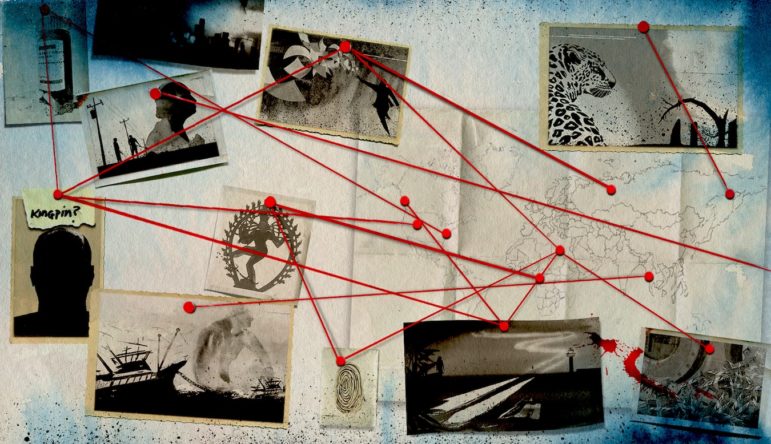

Cross-border criminal networks rarely announce themselves as such. They surface instead through fragments: a court ruling in one country, an arrest thousands of miles away, a passport that doesn’t quite fit the story it tells. On their own, these pieces can look incidental. Taken together, they reveal how organized crime has quietly outgrown national borders and how journalists are learning to follow it.
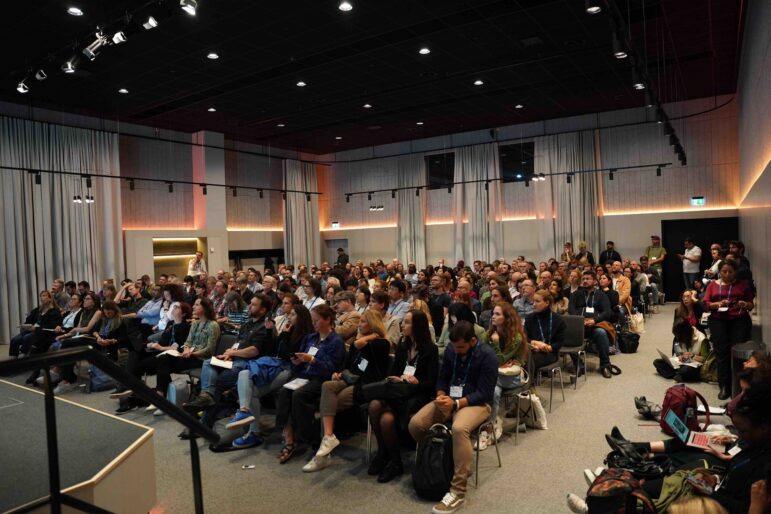
That challenge framed the “Investigating Cross-Border Criminal Enterprises” panel at the 14th Global Investigative Journalism Conference (GIJC25), where reporters described years-long investigations that moved across continents, legal systems, and languages. Moderated by Beauregard Tromp, convenor of the African Investigative Journalism Conference, the session brought together journalists who have documented how criminal networks operate today: fluid, decentralized and often indistinguishable from legitimate global commerce.
From a Single Document to a Global Syndicate
For Pavla Holcová, founder of Investigace.cz, one of her most consequential investigations began with what looked like a narrow request. A colleague, Serbian journalist Stevan Dojčinović, asked her to check a section of an Italian court ruling — a sentenza — because she happened to have studied Italian.
“It was quite an innocent request,” Holcová recalled. “But then it turned totally wild and crazy.”
The document referred to a man caught transporting nine kilograms (20 pounds) of cocaine from an Italian port to Slovakia. As Holcová began digging, the story expanded far beyond a single drug courier. Over five years, the investigation traced what prosecutors would later call “Group America,” one of the largest cocaine import networks into Europe, spanning Italy, Slovakia, Peru, Argentina, the United States, and beyond.
What made the reporting possible, Holcová said, was refusing to treat borders as endpoints. When answers didn’t come from emails or formal requests, the team shifted tactics — traveling, building local contacts, and physically accessing records where possible.
In Peru, they approached prosecutors directly. “I went to Google, found the prosecutor’s office, made a phone call,” Holcová said. “She said, OK, come.” When the prosecutor arrived late, staff gave them access to tens of thousands of pages of case files. “It was that simple,” she said, a level of openness that would have been unthinkable in many European jurisdictions.

Image: Screenshot, OCCRP
Reporting Inside the System and Seeing Its Blind Spots
The investigation eventually took an unexpected turn inside a Peruvian prison, where Holcová interviewed Zoran Jakšić, a key figure in the network who had spent years evading arrest using dozens of identities and passports. The meeting, she told the audience, was unplanned, risky, and revealing, not just for what Jakšić said, but for what it exposed about how organized crime now mirrors legitimate global networks.
“He told me, basically, that the way we work as journalists — having people in every country who help us — is exactly how they work now,” Holcová said. “In every country, he had somebody who could help him out.”
For Dojčinović, who is also editor-in-chief of Serbia’s KRIK, that insight became central to understanding modern organized crime. Traditional hierarchies like bosses, underbosses, and fixed territories no longer explain how these networks function.
“Organized crime used to control the whole chain,” Dojčinović said. “Buying drugs, transporting them, selling them.” What the Group America investigation showed instead was specialization. One group handled transport. Others handled wholesale distribution. Still others were contracted for forged documents or killings, sometimes by rival gangs simultaneously.”
This fragmentation, he argued, makes both policing and journalism more difficult. “You arrest the leaders, but the business continues,” Dojčinović said. “These groups are small, replaceable parts of a much bigger system.”
Exposing the Invisible
One of the starkest examples Dojčinović shared involved a Serbian gang whose sole function was murder. The group operated a house on the outskirts of Belgrade equipped with hidden chambers for torture and killing. Bodies were destroyed so thoroughly that no physical remains were recovered, yet the perpetrators recorded the acts themselves.
“They were just doing murders,” Dojčinović said. “Nothing else.” Other criminal groups hired them as contractors, outsourcing violence in the same way corporations outsource logistics or IT.
This modular structure, he added, explains phenomena often misunderstood by the public, such as the stamped logos on bricks of cocaine. “People think it’s about quality,” he said. “It’s not.” The markings identify which portion of a shared shipment belongs to which group, allowing multiple networks to move drugs on the same vessel without direct coordination
For Ronna Risquez, an investigative journalist with Alianza Rebelde Investiga, an investigative journalism consortium formed by Venezuelan media outlets El Pitazo, Runrunes, and TalCual, the challenge was different but related: how to document a criminal organization that had barely been mapped at all. Her work on Venezuela’s Tren de Aragua — now active across much of Latin America and beyond — began in the absence of reliable records.
“There was insufficient documentation,” Risquez said. “No investigation explained its structure or modus operandi.” To understand the group, she relied on exhaustive fieldwork: more than 60 interviews across seven countries with victims, police officers, prosecutors, psychologists, and, in some cases, members of the organization itself.
Local journalists were essential, she emphasized, not only for access, but for safety. “They know how to move around,” Risquez said, noting that protecting collaborators became as important as protecting sources. Every interview required a detailed security protocol covering transport, backups, and exit plans.
As she connected testimony with leaked police reports, Interpol documents, and overlooked local news items, patterns emerged. Events once reported as isolated incidents turned out to be coordinated actions by the same network, including supposed killings of leaders who were later found to be alive and operating elsewhere.
Reporting Across Danger Zones
Philip Obaji Jr’s work tracking Russian paramilitary operations in Africa illustrated another dimension of cross-border investigations: personal risk. Reporting on Wagner Group activities took him across Nigeria, Cameroon, and the Central African Republic, often without the protection of formal accreditation or institutional backing.
After contacting Wagner founder Yevgeny Prigozhin directly with questions, Obaji said he began receiving threats. “The first thing he said was: ‘You are a fool,’” Obaji recalled of an anonymous caller.
Later, while reporting in the Central African Republic, Obaji was detained after soldiers, urged on by Russian fighters, confiscated his equipment. What ultimately protected his sources, he said, were basic digital security techniques learned through training: encrypting files, disguising sensitive documents, and limiting exposure.
“Digital security saved me from bigger danger,” Obaji explained. “It’s as important as physical security.”
Across the panel, a common lesson emerged: cross-border crime can no longer be investigated by lone reporters working within national frames. These stories demand collaboration across newsrooms, disciplines, and regions and a willingness to rethink how investigations begin and end.
“Criminals are now freelancers,” Dojčinović said. “Journalists need to adapt the same way by working in networks.”
You can watch the full GIJC25 panel below.
 Hanan Zaffar is a media practitioner, multimedia storyteller, and documentary filmmaker based in India. His work primarily focuses on South Asian politics, minorities, human rights, and the environment. His reporting has appeared in TIME Magazine, the Guardian, VICE, Al Jazeera, Business Insider, and other places. He has also had reporting stints in Southeast Asia, Africa, and Europe, and is the UN Foundation’s 2025 Polio Press Fellow.

This work is licensed under a Creative Commons Attribution-NoDerivatives 4.0 International License
Republish our articles for free, online or in print, under a Creative Commons license.
Republish this article
This work is licensed under a Creative Commons Attribution-NoDerivatives 4.0 International License
Read Next
GIJC23
The New Organized Crime: How to Catch Up With Criminals
An all-star team of five journalism experts shared their approaches to investigating the ever-evolving world of organized crime.
GIJC23
Following the Money, from Laundromats to Central Banks
How did three reporters investigate complex financial stories featuring Nigerian billionaires, Eurasian oligarchs, and the head of Lebanon’s central bank?

Organized Crime Reporting Tools & Tips
Latest Money Laundering Trends Journalists Should Watch For
A recent IRE conference panel focused on new money laundering strategies that make hiding illicit assets increasingly difficult to track.
Asia Focus
State-Connected Oligarchs and Looted Public Funds: Tracking Illicit Money Across Asia
In this installment of GIJN’s Asia Focus project, we look at how investigative journalists across the continent are exposing kleptocracy and documenting official corruption.