
Image: Shutterstock
Tips for Conducting Investigations About Venezuela
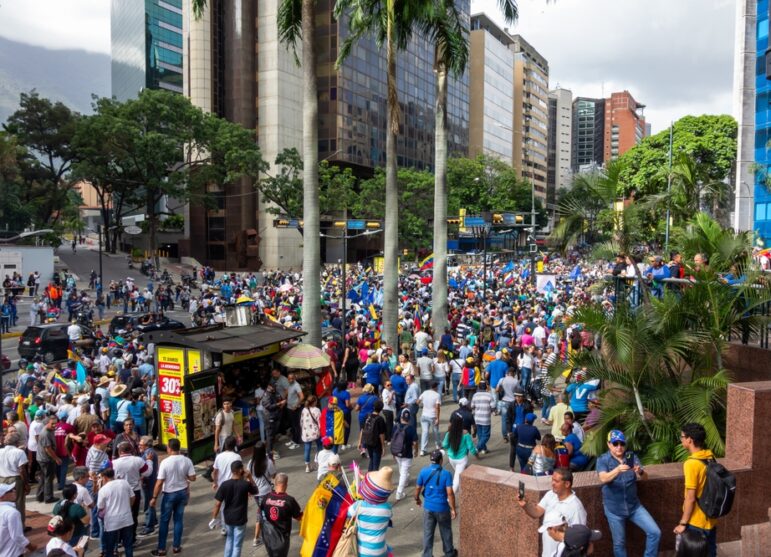
The world’s eyes have been on Venezuela since the capture of President Nicolás Maduro and his wife, Cilia Flores, by US armed forces and law enforcement on January 3, 2026. For years, the country had been in the grip of an authoritarian regime with documented evidence of human rights abuses, transnational money laundering operations, collaboration with organized crime, and widespread corruption. Journalists who want to delve into this network, or who want to understand what links other countries have to it, can face unique challenges, both physical and digital.
To assist those who are unable to report from on the ground or who are unfamiliar with all the different contexts of the country’s power structures, we spoke with three leading, award-winning investigative journalists from Venezuela, Joseph Poliszuk (Armando.info), Ronna Rísquez (Alianza Rebelde Investiga), and Laura Weffer (OCCRP). These news veterans can provide insider knowledge on how to understand the latest developments about Venezuela, what online resources and databases they use to track the state’s shady economy and flagrant human rights violations, and which practical tips will keep sources and journalists safe while reporting from inside and outside the country.
Understanding Venezuela from a Venezuelan perspective
The United Socialist Party of Venezuela (PSUV), or more colloquially Chavismo, has been in power since 1999, when Hugo Chávez was sworn in as president of Venezuela after winning open democratic elections. Since then, the regime’s grasp on society has become progressively tighter.
It may seem daunting for foreign journalists to get a grasp on nearly 28 years of Chavista rule over Venezuela, but there are some resources to help them make sense of Venezuela’s story. Laura Weffer, a veteran investigative reporter who cofounded independent media outlets like Efecto Cocuyo, was Latin American editor for the Organized Crime and Corruption Reporting Project (OCCRP) centered in Venezuela, conducts investigations for CNN, and produced a podcast with OCCRP and Colombia’s La No Ficción that serves as a good introduction to Venezuela. White Collars, Dirty Hands (Cuello blanco, manos sucias), follows the trail of money laundering surrounding Carmelo Urdaneta, a high-level executive in Venezuela’s state-owned oil company, Petróleos de Venezuela (PDVSA). Several of the podcast’s episodes offer a historical overview of how Venezuela got to where it is now, and although the original version is in Spanish OCCRP recently released an English version.
“The most important source is Venezuelan independent media that are giving everything to keep us informed,” Weffler says. Her site, Efecto Cocuyo, for example, published a piece explaining the state capture by Chavismo and democracy’s collapse. And although the piece and most of these media outlets are in Spanish, free translation software options can provide a good enough version to understand their content.
Although this is by no means an exhaustive list and some important media outlets might not be included in this list, the journalists GIJN spoke to recommended reading these to follow Venezuelan politics, human rights abuses, and corruption scandals, and learn some strategies on how to research organized crime:
Efecto Cocuyo: Founded by Laura Weffer and Luz Mely Reyes, this digital outlet is centered on covering inequalities, injustices and, according to its webpage, “topics that are often ignored or minimized.”
Armando.info: Since its launch in 2014, Armando.info, a GIJN member, headed by a team of investigative journalists such as Joseph Poliszuk, Ewald Scharfenberg, and Roberto Deniz, has been a leading outlet publishing some of the highest profile investigations of the country’s political elites.
TalCual Digital: Originally a daily print media outlet founded in the year 2000 by the influential journalist Theodoro Petkoff, who passed away in 2018, TalCual has been one of Venezuela’s most vocal critics of its corrupt political elite. It became a weekly print magazine and since 2017 an online platform because of political persecution and the scarcity of paper in Venezuela, which collapsed its print edition.
El Pitazo: This award-winning outlet, besides publishing investigative pieces, offers a wide variety of daily content on breaking news, politics, the economy, the Venezuelan diaspora, and op-eds. They also have a strong regional coverage inside Venezuela.
Runrun.es: Founded in 2010 by veteran Venezuelan journalist Nelson Bocaranda, Runrun.es offers daily content and investigative pieces centered on the victims of Venezuela’s regime.
El Nacional: A flagship newspaper in Venezuela since its founding in 1943, paper scarcity in Venezuela during the 2010s and government pressures forced it onto publishing only web-based content since 2017, just as happened with TalCual.
Cazadores de Fake News: Fact-checking journalism that publishes high-quality content both in Spanish and English, and provides valuable information to journalists conducting research.
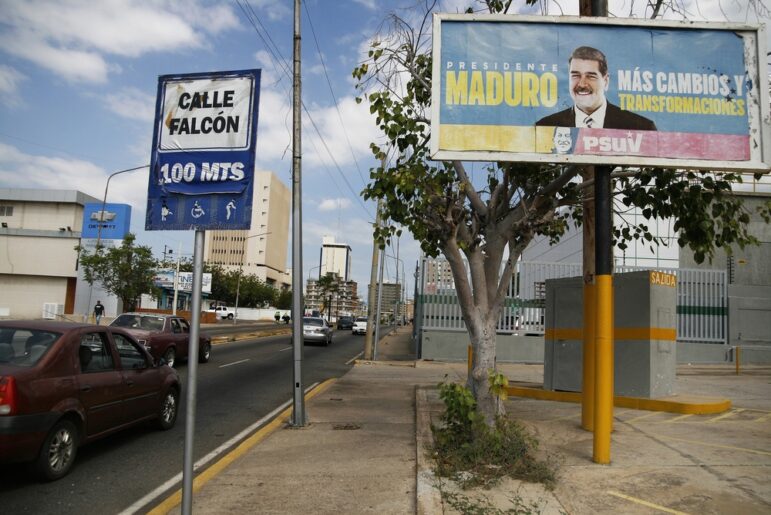
Image: Shutterstock
Caracas Chronicles: This English-language platform prides itself on having been “around longer than YouTube.” It has a newsroom in Caracas, correspondents in eight Venezuelan cities, and according to its webpage, provides “the best coverage of Venezuela you’ll find in the English language intertubes.”
Besides the aforementioned independent online media platforms, journalists interested in investigating Venezuela might want to review social media and online influencers. Although non-Spanish speakers might have trouble understanding this content, these are some of the social media platforms to keep an eye on.
Alianza Rebelde Investiga (ARI): Coordinated by Ronna Rísquez, ARI brings together journalists from Tal Cual Digital, El Pitazo, and Runrun.es, and publishes investigations in these three media platforms. But ARI also constantly produces online content on its Instagram and YouTube channels under “La Conversa ARI.”
Cesar Miguel Rondón: A veteran writer and journalist who has worked in print media, radio, and television since 1972, he now hosts a YouTube channel with daily content and interviews about Venezuela.
Researchers might even want to consider keeping an eye on recent political influencer content made by the likes of Kilometro on TikTok, to get a sense of social media content produced by young Venezuelans. “There are influencers that produce content that mixes humor with denouncing the current government,” says Rísquez. “But you must be aware that while saying things that are true, they also assume an openly clear pro-democracy political stance.”
NGOS that Track Venezuela
The three journalists we spoke to highlight these NGOs that operate inside and outside Venezuela as key sources.
Transparencia Venezuela: Journalist Ronna Rísquez suggests tapping into content published by the Venezuelan chapter of Transparency International, the major global coalition against corruption. Besides research on Venezuelan legislation and governance issues, Transparencia Venezuela publishes English-language reports on topics such as drug trafficking and the regime’s alliances with Russia and China. Many of their reports were researched by collaborating with investigative newsrooms like Armando.info, Cazadores de Fake News, and OCCRP. Follow this link to access their investigations.
Foro Penal is an organization that compiles and updates a list of political prisoners in Venezuela and publishes reports on political repression. Its team of lawyers also provides legal counsel to victims of the regime.
The United Nations Human Rights Council’s webpage for the independent international fact-finding mission in Venezuela and the Office of the UN High Commissioner for Human Rights publish reports and frequent updates regarding human rights issues in the country.
Human Rights Watch also publishes reports and analysis on human rights in Venezuela and closely follows any developments.
IPYS monitors press freedom and supports training for investigative journalism in Venezuela and across Latin America. Image: Screenshot, IPYS
The Venezuela Program Education-Action on Human Rights (PROVEA), established in 1985, currently documents and investigates human rights abuses in Venezuela. Rísquez suggests considering their content when investigating human rights topics related to Venezuela. Find their content in English here.
The International Crisis Group and the Washington Office on Latin America (WOLA) also publish reports and commentaries in English about issues related to human rights, organized crime, and security in Venezuela.
The Press and Society Institute (IPYS) monitors press freedom in Venezuela and also promotes and supports investigative journalism in the country.
Key Databases for Investigations on Venezuela
When approaching stories, sources, and databases, Joseph Poliszuk stresses the importance of collaborating with other colleagues and considering a global mindset. “The Chavista project is continental and Venezuelan corruption is transnational,” Poliszuk explains. “One must be aware of the global ties. Nobody steals bolivares to deposit them in a Caracas bank, which is why we also look for sources outside of Venezuela,” he adds.
So be ready to conduct transnational research to find the data you need. “In an economy like Venezuela, for example, that imports nearly everything, it’s very important to know about the goods that are coming in and who is bringing them in,” said Poliszuk. “But given you can’t access Venezuela’s port registries, you need to use the export registries of the countries that send goods to Venezuela.”
These kinds of import and export databases have been key to uncovering the shady business dealings of high-level military officers who have committed human rights violations and the international market for Venezuelan commodities such as gold. The UN Comtrade Database, for example, has data on imports and exports by country and goods. For additional tools, you can review GIJN’s tipsheets on investigating international trade.
Rizquez highlights collaborative projects by ARI, with partners such as Runrun.es, ProPublica, and The Texas Tribune, which have built databases on issues like the victims of state violence and Venezuelans deported to El Salvador by the Trump administration. Rísquez says they’re currently working on databases about people killed in recent bombings of alleged drug boats off the coast of Venezuela, and those killed during the US operation to capture President Maduro and his wife.
Poliszuk warns against expecting to find a specific database about the topic you’re researching. In many cases, you might need to build and maintain your own database. Also, be ready to use algorithms, AI tools, and data journalism programs to help structure your reporting. Other journalists might give you tips, but it’s also up to you, and the journalists you collaborate with, to understand what tools you need according to the issue you’re looking into.
Weffer also highlights Aleph, OCCRP’s platform to search, organize, and analyze data, which is especially useful to “follow the money” in corporate crime and corruption stories. GIJN has published a guide on how to make the best use of this valuable tool.
Digging into Venezuela’s Official Databases and Tracking Illegal Activities
Venezuela’s official government websites are unreliable, and its internet ecosystem is warped by a mantle of political oppression. If investigators want to tap into official databases, or if they’re in Venezuela and need to access independent media outlets that are blocked there, Weffer suggests they employ a VPN. She mentions this Efecto Cocuyo article that guides users on how to install VPNs and use them when trying to access information about Venezuela.
Weffer also points out that she frequently relies on the Wayback Machine to access content that’s no longer displayed on Venezuela’s institutional websites.
If a researcher wants to consult Venezuela’s Supreme Justice Tribunal to access court cases, Waffer warns that this site, like all other institutional sites in Venezuela, might go offline without warning, or a VPN might be needed to access them from outside the country. If you know specific information about the case or content you want to research, such as its geographic location, Weffer explains that a court case or gazette might be easier to access through an open web browser search than through the institutional website’s search engines. Weffer adds that this method is useful if you’re following drug trafficking cases or operations carried out by the Antidrug National Superintendent’s Office of Venezuela.
Other Venezuelan government websites that can be useful in investigations belong to the National Electoral Council and the National Procurement Service. Weffer notes that both of them are good examples of the oblique approach journalists must take when consulting official databases. Following the June 28, 2024 elections, the National Electoral Council’s webpage became a key source to counter the official ballot count published by the government. The government did not realize journalists and electoral observers could verify voting results by entering a citizen’s ID number in the system.
Recent investigations have been tracking the shadow tanker fleets that evade sanctions on Venezuelan oil trade, and that have been targeted by recent US military raids and blockades. If you’re conducting research that involves tracking vehicles on land, air, or sea, or organized crime airfields in rural areas, you’ll need to rely on technological tools such as satellite imagery. GIJN has compiled a comprehensive list of resources to track ships, and you can learn from how other journalists have used satellite imagery to identify illegal airfields.
Protecting your Sources — and Yourself — in Venezuela
Poliszuk, Rísquez, and Weffer all emphasize the need to be very cautious with sources from Venezuela, both inside and outside of the country, because of how vulnerable they and their families can be to retaliation from the regime. It’s always better to err on the side of safety when making decisions, such as concealing faces and identities.
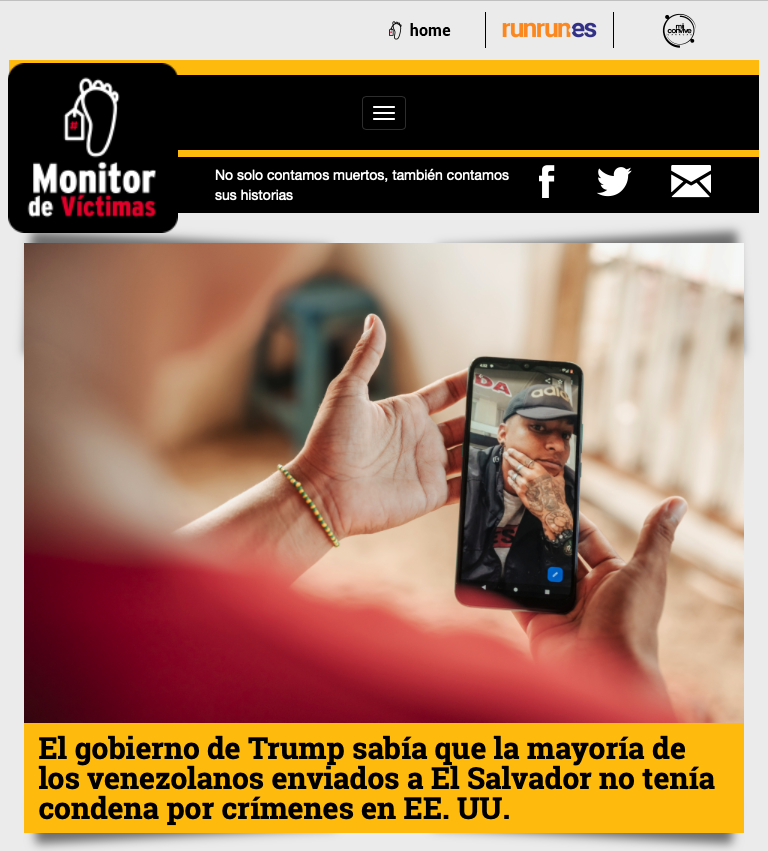
The Monitor de Victimas collaborative project by ARI tracked Venezuelans deported to El Salvador by the Trump administration. Image: Screenshot
If you can report from inside Venezuela, be aware that you’ll be facing extreme risks, because there’s no effective rule of law. Weffer suggests not conducting work in Venezuela as a foreign journalist without a fixer who knows where you can go and how to move around. The police set up frequent roadblocks and may extort journalists for thousands of dollars. Nothing prevents them from detaining you. “You can disappear for five days while they torture you and nobody will know where you are,” Weffer warns.
Investigating wrongdoers who have not been convicted might make you a target of legal action, both inside and outside Venezuela. Consider having legal counsel at hand if you’re uncovering new information about government officials, businessmen, and possible money launderers.
But Poliszuk also advises: your best defense will be a good offense. If you’re a target, double down on your research, go deeper, and publish. Given the global features of Venezuela’s corrupt political elite, it’s likely your investigation will transcend Venezuela. If you have solid evidence, your international audience will see past any intimidation tactics.
 Santiago Villa is an award-winning journalist who has written for Latin American news outlets for more than a decade. He is currently based in Colombia, and writes an opinion column for El Espectador. He has previously worked as a foreign correspondent in South Africa, China, Venezuela, and Ecuador.
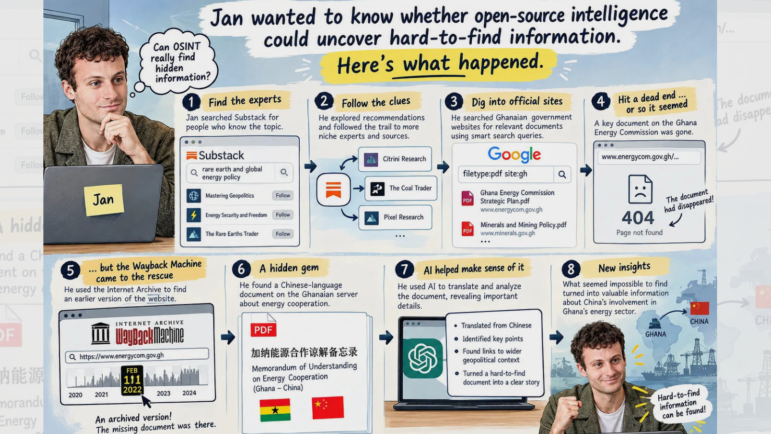
International Research Guide: How to Find Experts and Hidden Documents on Any Topic

Guide to Investigating Tech and AI in Modern Warfare
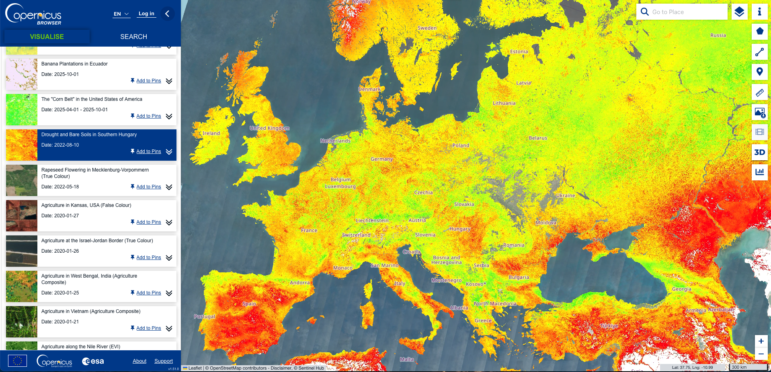
Turning Copernicus Satellite Data Into Public-Interest Climate Stories
10 Practical Tips for Verifying Scientific Claims
Forced into Exile After Investigating Corruption, Continuing to Report on Venezuela from Afar
How Armando.info Uncovered Hundreds of Venezuelan Officials’ Secret Assets in Florida
5 Questions for Venezuelan Journalist Ronna Rísquez on Overcoming Fear, Covering Organized Crime, and Working as a Woman Journalist
How They Did It: Uncovering a Vast Network of Illegal Mining in Venezuela

This work is licensed under a Creative Commons Attribution-NoDerivatives 4.0 International License
Republish our articles for free, online or in print, under a Creative Commons license.
Republish this article
This work is licensed under a Creative Commons Attribution-NoDerivatives 4.0 International License
Read Next
10 Questions
Forced into Exile After Investigating Corruption, Continuing to Report on Venezuela from Afar
Tips on persistence from a permanently exiled reporter whose multi-year investigation was turned into an Emmy-nominated documentary.
Methodology
How Armando.info Uncovered Hundreds of Venezuelan Officials’ Secret Assets in Florida
When a team at Armando.info set out to find individuals linked to the Venezuelan government who might have secret investments — and even residency permits — in the United States, they never imagined the scale of what they would find once they started following the money.
News & Analysis
5 Questions for Venezuelan Journalist Ronna Rísquez on Overcoming Fear, Covering Organized Crime, and Working as a Woman Journalist
Venezuelan journalist Ronna Rísquez has covered violence and organized crime in South America for more than 20 years. In conversation with LatAm Journalism Review, Rísquez talks about the challenges she has faced practicing journalism as a woman and about the threats she received before publishing her first solo book.
How They Did It Methodology
How They Did It: Uncovering a Vast Network of Illegal Mining in Venezuela
A behind-the-scenes look at a reporting collaboration that uncovers the vast scale of illegal mining and illicit smuggling in Venezuela’s Amazon region.