

Image: Shutterstock
Investigative Podcasts from Around the World: 2025 Edition
Read this article in

Investigative Audio: 8 Tips from Podcasting Innovators
GIJC23 – Podcasts: Producing the Investigative Podcast
How We Turned Years of Reporting on the High Seas into a Podcast: Tips from Ian Urbina

Podcasting Goes Visual: How Video Can Help Investigative Storytelling Reach New Audiences
I still haven’t decided if immersing yourself in an investigative podcast is a way to escape from the world for a few hours — diving deep into one particular subject in a way that takes over your mind, sometimes even your dreams. Or if, for a journalist, it’s like detoxing on vodka.
Narrative investigative podcasts are immersive in a way that few other formats can replicate — you can spend six, seven hours immersing yourself in a particular topic or subject. The host often taking you on the journey of the investigation — the highs, the lows, the things they did discover, and what they didn’t. There are segues and side channels that a text reporter could only dream of as well as philosophical questions about why bad systems exist and how corrupt people are allowed to get away with it that are more reminiscent of a novel or the opinion pages than a traditional investigation.
Whatever the answer, podcasts are unquestionably compelling. Each year, members of GIJN’s global team review some of the narrative investigative podcasts that come across their desks. Rather than a best-of-list, think of this list as a global tour. We have reviewed stories from El Salvador to Bangladesh, Germany to Turkey to the United States, and topics from state-sanctioned violence to corrupt policing, the far-right to environmental crime. Most were broadcast in 2025, but we made one exception, for an award-winning podcast from Latin America that was mostly broadcast in 2024. While most were series, a few were in-depth audio features on a specific topic.
Soon we will be publishing a podcast story of a different type — about those podcasts that go behind the scenes of leading investigations, or which teach reporters the tricks of the trade. If you listen to one of those — or are involved in making one — we’d love to hear from you
Deep State: From Elite Soldier to Reichsbürger — ARD
Language: German
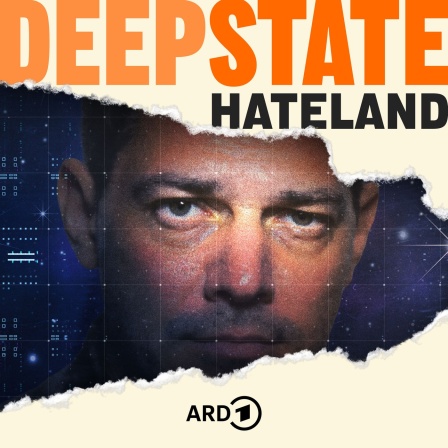
Image: Screenshot, ARD
In 2022, around 5,000 German police conducted a massive raid against the Patriotische Union, part of the extreme-right Reichsbürger movement, for plotting to overthrow the German government and install, in their eyes, a legitimate successor state to the German Reich. At one point, 69 people were considered defendants in ongoing terror trials across Germany.
Deep State’s seven compact episodes are reported concurrently with the trials, but ARD journalists dug beyond the matters playing out in the courts into the role of one of the plot’s central figures, a former elite paratrooper named Rüdiger von Pescatore, tracing his connections to a cache of missing Soviet weapons, his years in the German-speaking parts of Brazil, and why so many followed him into the darkest conspiracy theories.
Through court materials and their reporting, the journalists obtained text messages, wiretap recordings, video footage, Telegram chats, and dozens of interviews. Thanks to two years of reporting, they took listeners into “a twisted world between the esoteric and the extremist,” as ARD investigative journalist Martin Kaul puts it, as he goes to court proceedings in Frankfurt, gun fairs in Nuremberg, and a meeting with a secret agent in Berlin’s Tiergarten.
Telegram chats revealed that the plotters were preoccupied with esoteric beliefs such as soul constellations and planetary alignment. One defendant, a former high-ranking soldier, told Kaul about his belief in underground military bases where children are tortured, and powerful elites drink their blood as an elixir of youth. The plotters also included QAnon adherents and COVID-19 deniers — a collection of strange bedfellows, allied through online conspiracy theories with a global reach preoccupied with overthrowing the so-called Deep State.
Many questions remain unanswered — such as, how dangerous is this group, really? Von Pescatore, currently on trial, declined to be interviewed. But his stranger-than-fiction story is a fitting vehicle to ponder other pressing questions: Why and how does a fringe movement with local, specific historical roots, such as Germany’s Reichsbürger, connect with the more amorphous but globally metastasizing conspiracy theories that fuel real-world violence? — Alexa van Sickle, GIJN Associate Editor
Humo: Murder and Silence in El Salvador — Sonoro and Revista FACTum (Most episodes broadcast in 2024, with a one-hour special in 2025, and a 2025 award win)
Language: Spanish and English versions available.

Image: Screenshot, Sonoro and Revista El FACTum
In 2021, a clandestine grave was discovered at the home of a former police officer in Chalchuapa, El Salvador. At first, it seemed to be a case about a serial killer, but as the investigation moved forward, the discovery lead to the uncovering of something much deeper. The story became one of violence and corruption — of forced disappearances, pacts with gangs, and the illusion of security behind a narrative of peace and progress promoted by the government of President Nayib Bukele.
This investigative series won the 2025 Gabo Award in the audio category and the Ondas Globales award for best non-fiction narrative podcast. The podcast is a piece of investigative journalism that exposed how thousands of people have disappeared in the country under a veil of official silence. It investigated the alleged links between the state, gangs, and power structures, and questioned the government’s security plan in light of the reality of the victims and the censorship faced by the press.
The production used leaked official audio recordings, confidential police documents, and harrowing testimonies from families who, faced with state inaction, are still searching for their loved ones on their own. The audience’s listening experience is accompanied by the voices of journalists, primarily Bryan Avelar, who narrated the Spanish version. This approach fosters a connection with the audience by showcasing the journalistic work in environments of media harassment like this one, and in fact, several team members were forced into exile to ensure their safety. — Lucero Hernández García, GIJN en español contributor.
Hasina: 36 Days in July — Al Jazeera Investigates
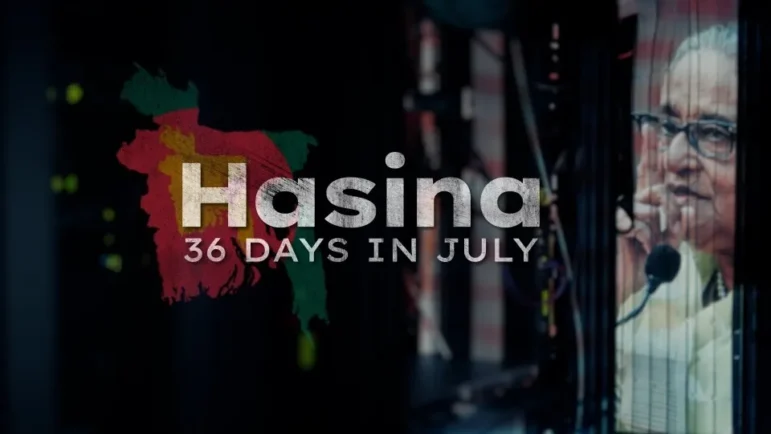
Image: Screenshot, Al Jazeera
This Al Jazeera podcast is a powerful and unsettling piece of investigative journalism that combines meticulous reporting with compelling audio storytelling. Positioned within the Al Jazeera Investigates podcast series, it delved into the dramatic climax of the July 2024 uprising in Bangladesh by foregrounding covertly obtained evidence and deeply contextual narrative.
The core of the podcast hinges on secret phone recordings allegedly made by Bangladesh’s intelligence apparatus, in which the then-Prime Minister Sheikh Hasina is heard directing security forces to use “lethal weapons” against student protesters. These recordings, verified by forensic audio analysis and voice matching, were presented as central evidence of high-level decisions that precipitated a nationwide crackdown. Through these clips, listeners are thrust into the June-to-August 2024 protests sparked by grievances over state jobs and governance — a movement that escalated into a broad challenge to elite political power.
Journalistic narration was interwoven with first-hand testimony, offering both factual description and emotional resonance. The team recounted how the protests morphed into a crisis that left more than 1,000 people dead and tens of thousands wounded, and how state tactics included shutting down internet access and using helicopters to monitor and suppress gatherings. The story of Abu Sayed — a student whose killing became emblematic of the wider violence — was treated with particular care, including how his post-mortem report was allegedly altered multiple times to conceal evidence of gunshot wounds.
As investigative podcasts go, it is rigorous and immersive. It contextualizes leaked material within broader political developments and gives voice to both victims and analysts. It succeeds in making listeners feel the urgency and consequence of state decisions that unfolded over those 36 pivotal days. However, while the podcast’s narrative is compelling, it also exists within a controversial political context, and some critics have characterized Al Jazeera’s framing as one-sided and argued that selection bias and reliance on certain sources may have compromised its neutrality. —Tanvir Mahmud, GIJN Bangla editor
Snitch City — The Boston Globe

Image: Screenshot, The Boston Globe
Lurking behind the US government’s decades-long war on drugs is an unregulated and opaque system of police “confidential informants” that is ripe for corruption and abuse. Reporter Dugan Arnett from the Boston Globe’s famed Spotlight team — known for its groundbreaking investigation into the Catholic Church child-sexual-abuse scandal — spent a year on this story to provide an unprecedented look into the system of CIs (also known as “snitches”) and their impact through the lens of one Massachusetts city, where evidence of misconduct infects almost every level of the local police department, from the beat cop up to the chief.
During this gritty, five-episode series, Arnett documented countless “drug rips” — where tipped-off cops steal illegal drugs or cash — alongside the exploitation and endangering of informants who are often, he said, extorted into cooperating. Going deeper, Arnett also delved into the alleged collusion between police officers and drug dealers by obtaining on-the-record interviews from both sides who claim to have witnessed the corruption first-hand. He also examined institutional cover-ups of the cops who eventually fell under investigation, and the official denials that accompanied them. In all, it’s a damning indictment of how US drug policy is creating dangerous incentives for the abuse of power and entrenchment of an illicit market among the very government agencies that are supposed to protect the public from it. — Reed Richardson, GIJN Managing Editor
Exposed: Listening in on a $35m Phone Scam — the Guardian

Image: Screenshot, the Guardian
Audio — in the form of phone call recordings between a scam center agent and a British man using the pseudonym Mark — is at the heart of what makes this podcast by the Guardian so powerful and compelling. The nature and content is both authentic and relatable, making you feel as though it could be you in Mark’s shoes. As the podcast progresses, you come to learn just how an individual is manipulated, and how easy it is for victims to get sucked in as the scam around them deepens.
The podcast forms part of the Scam Empire investigation — a collaborative probe by OCCRP, Swedish broadcaster SVT, and 30 other media partners into 1.9 terabytes of leaked data from two groups of call centers based in Israel, Eastern Europe, and Georgia, where employees have convinced at least 32,000 people across the globe to make millions of dollars in phony “investments.”
In this specific podcast, listeners hear the story of one of the victims of the industrial phone-scamming center in Tbilisi, Georgia. The journalist, Simon Goodley, described Mark as an “ordinary English bloke in his 30’s who has worked a blue collar job, has worked his way up to a junior management position… and wants to better himself.” This characterization of Mark extends to the profiles of many of the victims – ordinary people across the globe who are looking to invest their savings and fall victim to scammers.
The leaked files from Scam Empire contain more than 20,000 hours of recorded calls along with tens of thousands of screen captures, revealing how call center staff aggressively persuade targets that they are close to achieving financial success. However, when these so-called investors attempt to cash out, the fraudsters usually fabricate excuses for why withdrawals are impossible and then pressure them to send additional funds instead. – Joanna Demarco, GIJN Visuals and Newsletter Editor
Blood Relatives — The New Yorker

Image: Screenshot, The New Yorker
The New Yorker’s Pulitzer Prize-winning investigative podcast In the Dark returns with a six-part series that asks whether one of the UK’s most famous murder cases ended with a wrongful conviction.
It’s an investigation that began with a provocative question: What if one of the UK’s most notorious murder cases got it all wrong, and has imprisoned the wrong person for four decades? Working off an expert tip, The New Yorker’s Heidi Blake undertook a two-year deep dive into the infamous 1986 White House Farm massacre, in which a young man was ultimately convicted of killing his adopted parents, twin nephews, and sister in a grisly mass shooting, despite initial indications that the sister perpetrated the crime in a murder-suicide.
Along the way, this investigation by reporter Heidi Blake pored over a massive trove of legal documents, uncovering police misconduct and incompetence in nearly every step of the investigation. Key findings included an admitted contamination of the crime scene by a police investigator (appropriately nicknamed “bumbling Ron”), and a potentially exculpatory emergency phone call that police had ignored for decades (but that was bizarrely recanted by the police officer who took it). Blake’s blockbuster print story, published in 2024, had an immediate impact, forcing a broad re-examination of the case by the British public and eventually prompting the country’s last-ditch criminal review unit to take it up for a second time. That unit’s decision on whether or not to have a new legal hearing, however, has raised questions of how the UK justice system copes when it comes to addressing its own failures. — Reed Richardson, GIJN Managing Editor
Boy Wasted — ENDS Report and De Groene Amsterdammer
Content warning: This podcast contains detailed graphic references to a worker’s death and to child labor fatalities.
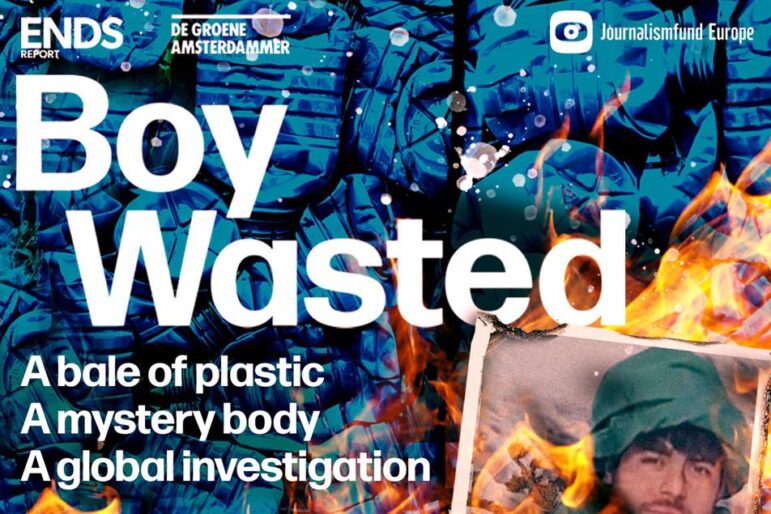
Image: Screenshot, ENDS Report and De Groene Amsterdammer
This three-part environmental crime podcast begins with the discovery of a boy’s body at a recycling facility in Turkey and expands into a global investigation of the human cost of the plastic waste trade. A team of investigative reporters, including hosts Dan Ashby and Lucy Taylor, Adnan R. Khan, as well as Tess Colley and Pippa Neill from Ends Report, drew on cross-border reporting to connect what happens in British households to what unfolded in industrial zones on the outskirts of Istanbul.
The podcast opens with the death of Arifullah Fazli, an Afghan refugee who had come to Turkey to work while dreaming of reaching Europe, and who died in a tragic industrial accident involving recycling machinery. From that starting point, the journalists traced how and why this happened, speaking to workers and witnesses, visiting industrial sites, and attempting to access official records. As the reporting progressed, tensions rise; at one point, a member of the reporting team was detained.
The reporters directed questions to police and local authorities and submitted formal information requests. However, many institutions either failed to respond or provided incomplete answers, highlighting gaps in transparency and oversight. Conversations with lawyers and labor advocates underscored systemic safety failures and the precarious, often undocumented status of refugee workers in the industry. Fazli’s death is presented not as an isolated tragedy, but as a symptom of structural problems.
The series also examined the scale of the UK’s plastic waste exports and what happens once that waste reaches Turkey. Reporters sought answers from authorities in both countries about regulation, inspections, and accountability — but the repeated lack of clear responses raises questions about enforcement and responsibility within the global waste trade.
As a podcast, Boy Wasted is meticulous and immersive, combining on-the-ground reporting, testimony, and investigative analysis to connect consumption, waste, and labor exploitation. For listeners interested in environmental justice, migration, labor rights, or investigative journalism, this is a series worth hearing in full. It challenges audiences to reconsider where their discarded plastic ends up and at what human cost. — Pinar Dag, GIJN Turkish Editor
Scam Inc — The Economist

Image: Screenshot, The Economist
What connects a bank manager from Kansas who coaches the local soccer team with a trafficking compound in Southeast Asia? A successful, if lonely, career woman with a PhD from the Southern US with Chinese organized crime gangs? The answer, according to this deeply researched eight-part podcast hosted by The Economist’s Sue-Lin Wong, is a sprawling, web-like network of scammers so efficient at deceiving their victims that they are now responsible for stealing over $500 billion a year.
The podcast, part of a growing series of exposés into the world of online scams, moves from Kansas — where that banker gambled on the fortunes of his rural community, losing $47million in the process — to Cambodia, Myanmar, and the Philippines, and spoke to people trafficked to a scam compound and held against their will, including a former kindergarten teacher who feared she’d never get home to see her child again. Wong interviewed industry experts, law enforcement officials, and counselors who deal with the fallout, interrogating the various ranks of victims, perpetrators, and investigators. She details how pig butchering — the term for fattening up wealthy targets before stealing everything they have — is now a global phenomenon that has left everyone from teachers in China to middle-class workers in the US exploited.
“For as long as humans have traded with each other, fraud has existed,” Wong noted. But what has made it easier for those behind the crime is the information ecosystem — how much material many of us put online and how often we can be tricked into letting our guard down in a digital world, all while the criminal justice system struggles to keep up with the scale of the problem.
“In that sense pig butchering is nothing new. It’s the same old swindle supercharged by cryptocurrency, deep fakes, and messaging apps. What’s new is the industry, the Inc, in Scam.Inc,” Wong concluded. Many of these scam systems are now run under a franchise model — the “underworld version of a fast food chain” where the scam industry is standardized and replicated, from the scripts to the technology to the crypto investment models often used to trick people out of their money. “Same products made and served in the same way in the same kinds of places. Standardized all around the world.” — Laura Dixon, GIJN Senior Editor
Arachnid: Hunting the Web’s Darkest Secrets — Investigative Journalism Bureau (IJB), TVO, Piz Gloria Productions, and the Toronto Star (May 2025)
Content warning: This podcast contains graphic references to child sexual abuse imagery.

Image: Screenshot, IJB
Each day, tens of millions of images of child sexual abuse appear on global online platforms — and the volume of this material is constantly growing. Despite the unspeakable horror that this perpetuates for victims and survivors, the scale of the child sexual abuse material (CSAM) “market” rarely makes front page news, and it’s kept “out of the water cooler discussions,” says Rob Cribb, the director of IJB and Arachnid’s host. “I have a lot of really smart colleagues, but they are very intimidated by abusive images,” forensic pediatrician Dr. Sharon Cooper told Cribb. “They’re just psychologically so aversive for them.”
In this six-part series, Cribb and his team uncovered the dark underbelly of the internet, and explored why social media platforms are resisting the changes required to prevent the constant resharing of CSAM. They spoke to survivors who are unable to remove the footage of their abuse from online platforms, and are even stalked by “fans” of the content who attempt to discover their whereabouts. Arachnid also interviewed law enforcement, advocates, and the experts involved in the technological efforts to curb the spread of CSAM — including those behind Project Arachnid, an innovative tool that identifies child sexual abuse imagery and sends removal notices to providers.
Arachnid is a difficult listen, and delved into a subject that many of us do not — or cannot — think about. It takes the audience into the unimaginable lives of those who spend every day fighting for survivors, current victims, and the children who are vulnerable to future exploitation. Nonetheless, Cribb handled the subject extremely sensitively, and has held up a microscopic lens to the past failures of government and big tech. He leaves listeners with an important question: What will it take for those in power to act? – Emily O’Sullivan, GIJN Resource Center researcher
When Children Were Arrested — Sowt

Image: Screenshot, Sowt
This powerful three-part series within Sowt’s Sharait program revealed how the international care organization SOS, along with local counterparts, conspired with the Syrian Assad regime to steal children from their families at the height of the brutal civil war.
The podcast narrated the agony and bitterness Syrian parents continue to endure, as many children remain missing even after the Assad regime’s collapse. The series was part of an international collaboration that included organizations such as Lighthouse Reports, BBC Eye, The PBDer, Women Won the War, and others.
The podcast stands out not only for the seriousness of the crime it revealed, but also for the thoroughness behind it. Based on thousands of documents, spreadsheets, digital files, and images, the investigation uncovered how a global child welfare organization became linked to Syrian intelligence. As Mais Katt, a key member of the podcast team, explains:
“The biggest challenge in this investigation was how to present the findings from the documents we obtained. We collected thousands of documents from different sourcesspreadsheets, digital files, and images—all proving the crime. Processing these materials was a core part of our method. But sharing the findings risked disrupting the podcast’s narrative flow, which was already dense. So we invited our colleague Bashar Deeb, a digital investigator at Lighthouse Reports, to join us for a two-part conversation in the episodes. Through an open discussion with Salim Salama and me, we unpacked the results in a natural way. The dialogue reflected the candid exchanges journalists have about their work and investigations.”
Edited and investigated by Mais Katt and Bashar Deeb, written and presented by Salim Salama and Mais Katt, and produced and directed by Salim Salama, the series moves carefully between personal stories and documentary evidence. It is dense, heavy, and necessary. This podcast avoids sensationalism while demanding accountability. — Majdoleen Hasan, GIJN Arabic Editor
 Laura Dixon is a senior editor at GIJN and a freelance journalist from the UK. She has reported from Colombia, the US, and Mexico, and her work has been published by The Times, The Washington Post, and The Atlantic. She has received fellowships from the IWMF and the Pulitzer Center.
Investigative Audio: 8 Tips from Podcasting Innovators
GIJC23 – Podcasts: Producing the Investigative Podcast
How We Turned Years of Reporting on the High Seas into a Podcast: Tips from Ian Urbina
Podcasting Goes Visual: How Video Can Help Investigative Storytelling Reach New Audiences

This work is licensed under a Creative Commons Attribution-NoDerivatives 4.0 International License
Republish our articles for free, online or in print, under a Creative Commons license.
Republish this article
This work is licensed under a Creative Commons Attribution-NoDerivatives 4.0 International License
Read Next

Editor's Picks News & Analysis
Global Tour of Investigative Podcasts: 2024 Edition
Our annual round-up of compelling investigative audio stories, as reviewed by GIJN’s global team. Featuring stories from the US, Germany, Switzerland, El Salvador, Turkey, and Russia.

Getting the Story Out GIJC23
Going Multilingual — The New Frontier of Podcasting?
The global boom in audio streaming offers an opportunity for investigative journalists to reach wider audiences by developing multilingual translations of their podcasts.

The Power of Emotion: How to Connect With Investigative Podcast Listeners
Connecting with your audience is key to telling a good story. But how do you actually make it happen? Podcast producer Siobhán McHugh explains how she uses emotion — and lots of technique — to connect with her listeners.

Getting the Story Out LATAM Focus News & Analysis
Investigating in Audio: Nine Standout Podcasts from Latin America
Investigative podcasts from the region have successfully managed to mix traditional reporting with one of the continent’s oldest genres: narrative journalism.