Resource Video
GIJC23 – Using Pinpoint to Organize Unstructured Data
Pinpoint is a powerful tool for converting unstructured data (text and other forms of messy data) into datasets that can be analyzed and used for stories.
Hundreds of journalists are forced into exile around the world by despots, autocrats, and crime cartels. Exiled editors and émigré media are an old story. But amid the modern backlash against independent media, journalists are taking advantage of a new era in tools and technology. These digital toolkits are proving a game-changer, enabling journalists to better report on their homelands, and their audiences to better access that reporting.
More than half of the world’s countries have laws that require officials to supply public documents on request, offering valuable windows for reporters.
Criminal activity tends to thrive where state oversight is weakest. So it’s no wonder that cryptocurrencies are the financial tool of choice for criminals around the world, which makes insightful coverage of them increasingly important for investigative journalists.
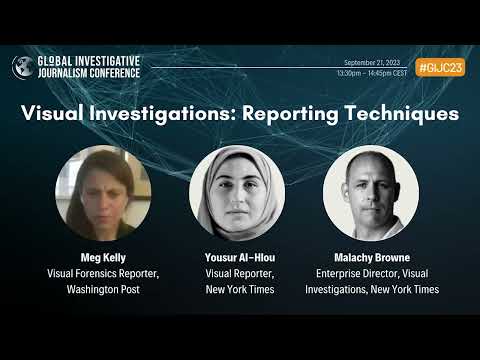
In this panel session, attendees heard about the latest visual investigations techniques from three members of The New York Times and Washington Post teams.
The numerous ways to track ships and planes open a whole new range of stories for journalists to investigate.
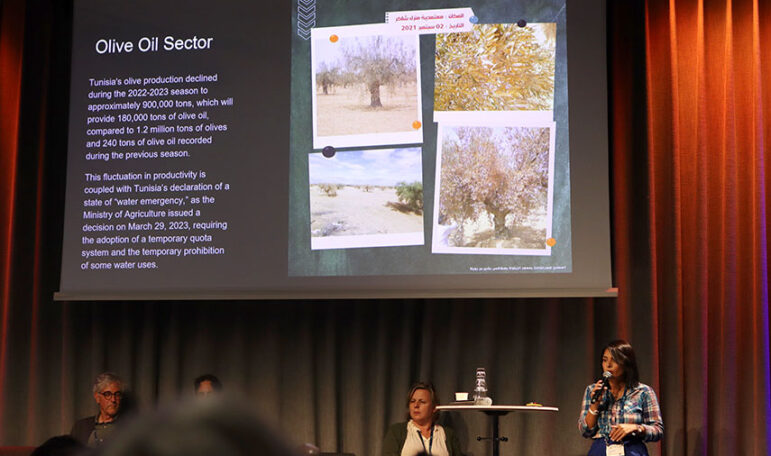
There are numerous investigative topics to explore between the farmer’s field and the grocery store – and, indeed, the plate – and several recent projects have exposed abuses in the production, distribution, and access to food. This expert panel offers deep experience in issues from fisheries and pesticides to food security and biodiversity — with journalists based in Tunisia, the UK, the US, and Southeast Asia.
We are in the midst of a decade-long global backlash against democracy and human rights. A new extremism has taken hold, characterized by radical right-wing groups and ultranationalist political movements. These groups are not only growing but are becoming more organized. International ties among them are also growing — digitally, ideologically, financially — but their networks are poorly understood and investigative journalism in this area is lacking.
One of the great spin-offs of the digital age is that journalists can tap into crowds and communities in ways unimaginable only a few years ago. Local communities are reporting impactful stories, providing tips and resources, and bolstering the finances of watchdog media around the world. Here are journalists from remarkably diverse environments — Malaysia, […]
Hands-on tips for scaling your sports investigations from three award-winning journalists who have covered doping, sexual abuse, sportswashing, and more.
The rise of AI-powered chatbots has prompted hot debates about whether these technologies will reshape or unmake our world. But instead of engaging in the hype cycle, journalists can demystify these tools for their audiences by sticking to basic reporting principles: investigate the artificial intelligence models themselves and cover their real-world impact. Burke will discuss […]
The impacts of climate change everywhere. But how to do in-depth reporting on the widespread human costs — both immediate and longer-term? Speakers from Asia, Africa, and Europe will discuss how to cover topics such as sea level rise, heat, drought, and extreme weather with an eye to the impact on humanity and the environment. […]
This workshop might just emerge as the one that changes your life as a watchdog journalist. Misinformation and disinformation on “closed” social media networks — such as WhatsApp and Telegram – have already had devastating consequences for democratic processes in places like India, Nigeria, Russia, and Brazil.
Finding victim-survivors to talk about human trafficking is difficult. Three journalists at GIJC23, who cover human trafficking and irregular migration, shared tips on how to find and protect sources.
Tracking ships and planes is essential for investigative journalists covering a wide range of stories around the world, from smuggling to sanctions evasion to environmental crimes.
Hear from some of the world’s most imaginative climate change journalists. Mongabay’s Rhett Ayers Butler presides over a newsroom producing a constant stream of articles on climate change worldwide. Elisângela Mendonça recently has connected the production of the anti-aging cure collagen with deforestation in Brazil. Emilio Godoy’s multi-faceted portfolio includes investigations of gas leaks and […]
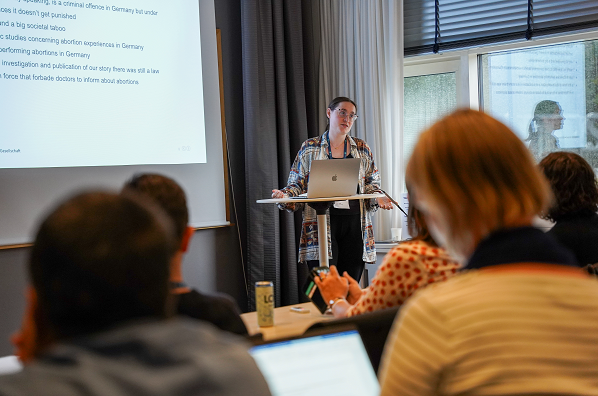
This session will address how to convert unstructured data (documents) into structured data that can be filtered, summarized, and visualized.
A well-designed, properly distributed survey can build a powerful dataset for an investigation. Here are top tips on planning, designing, and executing them from the team at CORRECTIV.
Forensic visual investigation has rapidly become a critical method of journalistic inquiry, thanks to new technologies, innovative skills, and the global ubiquity of social media imagery.
From investigating prisons to stolen sand and child brides, three award-winning journalists share their experiences reporting from a region experiencing a press freedom “crisis.”
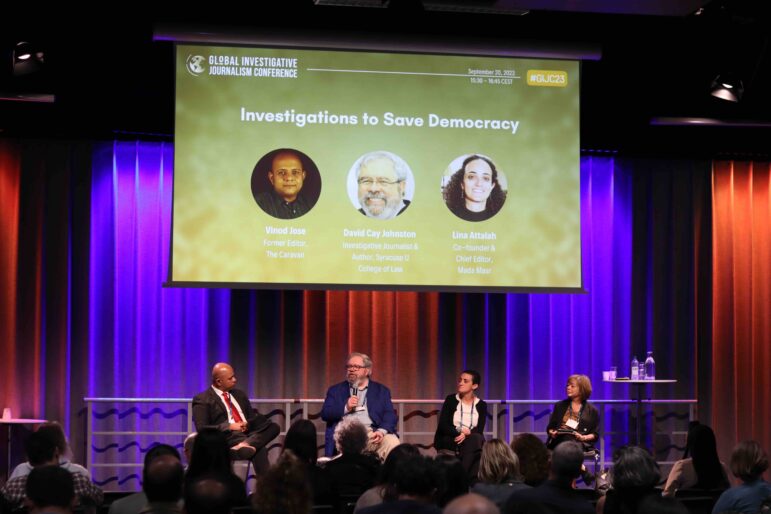
Four editors — and veterans of the global push-back against autocracy — discussed effective methods for holding the enemies of democracy accountable.
Three reporters from across the globe discussed the numerous looming threats to democracy — and shared tips for exposing the bad actors behind election disinformation and authoritarian attacks.
Three veteran journalists shared tips on maximizing the potential and navigating the pitfalls of artificial intelligence and cross-border collaborations.
Exploring how the technology can help newsrooms, how investigations have revealed the impact of AI on communities, and how journalists can move beyond narratives of hype or despair.
Online research expert Henk van Ess has created a seven-chapter guide that offers reporters step-by-step instructions on how to use social media search to perform investigations of people and subjects and he’s also created a detailed tutorial on using facial recognition technology and best practices for putting these tools together in verifying claims online.
Satellite images are powerful tools for discovery and analysis, plus provide vivid illustrations. Discover GIJN’s favorite resources.
An investigative data journalist and a former tech lawyer teach you how to spot tricks and hidden disclosures within these interminable documents — and even how to claw back some privacy.
El Faro investigative journalist Jimmy Alvarado offers his favorite tools and techniques for exposing corruption.