Stories
News & Analysis
Indian Journalists Challenge Government Over Coronavirus Transparency
A group of Indian journalists have been calling out the government on social media over its opacity in the face of the COVID-19 pandemic. The collaborative effort continues to press for official answers on overall health preparedness, such as drug availability, access to care, health inventory, and insurance schemes.
COVID-19’s Toll on Journalists: At Least 64 Dead in 24 Countries
Like health professionals, care givers, and other essential workers, journalists face heightened and grave health risks as they pursue crucial stories on the COVID-19 crisis. But measuring coronavirus deaths among media workers poses many of the same problems as counting true mortality figures in the general population. The Press Emblem Campaign (PEC), a nonprofit focused on press freedom, recorded 64 deaths in 24 countries by May 5.
GIJN Webinar — Investigating the Pandemic: Evaluating the Evidence
The COVID-19 pandemic narrative is dominated by numbers — mountains of data and seemingly endless statistical models. Yet most of the figures are uncertain at best, often highly flawed and simply untrue at worst. How to deal with the many claims on the truth that are made every day? What should journalists do if the evidence is poor?
Reporting Tools & Tips
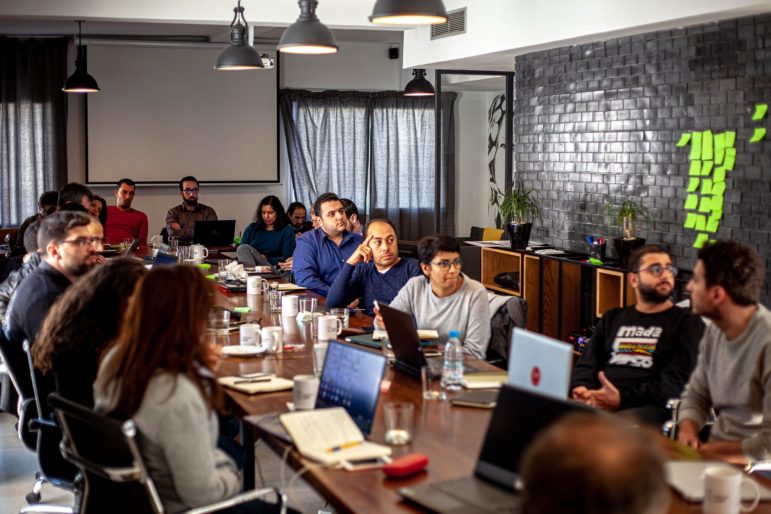
Tips for Running an Online Event in the Time of COVID-19
Splice Media have been running “check-in” sessions with the media startups they support in Asia to find out how organizations and individuals are coping through the coronavirus pandemic. Here are his tips for hosting an online media event like this. His takeaway? The technology is the easy part.
News & Analysis
How Latin American Media Outlets are Collaborating on COVID-19 Investigations
Media organizations across Latin America are working together to investigate how the COVID-19 pandemic is playing out in the region. Reporters say that cross-border collaboration is helping them report the story of a lifetime so that jointly they can work to “connect the dots.”
News & Analysis
Journalism Without Fear or Favor: May 3 Is World Press Freedom Day
This Sunday, May 3, is World Press Freedom Day, an initiative to stand up for journalists around the world, particularly those who are facing repression.
News & Analysis
What We’re Reading: European Media’s COVID-19 Trust Test, New Verification Handbook, Documentaries to Stream
This week’s Friday 5, where we round up our favorite reads from around the online world in English, features a Nieman Reports story about European media’s eroding trust problem during COVID-19, the latest edition of Craig Silverman’s Verification Handbook, and the free-to-stream investigative documentary playlist from the good people at the DIG Festival.
Data Journalism
Data Journalism Top 10: COVID TikTok, Fact-Checking Coronavirus, Trump Narcissism, Pandemic Economy
The popularity of TikTok has surged during the pandemic, and one particular “data investigation” clip has gone viral. Our NodeXL #ddj mapping from April 20 to 26 found TikTok user Rebecca fact-checking a woman’s claim about the COVID-19 quarantine and her grey hair roots, the Coronavirus Fact-Checking Alliance visualizing the thousands of fact checks they have produced during the pandemic, The New York Times analyzing United States President Donald Trump’s messages about the country’s coronavirus response, and FiveThirtyEight examining how concerned Americans are about the coronavirus compared to the economy.
Medical, Digital, and Legal Safety Tips for Journalists Covering the Pandemic
Journalists are playing a critical role informing the public about the virus. Understanding it — and the measures governments are putting in place to control reporting of the pandemic — are vital if journalists are going to report safely.
Case Studies
How The New York Times is Visualizing the Smartphone Tracking Industry
The New York Times’ Privacy Project highlighted the alarmingly unregulated activity of location data companies collecting data from millions of smartphone users. As the coronavirus pandemic sheds further light on the uses and misuses of location tracking, here’s a deeper look at the project that visualized phones being tracked around the US, from the Pentagon and the White House to the streets of San Francisco.
My Favorite Tools
My Favorite Tools with Cuban Data Journalist Barbara Maseda
For our series about journalists’ favorite tools, we spoke with Barbara Maseda, the founder and editor of Proyecto Inventario, an open data platform for journalists reporting on her native Cuba. She told GIJN about the investigative tools she uses to overcome the difficulties of data reporting in and about Cuba.
GIJN Webinar: Using Open Source Information to Report from Home
The COVID-19 pandemic brings yet another level of danger to the press: reporting on the ground and interviewing people face-to-face have become high-risk activities — even illegal in some countries. But there are ways to continue investigative work using your laptop, your wit and some very useful techniques — as three experienced investigators will highlight in this GIJN webinar, Using Open Source Information to Report from Home.
Coronavirus May Spell the End for Many of Africa’s Print Newspapers
Newspapers around the world are vulnerable to the impacts of the coronavirus pandemic, and many of Africa’s print publications might not survive it. Ntibinyane Ntibinyane from the INK Center for Investigative Journalism in Botswana writes about what’s to come and what can be done to support the industry.
News & Analysis
What We’re Reading: WhatsApp Engagement, Media Survival, and Russian Disinformation
This week’s Friday 5, where we round up our favorite reads from around the online world in English, includes a Bellingcat post on what to look out for when reporting on Russian disinformation, how Documented is using WhatsApp to maximize reporting and audience reach, and the Oxford research group’s global effort to gather publicly available data on the coronavirus.
Data Journalism
Data Journalism Top 10: Bill Gates Conspiracies, COVID-19 Excess Mortality, Home Deaths Spike, Test Kits
Misinformation has grown ubiquitous during the COVID-19 pandemic, so much so that World Health Organization Director-General Tedros Adhanom Ghebreyesus proclaimed: “We’re not just fighting an epidemic; we’re fighting an infodemic.” Microsoft co-founder Bill Gates has emerged as a favorite target of disinformation actors, according to The New York Times, that we discovered through our NodeXL #ddj mapping from April 13 to 19. We also found The Economist and ProPublica examining the true impact of the pandemic by looking into “excess mortalities” such as home deaths, the Associated Press releasing and updating a coronavirus public dataset for the United States.
News & Analysis
Document of the Day: World Press Freedom Index in the Time of Coronavirus
The 2020 World Press Freedom Index, compiled by Reporters Sans Frontières (RSF), shows that the coming decade will be decisive for the future of journalism, with the COVID-19 pandemic highlighting and amplifying the many crises that threaten the right to freely reported, independent, diverse, and reliable information.
Case Studies
How to Adapt Membership Models and Events During the Pandemic
As coronavirus sweeps through communities around the world, the Membership Puzzle Project has shared examples from newsrooms around the world on how they have quickly adapted pillars of their membership programs and memberful routines to respond to the realities of this crisis.
GIJN Welcomes Seven New Member Organizations in Five Countries
The Global Investigative Journalism Network is delighted to welcome seven new member organizations based in five countries. We are particularly pleased to welcome our first member in Australia and our first representing Syrian journalists. The new groups bring GIJN’s global membership to 184 organizations in 77 countries.
GIJN Webinar — Staying Safe: How to Report a Pandemic
In a global crisis like this, journalists play a critical role: they inform the public and they monitor and report abuses of power by officials. But how can they do this when they’re dealing with psychological stress and threats to their own health and safety? In this webinar “Staying Safe: How to Report a Pandemic,” two experts will focus on how to best manage the multiple threats faced by journalists when reporting on COVID-19.
Data Journalism
Data Journalism Top 10: Viral Dataviz, DIY Masks, Breaking the Wave, China and US Response to COVID
From “flattening the curve” to “social distancing,” and now “breaking the wave,” the global data journalism community is using new terminology in its attempts to explain the intricacies of COVID-19 to the masses. Our NodeXL #ddj mapping from April 6 to 12 finds Reuters Graphics explaining their “breaking the wave” chart, The Washington Post helping readers figure out the best material to use to make their own masks, the Financial Times comparing the response of China and the United States in handling the pandemic, and Press Gazette highlighting the huge appetite for data-driven visual journalism about COVID-19.
Reporting Tools & Tips
Multilingual Journalism Could Make a Comeback. Here Are Some Tools That Might Help
New tools and industry trends are making it easier for media organizations to publish translations and localized adaptations of their work, writes Patrick Boehler, executive editor of the Swiss public broadcaster’s international service — and publishing in multiple languages helps newsrooms develop new sources and fact-check. Boehler outlines three new tools for multilingual journalism from a recent “hackathon.”
News & Analysis
COVID-19: Expert Advice on Investigative Angles
With the extraordinary measures being taken to counter the coronavirus outbreak, the work of investigative journalists scrutinizing abuses of power and exploitation of the vulnerable has never been more vital. Amid the fast-unfolding crisis, where should investigative reporters begin? GIJN asked leading journalists in our community for their advice to investigative reporters around the world.
GIJN Webinar — Strategies for Financial Survival
The COVID-19 pandemic is inflicting major financial strain on media organizations worldwide. Three experts will share their practical advice for small to medium-sized media organizations to stem the loss in revenue and survive the economic upheaval at hand.
GIJN Webinar — Collaborating on Long-Form and Documentary TV & Video
In this third GIJN Webinar in our Investigating the Pandemic series, Collaborating on Long-Form and Documentary TV & Video, we bring you a stellar cast of television executives and commissioning editors from RTS in Switzerland, Premières Lignes in France, BBC Global News, and BBC Arabic and BBC Africa, and from Canada’s CBC — to launch a collaborative platform to support long form television investigations into COVID-19.
News & Analysis
What We’re Reading: Google Mobility Reports, Pegasus Spyware for Virus Tracking, Justice for Jan Kuciak, COVID Corruption
This week’s Friday 5, where we round up our favorite reads from around the online world in English, includes the launch of Google’s Community Mobility Reports that track social distancing trends in 131 countries, how the group behind Pegasus spyware created software for COVID-19, and news that the man who murdered investigative journalist Jan Kuciak was sentenced to 23 years in prison.