Accessibility Settings

color options

monochrome muted color dark

reading tools

isolation ruler

Topic

Reporting Tools & Tips

567 posts

Reporting Tools & Tips

Three Simple Ways To Boost Your Board’s Fundraising Knowledge

Your nonprofit board of directors can be a dynamic catalyst to bring in new major donations. People who are passionate about what your institution does and have a lifetime of connections can make the difference between “basic survival” fundraising or breaking out into the green fields of major gifts fundraising. Here are three ways to help your board shed their fears of fundraising and find their unique role in this aspect.

Reporting Tools & Tips

Why Investigative Journalism Needs Our Help

The Boston Globe’s Spotlight team’s exposé on sexual abuse of minors by clergymen made a huge difference – worldwide, the Vatican defrocked more than 800 priests, laws were changed to better protect children and a lot of victims received help, counseling and money. Now, as finances of the news business are crumbling, reporters need help too. Because without the support of the public, investigations that should be done – like Spotlight’s – will not get done.

Reporting Tools & Tips

Blending Animation and Investigative Reporting

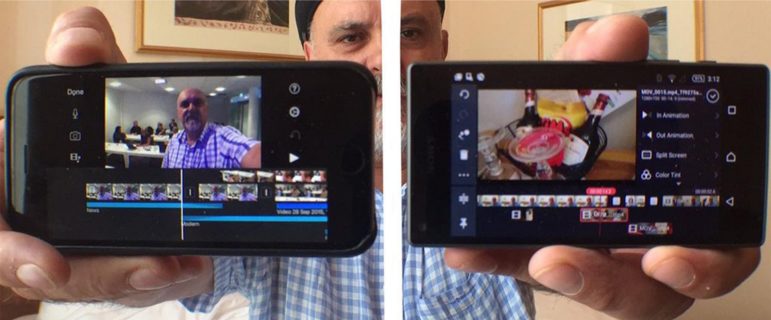
The Center for Investigative Reporting embarked on a new experiment last year: piloting an Animated Investigations collaborative course with the California College of the Arts. The course, which is intended for three semesters and a malleable work in progress, first taught students to animate existing Reveal investigations. However, it slowly transformed into a course where students identified their own underreported stories to animate.

Data Journalism Reporting Tools & Tips

Tracking Business Records Across Asia

The paper trail has changed — money now moves digitally and business registries are databases — and this lets journalists do more than ever before in tracking people and companies across borders. Here’s a useful list of which business databases to start looking into if you’re background companies in China, India, and the Philippines.

Resource

Three “Musts” for Today’s Investigative Journalist

Journalism is by definition investigative. However, the depth and scope of possibilities to unearth and bring to light wrongdoings of public interest has increased manifold, thanks to the way the Internet has been evolving in the last decade. To be a true investigative reporter today, it is indispensable to fine-tune the old philosophy with three new practices: be Open, Systematic and Safe.

Data Journalism Methodology Reporting Tools & Tips

How I Built a Scraper To Measure MP Activity

When the president of the parliament states that there are some MPs “doing nothing,” you know what to do as a data journalist: you turn to the numbers. This is how I did that and how I got a scatter plot in a printed paper and an interactive one online.

Reporting Tools & Tips

Six Open Data and Accountability Tools for Africa

At this year’s Highway Africa — the continent’s largest annual gathering of journalists — watchdog groups showcased a host of open data and accountability tools aimed squarely at Africa. Here are six of them, developed by Code4SA and presented by Wellington Radu of Media Monitoring Africa and Levi Kabwato of the Open Democracy Advice Centre.

Reporting Tools & Tips

Know Your Audience, Build A Clique

Many great actors failed to adapt from silent movies to the “talkies” and disappeared from the big screen. By the same token, many great journalists risk fading away because they are not adjusting from the era of virtually silent audiences to the virtual era of talking audiences.

Reporting Tools & Tips

The Digital Journalist’s Toolbox: Audio

Engaging and interactive journalism is still possible even without an extensive knowledge of coding. But how? We’ve taken the guesswork out, scouring the internet to find the most accessible tools to create multimedia content.

Data Journalism Methodology Reporting Tools & Tips

Getting Started in Online, Open-Source Investigations

At First Draft, we frequently receive emails from a whole range of people asking how they can start doing the sort of online open-source investigation and verification that they’ve seen us doing. The skills and methodologies used are all something that can be learnt through a little persistence, but here are a few pieces of advice to get you started.

Resource

Digital Self-Defense for Journalists: An Introduction

Digital self-defense is becoming an important part of the journalistic toolkit. Beyond risks to everyone’s digital lives—webcam hacking, email breaches, identity theft—people who work in newsrooms have even more at stake. Newsrooms are some of the biggest targets in the world for state-sponsored digital attacks, as well as more routine threats.

Reporting Tools & Tips

The 10 Most-Used Tools in Today’s Newsrooms

In the very early days of building Sonr*, we talked to newsrooms all over New York City and London to get a sense of what tools journalists are currently using to get the job done. Some of these newsrooms were more traditional than others, but we found that there was a core set of digital tools that most writers and editors couldn’t get through the day without. Let us know what you think, or if this list is missing anything in the comments!

Data Journalism Methodology Reporting Tools & Tips

New Tools Open Up Virtual Reality to Journalists

When Gustavo Cerati, a legendary Argentinian musician and songwriter, was asked to share his best advice for new musicians, he refused—saying instead that “experiences are not transferable.” You may agree or may not with his statement, but if you’ve ever worn an Oculus Rift or a similar virtual reality (VR) headset, you’ll know we are getting closer and closer to transferable experiences.

Resource

A Tour Of Aleph, A Data Search Tool For Reporters

In a short story by Jorge Luis Borges, the Aleph is a point in space that contains all others. To those who see it, it presents the entire universe at once — an investigative reporter’s dream. Over the past six months, I’ve been working for OCCRP to produce a tool named after this mythical object. It’s based on a prototype I hacked up as part of my 2014 Knight International Journalism Fellowship, and it has now grown into a data research tool as part of the Investigative Dashboard.

Resource

When Virtual Reality Meets Data Journalism

Isn’t the best journalism always immersive? Whether it’s Walter Kronkite’s journalistic take on history “You are There” from the 1950s or Declan Walsh’s mobile phone reporting from Syria in June, the best journalism makes you feel like you are part of the story. You care what happens. Virtual Reality is a powerful tool in making journalism more […]

Reporting Tools & Tips

A Poor Journalist’s Text-Mining Toolkit

How can you search and analyze collections of documents on your own computers with simple tools? At DataHarvest, Robert Gebeloff and I ran a workshop to answer that question. As people were seemed interested, here’s a write-up of the two key tools we worked with: Apache Tika for content extraction and regular expressions in Sublime Text as an advanced search tool.

Reporting Tools & Tips

From Research to Publication: A Snap Look at Tips from IRE16

When it’s time to start a new investigation, journalists prepare themselves in different ways: from doing the research to pitching the story to building the narrative. It’s not about a single formula, but about integrating different resources and strategies. Here, we present a selection of the tips presented at the 2016 conference of Investigative Reporters and Editors (#IRE16), useful for starting and developing investigations.

Data Journalism Methodology Reporting Tools & Tips

My Data Is Dirty! Basic Spreadsheet Cleaning Functions

In an extract from his book Finding Stories with Spreadsheets Paul Bradshaw explains how to use basic cleaning functions in spreadsheets to make it easier to combine data, including a case study where the same functions were used to speed up a research process for a story.

Reporting Tools & Tips

Better Recording, Better Transcribing: A Digital Toolbox for Bringing Home the Perfect Interview

Before the emergence of digital tools, recording and (especially) transcribing an interview was a tedious affair. The little microcassette tapes were of dubious reliability—and yes, I once had one fail on me during a crucial and contentious encounter. Transcribing was worse, as you’d sit there constantly hitting the “play” and “rewind” buttons, an imprecise process that risked damage to the tape.

Reporting Tools & Tips

Follow the Money: How Open Data and Investigative Journalism Can Beat Corruption

Alongside the advantages available for criminals of operating on a global scale, making it harder to track them down, there are also disadvantages that the clever journalist or law enforcement official can exploit to expose them. How do we do this? Firstly, through data: more data means more transparency, provided the quality of information is there and supported by tools that allow proper analysis. Secondly, by journalists using advanced techniques.

Data Journalism Reporting Tools & Tips

OjoPúblico Launches Data Journalism Guide

With the aim of contributing to the promotion of data-based investigations and asserting its vision of journalism as an essential service to democracy, OjoPúblico has published “La navaja suiza del reportero. Herramientas de investigación en la era de los datos masivos” (“The Swiss Army Knife Journalist: Digital Research Tools in the Era of Big Data”), a resource for Hispanic reporters who want to become familiar with the world of data journalism and, above all, to understand its meaning and relevance in Latin America and the world.

Data Journalism Reporting Tools & Tips

25 Tips for Everyday Digging

Some of the best tips and techniques come out of the annual meetings by our colleagues in Scandinavia, and this year is no different. More than 600 participants attended the SKUP conference in Tønsberg, Norway, on April 8-10. Among the tip sheets presented was this gem of 25 practical tips that reporters in even the smallest newsrooms can use to good effect, focused on finding great characters and cases to bring your story to life.

Data Journalism Reporting Tools & Tips

A Data Journalism Expert’s Personal Toolkit

People regularly ask what tools to use or what programming language to learn for data-driven journalism (ddj). There is no right answer for it, especially considering that technology and tools available are evolving quickly in the field.

Reporting Tools & Tips

How To Get People To Pay for News

A Round-up of Recent Debates about Community Support and Culture Change in Newsrooms. A study released earlier this month suggested that 40% of Americans would buy digital newspaper subscriptions if they were presented with a persuasive argument. It is worth spending a minute unpacking what that “persuasive argument” might look like.

Reporting Tools & Tips

How To Save Online Evidence And Why It Matters: Part Two

In part one of this blog I discussed the need for journalists to save evidence they find online and some of the techniques for recording that information. In part two, I’ll focus on some of the issues journalists face when it comes to saving information from social media and mobile devices.

Resource

How to Save Online Evidence and Why It Matters: Part One

As journalists we are used to saving information. We securely store documents, keep meticulous notes, save and back up important emails on our computers. But what about the information we find online during the course of our investigations?