
Press Freedom
Nicaragua: Reinventing Journalism in Exile
In this World News Day op-ed, the Latin American journalist and editor discusses the challenges of holding an authoritarian government to account after being forced to leave the country.
In this World News Day op-ed, the Latin American journalist and editor discusses the challenges of holding an authoritarian government to account after being forced to leave the country.
Alia Ibrahim, the co-founder and CEO of Daraj, discusses the impact of her organization’s investigative journalism — and how expanding its audience is critical for the future of news.
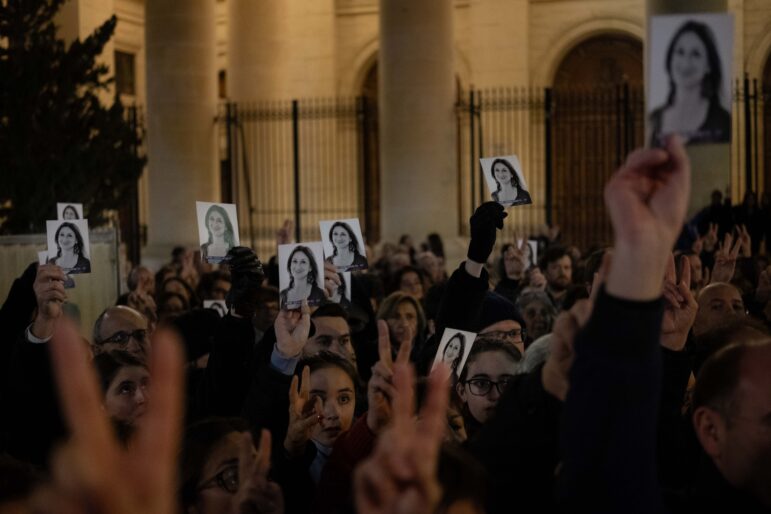
Nine years after her assassinaton, the businessman who was charged with conspiring in Daphne Caruana Galizia’s killing has been acquitted after a lengthy trial.
A new form of censorship is emerging globally to silence the work of journalists and activists online, targeting their reporting with impostor accounts and fake copyright complaints.

When RightsCon 2026 in Zambia was abruptly cancelled, the story at its companion World Press Freedom Day conference shifted from panel coverage to a real-time lesson in access and government power.
The African Centre for Media Excellence fills a critical gap between journalism schools and newsrooms, but earlier this year Ugandan authorities ordered it to shut down and it’s now fighting for its survival.

Norway, Denmark, Sweden, and Finland frequently feature in the top ten of the world press freedom rankings. We spoke to investigative reporters in each country to find out why.

In its 25th edition, the Reporters Without Borders assessment notes a “widespread decline” in the global state of media freedom — but notes a few encouraging signs of optimism.
Journalists and editors from this Balkan nation warn that if the recently passed law survives a legal challenge, it would stifle independent reporting.

GIJN offers a snapshot of how watchdog reporters are confronting algorithmic abuses and misinformation while also employing AI as a key newsroom tool.
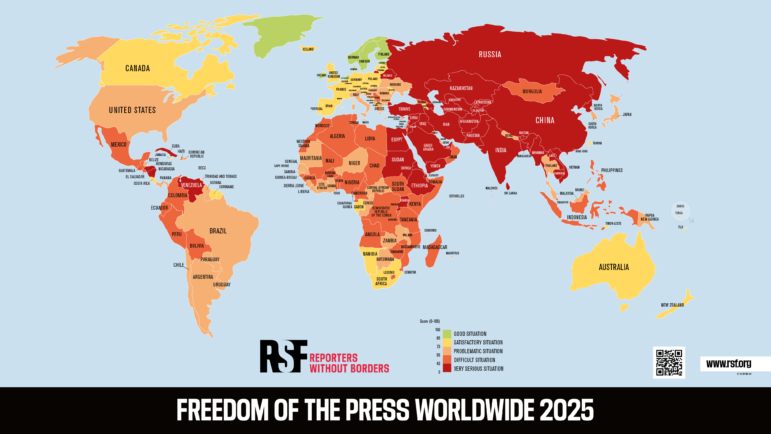
As reporters mark World Press Freedom Day, RSF’s 2025 annual ranking reveals press freedom around the world has fallen to a new, unprecedented low.
Newsrooms across Africa have established formal, right-to-information help desks that leverage government document requests for public accountability and watchdog reporting.

A bill currently being proposed in the South American country’s legislature would have a chilling effect, and make in-depth exposés of the powerful virtually impossible.

In El Salvador, the government has increasingly failed to honor public access to Information laws, forcing journalists to obtain data through other channels to hold power to account.

At Trust Conference 2024, a panel of experts discussed the growing risks to lawyers who defend watchdog reporters, and what this could mean for the future of our democracies.

The founder of IStories talks about moving his entire newsroom abroad for security reasons and the challenges of reporting on Putin’s regime from outside the country.

The exiled Nicaraguan journalist and editor Carlos F. Chamorro explains the critical need to promote and support journalists who are forced to leave their homelands because of their reporting.

Brazilian investigative journalist Juliana Dal Piva faced personal and professional ramifications for investigating the powerful.

“Our priority was to reveal what the government was trying to hide,” says Zyma Islam about the work of her team in the weeks that changed her country.

Investigative journalism in Ethiopia — Africa’s second most populous country — currently faces a series of severe challenges.

Polish journalist Patrycja Maciejewicz on how SLAPPs have been used Poland, Serbia, Croatia, Slovenia, and Bosnia & Herzegovina — and how to combat them.

The Mexican filmmaker Santiago Maza has a new documentary called “State of Silence,” which explores the perilous situation facing investigative journalists in his home country.

A proposed “foreign agents” bill in Georgia is viewed by many journalists in the country as part of a coordinated campaign to suppress investigative and independent media.

Reporters Without Borders (RSF) warns that state oppression and political pressure are increasingly threatening journalism around the globe in its 2024 World Press Freedom Index.

Anti-corruption campaigner Alexey Navalny proved that anyone, after investigative training and practice, can expose rights abuse at the highest levels of government.
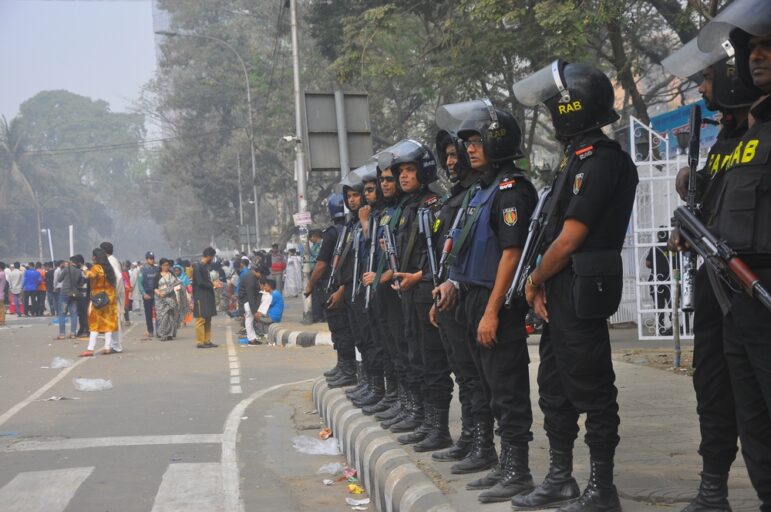
Netra News Editor-in-Chief Tasneem Khalil speaks about his experience as a journalist working from exile.
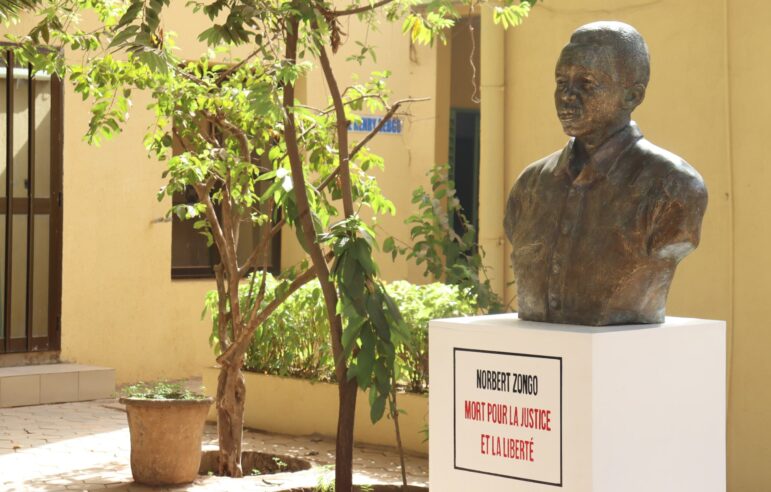
GIJN member The Norbert Zongo Cell for Investigative Journalism in West Africa (CENOZO) strives to promote journalism in the public interest.
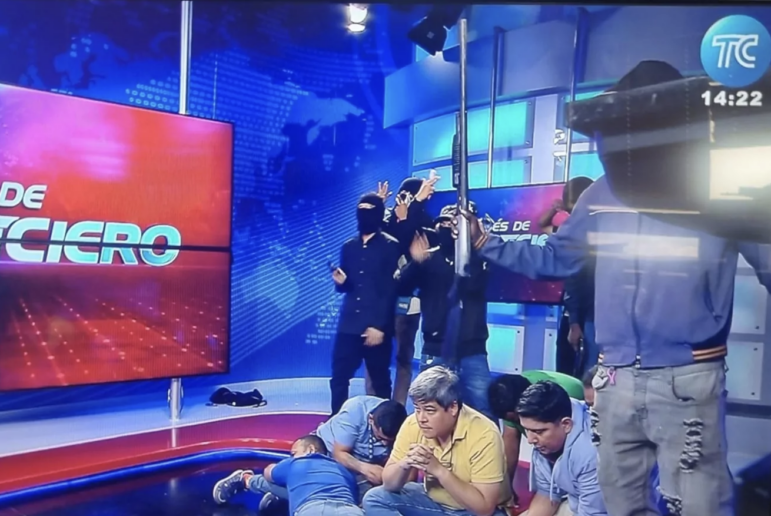
The investigative reporter Paúl Mena Mena speaks about the worsening security crisis in Ecuador.