

Resource Video
GIJC23 – Developing a Business Strategy (Part 1)
What revenue options are currently the most viable for investigative journalism and why, and how do we develop methods that will lead to increased revenue?
What revenue options are currently the most viable for investigative journalism and why, and how do we develop methods that will lead to increased revenue?
There are numerous investigative topics to explore between the farmer’s field and the grocery store – and, indeed, the plate – and several recent projects have exposed abuses in the production, distribution, and access to food. This expert panel offers deep experience in issues from fisheries and pesticides to food security and biodiversity — with journalists based in Tunisia, the UK, the US, and Southeast Asia.
We are in the midst of a decade-long global backlash against democracy and human rights. A new extremism has taken hold, characterized by radical right-wing groups and ultranationalist political movements. These groups are not only growing but are becoming more organized. International ties among them are also growing — digitally, ideologically, financially — but their networks are poorly understood and investigative journalism in this area is lacking.

Online harassment of investigative journalists who identify as women has reached crisis proportions.

One of the great spin-offs of the digital age is that journalists can tap into crowds and communities in ways unimaginable only a few years ago.

Local communities are reporting impactful stories, providing tips and resources, and bolstering the finances of watchdog media around the world.
This hands-on class will deepen your reporting skills by using QGIS, a free, popular mapping program.

Hands-on tips for scaling your sports investigations from three award-winning journalists who have covered doping, sexual abuse, sportswashing, and more.

The current regime in Moscow has driven out or silenced the country’s independent journalists, but many remain in the fight, operating from exile.

Governments and corporations worldwide are quietly deploying AI technologies that can discriminate and harm the most vulnerable members of society.
If there was just one panel to attend at GIJC23, this might be it. We’re witnessing a global assault on democratic institutions and a sustained global decline in democracies.
The best historians and investigative journalists share a great deal: they go after primary sources, they follow the trails of money and accountability, and they put events in a broader context that the public can understand. Often those events look shockingly different just 20 or 30 years later, based on documents, data, and interviews.

Following Ron Deibert’s keynote, we have an all-star panel of journalists on the front lines of the digital war being waged against watchdog media.

Hear how early experiments by InterNation, CIR, GIJN, PCIJ, FarmSubsidy, and ICIJ laid the groundwork for the modern age of global muckraking.

The rise of AI-powered chatbots has prompted hot debates about whether these technologies will reshape or unmake our world.

Journalists are facing a worldwide legal assault from a growing arsenal of abused laws, from national security and emergency edicts to libel and privacy statutes. Harassment lawsuits, while always a threat, have mushroomed in use by the rich and powerful to silence watchdog reporting. SLAPP suits (“strategic lawsuits against public participation”), are one variant and […]
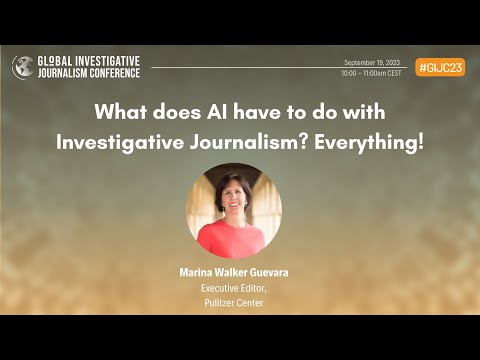
If we follow the headlines, AI is either going to kill us all or solve all our problems. Meanwhile, in the real world, algorithms deployed in hospitals, schools, courts, and even refugee camps are creating new forms of discrimination and exclusion among the most vulnerable citizens. Actual, life-changing harm, not doomsday futuristic scenarios. In this […]

The impacts of climate change everywhere. But how to do in-depth reporting on the widespread human costs — both immediate and longer-term? Speakers from Asia, Africa, and Europe will discuss how to cover topics such as sea level rise, heat, drought, and extreme weather with an eye to the impact on humanity and the environment. […]
This workshop might just emerge as the one that changes your life as a watchdog journalist. Misinformation and disinformation on “closed” social media networks — such as WhatsApp and Telegram – have already had devastating consequences for democratic processes in places like India, Nigeria, Russia, and Brazil.

In the fast-evolving landscape of investigative journalism, knowledge of the latest tools and cutting edge techniques can help newsrooms and reporters stay ahead of the curve and tell impactful stories.

Think there’s no data in your story? Create your own. Journalists can use polls, physical surveys, documents, or even monitoring devices to create their own data. We’ll give you examples of how these techniques are used and some best practices for doing it yourself. ———————– The Global Investigative Journalism Network is an international association of […]
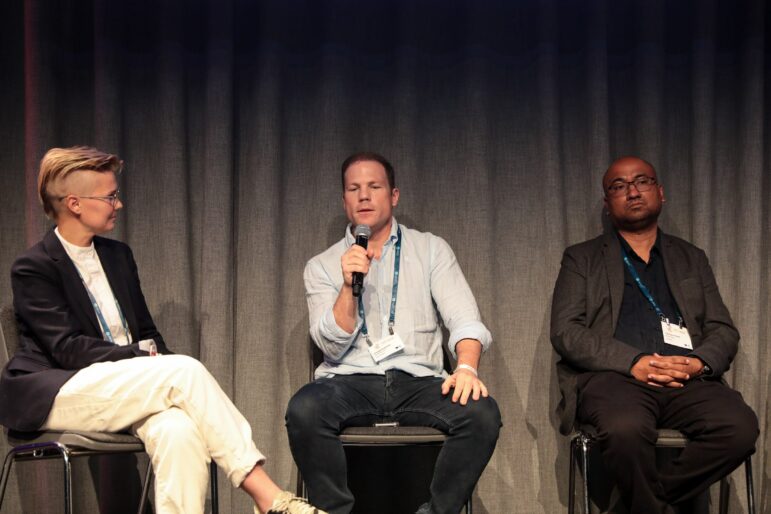
Autocratic regimes and threats to press freedom have forced independent journalists and newsrooms into exile with alarming frequency in recent years. Founders and editors from three newsrooms in exile from Bangladesh, Russia, and Venezuela shared their tactics for survival.

Finding victim-survivors to talk about human trafficking is difficult. Three journalists at GIJC23, who cover human trafficking and irregular migration, shared tips on how to find and protect sources.

Tracking ships and planes is essential for investigative journalists covering a wide range of stories around the world, from smuggling to sanctions evasion to environmental crimes.

Hear from some of the world’s most imaginative climate change journalists. Mongabay’s Rhett Ayers Butler presides over a newsroom producing a constant stream of articles on climate change worldwide. Elisângela Mendonça recently has connected the production of the anti-aging cure collagen with deforestation in Brazil. Emilio Godoy’s multi-faceted portfolio includes investigations of gas leaks and […]

This session will address how to convert unstructured data (documents) into structured data that can be filtered, summarized, and visualized.
This session will provide an overview of social network analysis, which is used to visualize and analyze such things as the connections between companies and individuals in organized crime and money laundering, the paths and progress of infections in pandemics, interlocking directorships of corporations, and the structure of terrorist organizations.
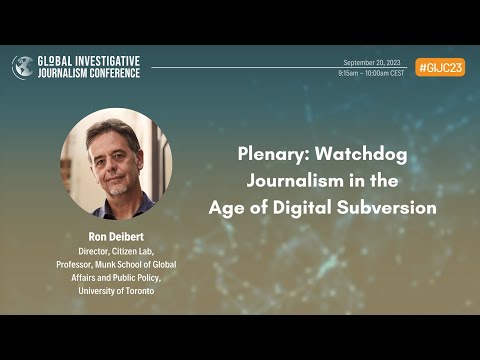
Our keynote speaker this year is Ron Deibert, director of the groundbreaking Citizen Lab at the University of Toronto. Deibert was among the first to sound the alarm about a global information security crisis — warning that the digital revolution would spark a new era of surveillance, censorship, and disinformation. Deibert’s interdisciplinary team at Citizen […]