

News & Analysis
Tips for Handling the Mental Load of International Watchdog Reporting
Most reporters still rely on individual coping strategies, leaving them to face systemic challenges alone, says writer and researcher Belle de Jong.
Most reporters still rely on individual coping strategies, leaving them to face systemic challenges alone, says writer and researcher Belle de Jong.

A cross-border investigation into Russia’s use of drones in Ukraine includes how drones are assembled despite sanctions, and cooperation with Tehran to produce UAVs on Russian soil.

A panel of journalists shared methods, tools, and security protocols with reporters from across the globe who want to track organized crime’s finances and operations.

Lighthouse Reports journalists share how their cross-border collaboration investigated the deaths of 40 people in a fire at a migrant detention center.

At a Dataharvest 2024 panel, three well-established investigative reporters spoke about their past mistakes, failures, and other errors that almost cost them a story.
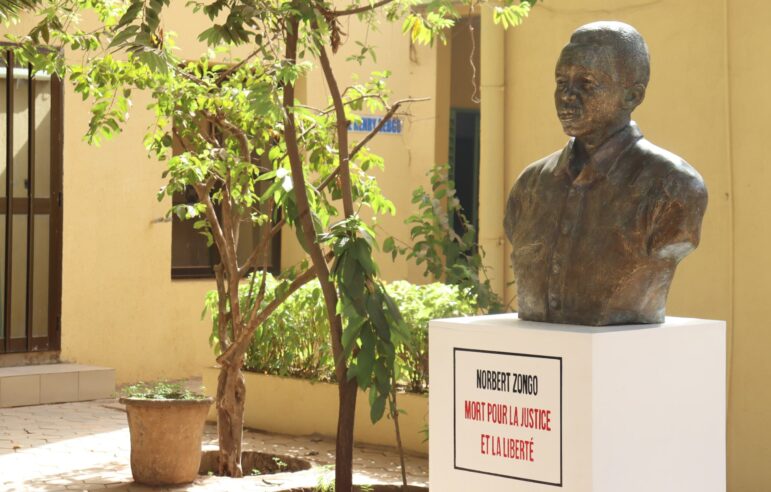
GIJN member The Norbert Zongo Cell for Investigative Journalism in West Africa (CENOZO) strives to promote journalism in the public interest.
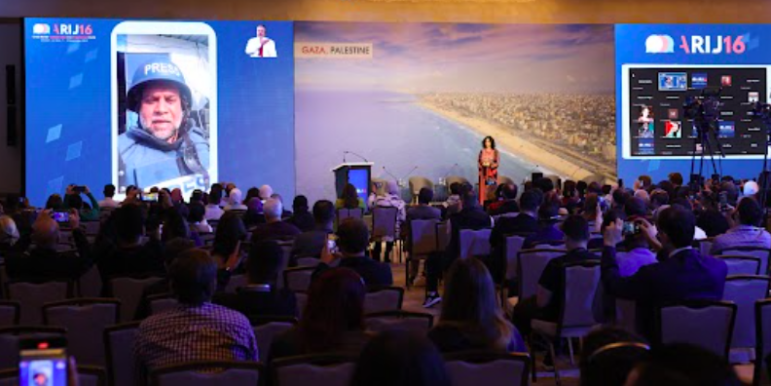
ARIJ’s 16th annual forum in Amman, Jordan highlighted “cross-border collaboration in a fragmented world” and recognized numerous regional stories with awards.
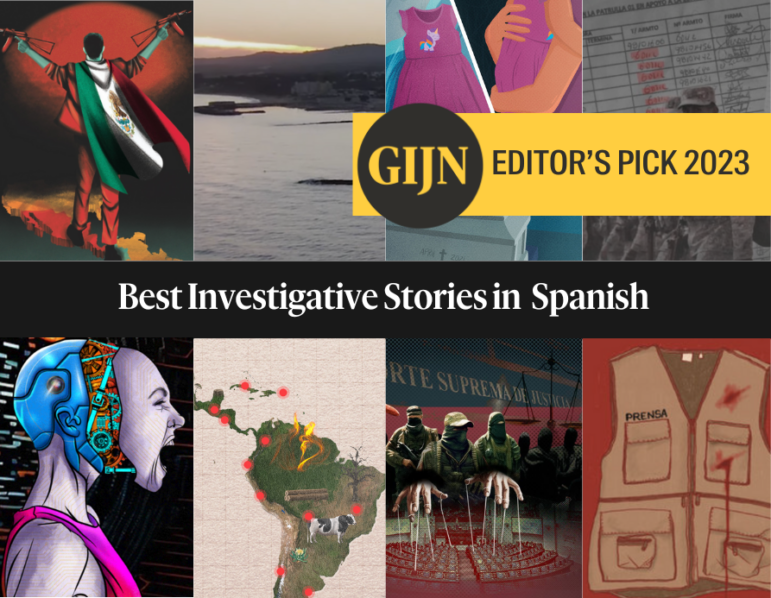
This year’s round-up of the top investigative stories in Spanish explores a wide range, from deforestation in the Mexican Caribbean to drug trafficking on Spain’s Costa del Sol.
The global boom in audio streaming offers an opportunity for investigative journalists to reach wider audiences by developing multilingual translations of their podcasts.

As GIJC23 wraps up in Gothenburg, Sweden, it’s clear that investigative journalism has grown stronger and more intelligent, and reporters have become more collaborative and united than ever before.
In 2001 GIJN was born, as investigative journalists from around the globe met for the very first time to share ideas, tips, and best practices to strengthen their reporting in a world where journalism was increasingly under threat.
Today the threat has multiplied, and at GIJN we find ourselves under the same pressures as our member organizations. Most urgently: available funding for investigative journalism has been impacted as some longtime funders who supported journalism in the past are no longer doing so or have closed. Yet our work continues, more important than ever before.
GIJN serves as the global hub for the world’s investigative reporters. Our core mission is to support and strengthen investigative journalism—with special attention to those from repressive regimes and marginalized communities.
We are embarking on our first-ever campaign initiative to help us expand our revenue by the end of the year through individual donors. If you have ever joined one of our free webinars, used one of our free resources, learned a new skill thanks to a GIJN training, or simply believe that press freedom is essential to civil society, we ask you to show your support for GIJN’s work with a donation of your choosing. Called “Friends of GIJN,” this campaign includes a more personalized experience, starting in 2027, for individuals who answer the call to join with us during this unprecedented time.
Truth and democracy are under attack around the world. You can fight back by helping GIJN support investigative journalists with free access to the latest tools and techniques — so they can foster justice and hold accountable those who abuse the public trust.
With a staff based in 24 countries, GIJN works in a dozen languages each day, linking together the world’s most enterprising journalists, offering state-of-the-art training, webinars, tip sheets, and a Help Desk that responds to 2,000+ requests for assistance each year. More than 84% of GIJN’s operating budget goes directly to our program work.
Please make a gift today to support journalists on the front lines of the fight for accountability and human rights.