

Resource Video
Investigating Elections: Threat from AI Audio Deepfakes
In this GIJN Webinar, three experts share tips, tools, and resources to identify, investigate, and verify potential deepfakes.
In this GIJN Webinar, three experts share tips, tools, and resources to identify, investigate, and verify potential deepfakes.
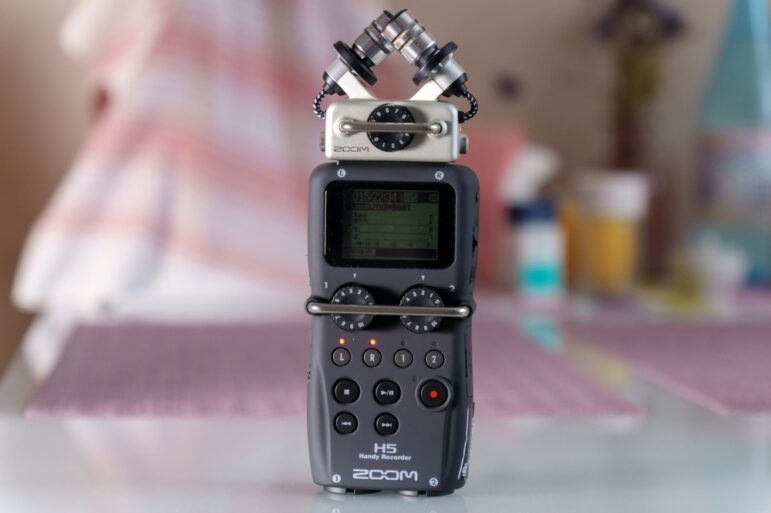
At the International Journalism Festival in Perugia, veteran journalists from Africa and the Middle East discussed the power and intimacy of audio and podcast reporting and how it can enable reporters to better access hard-to-cover stories.

There are different tools reporters can use to make video and audio files searchable, they should be an essential part of any investigative journalist’s toolkit.

In a GIJC21 session on investigative podcasts, journalists and producers who have created award-winning podcasts shared ideas on how to leverage this audio storytelling technique to better connect with the audience and tell impactful stories.

An alliance of regional radio stations, backed by the Peruvian investigative network OjoPúblico, has begun an unprecedented effort to fight disinformation in Indigenous languages for people living in the Andean and Amazonian regions. To date, hundreds of explanatory pieces about COVID-19 have been created in five Indigenous languages and broadcast by 15 radio stations in eight different regions.

What’s the global data journalism community tweeting about this week? Our NodeXL #ddj mapping from February 4 to 10 finds exciting releases with a document analysis tool by @ICIJorg and an audio-driven visualization tool by @f_l_o_u_r_i_s_h, while @kloopnews highlights domestic labour imbalance in Kyrgyzstan and @davidottewell emphasizes that data journalism is not just for nerds in a corner.

Since the launch of Serial in 2014, podcast popularity has soared. And an increasing number of investigative journalists have begun aiming for ears as well as eyeballs. At the Uncovering Asia 2018 conference in Seoul, sound experts shared their recommendations on must-hear investigative storytelling.

So you’ve got the interview and are ready to transcribe. Whether you’re looking to transcribe yourself, want to try out the latest transcription app, need an automated service or a freelancer to help you out, here’s an overview of 28 tools that can help you efficiently turn audio into text.

In his second column, Ivo Burum has some tips on location sound recording, including suggestions on mic types and a basic checklist to make sure you’re getting it right while working solo.

Engaging and interactive journalism is still possible even without an extensive knowledge of coding. But how? We’ve taken the guesswork out, scouring the internet to find the most accessible tools to create multimedia content.
In 2001 GIJN was born, as investigative journalists from around the globe met for the very first time to share ideas, tips, and best practices to strengthen their reporting in a world where journalism was increasingly under threat.
Today the threat has multiplied, and at GIJN we find ourselves under the same pressures as our member organizations. Most urgently: available funding for investigative journalism has been impacted as some longtime funders who supported journalism in the past are no longer doing so or have closed. Yet our work continues, more important than ever before.
GIJN serves as the global hub for the world’s investigative reporters. Our core mission is to support and strengthen investigative journalism—with special attention to those from repressive regimes and marginalized communities.
We are embarking on our first-ever campaign initiative to help us expand our revenue by the end of the year through individual donors. If you have ever joined one of our free webinars, used one of our free resources, learned a new skill thanks to a GIJN training, or simply believe that press freedom is essential to civil society, we ask you to show your support for GIJN’s work with a donation of your choosing. Called “Friends of GIJN,” this campaign includes a more personalized experience, starting in 2027, for individuals who answer the call to join with us during this unprecedented time.
Truth and democracy are under attack around the world. You can fight back by helping GIJN support investigative journalists with free access to the latest tools and techniques — so they can foster justice and hold accountable those who abuse the public trust.
With a staff based in 24 countries, GIJN works in a dozen languages each day, linking together the world’s most enterprising journalists, offering state-of-the-art training, webinars, tip sheets, and a Help Desk that responds to 2,000+ requests for assistance each year. More than 84% of GIJN’s operating budget goes directly to our program work.
Please make a gift today to support journalists on the front lines of the fight for accountability and human rights.