

Image: Shutterstock
Reporter’s Notebook: How to Track Down People Who Don’t Want to Be Found
Read this article in
GIJN Workshop: Search Tips for LinkedIn – How to Track People and Companies on the World’s Top Professional Network
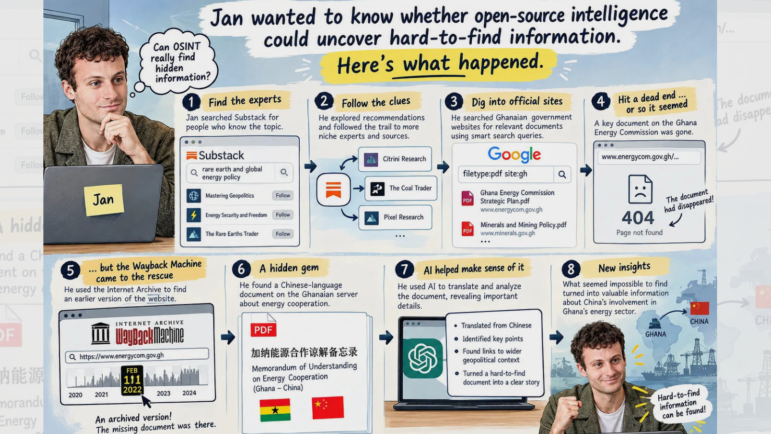
International Research Guide: How to Find Experts and Hidden Documents on Any Topic

Guide to Investigating Tech and AI in Modern Warfare
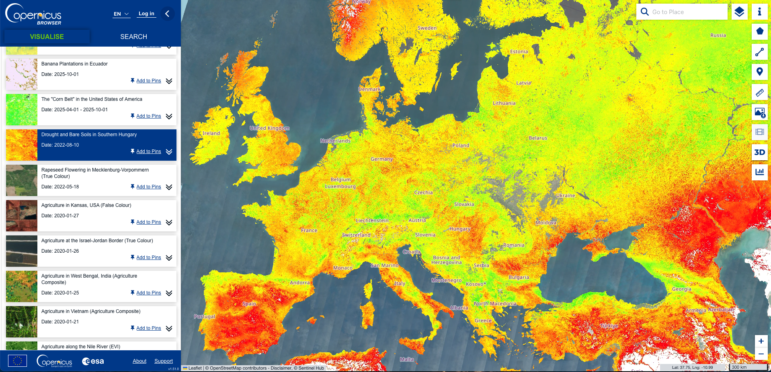
Turning Copernicus Satellite Data Into Public-Interest Climate Stories
Whether digging into a corrupt official or trying to unmask the owner of a shady shell company, investigating a person often starts with just a handful of clues.
You may have an old phone number, a name, or a face in the background of a social media post. Taking those scattered breadcrumbs and building them into a full dossier on an individual takes a systematic approach, and is all part of a day’s work for the investigative researchers at OCCRP who support journalists across the network.
This playbook lays out the basic methods, databases, and digital tricks our team uses to track down people who don’t want to be found. No matter what kind of story you’re digging into, these steps will help you safely and effectively build a profile of whoever you’re looking for.
Before You Begin: Basic Security
Before diving into a digital people-search, a word of warning: setting up basic security measures is essential to protect yourself.
To avoid alerting a person of interest that someone is sniffing around, never investigate subjects using your personal accounts. Instead, create dedicated, believable social media accounts designed specifically for your work. Just as importantly, always route your connection through a virtual private network (VPN) to encrypt your activity and mask your physical location.
Most major social media platforms now use automated algorithms to weed out obvious fakes. This proves especially challenging on platforms like LinkedIn. To get around this, you want to make sure your fake account has a persona and is active on the platform. If your persona is, for example, named “Sam Wood,” then create an email account with the same name. Choose a profession or hobbies and post about these from time to time, like a real person would.
If you decide to ignore this advice and browse privately from your own social media, the algorithm may still suggest your private account as a connection to the very person you are investigating. For instance, if you are investigating someone named Hannah Smith and spend hours on her profile, Facebook or LinkedIn might then suggest your account to Hannah Smith, thinking you’re probably friends.
Accidentally liking a 10-year-old photo on your ex-partner’s Facebook page is embarrassing. But making that same slip-up on a criminal’s profile could be downright dangerous.
Archiving
The moment bad actors sense an investigation, their first instinct is often to pull everything down and scrub their digital footprint. To prevent losing precious material, be disciplined about archiving what you find.
We recommend adding a full-page screen capture extension on your browser so you can quickly and easily get screenshots of the pages you’re browsing.
Make sure the date is visible in your screen captures, and also save the URL link so that you can revisit it later, if still available. You can also use the Wayback Machine to create a copy of a webpage that will be accessible even if the original link is later taken down. Just keep in mind that the page will then be available to others too.

Wayback machine can be used to archive websites. Image: Screenshot, Internet Archive
The tools to save social media content change regularly so it’s important to keep up to date. For example, Fdown.net currently helps download Facebook videos and Story Saver downloads public Instagram stories, highlights, and videos.
One of our colleagues once looked into the wife of a businessman associated with the Prince Group — a massive Cambodian conglomerate sanctioned by the US for running industrial-scale cyber-scam operations. Three years later, everything had been deleted from her social media. Luckily, our colleague had taken screenshots of everything and saved them somewhere easily retrievable, preserving the evidence.
Starting Broad
A basic but necessary first step is to begin with a broad search. You don’t want to spend weeks looking into something, only to realize another journalist already found the answer and wrote about it.
We usually cast a wide net by searching the person’s name or other known identifier on Google. You can make this more efficient by using advanced search operators — such as quotation marks for exact names (“Mark Doe”) or the minus sign to exclude irrelevant information.
These days, we also cautiously use AI to see what it already knows about a person, all while paying close attention to the sources. Structure your prompts to require cited links, and never upload sensitive data to AI or trust AI summaries without verifying them against the original source.
We also use databases that contain decades of archived press clippings — such as LexisNexis and Dow Jones Factiva — to check for any old mentions of arrests or court appearances in the media. Even without these, it’s a good idea to get into the habit of checking news archives or press clippings for any mentions of the person you’re looking into. Having a precise idea of what’s already out there will give you a solid grounding before narrowing down your search for more exciting or hidden findings.
Asking The Right Questions
It’s easy to get stuck in rabbit holes when you start digging online, so it’s important to make sure you get stuck in the right one. After your initial broad review, narrow your search by asking the right questions.
Setting a broad objective — like simply trying to “find everything on Vladimir Popov” — can lead to information overload. A targeted approach is far more effective. Framing specific questions — such as, “Is Vladimir Popov related to Official X?” or “What are his financial ties to Company Y?” — keeps the investigation focused, allows for deeper analysis, and helps uncover the exact evidence needed to anchor a story.
Names and Numbers
Personal identifiers — i.e. unique personal data points — help us distinguish one individual from millions of others who might, for instance, have the same name.
While direct identifiers like passport numbers, national IDs, or biometric data provide definitive proof, they are often out of reach or legally protected. Instead, the golden identifiers of open source journalism include dates of birth, email addresses, phone numbers, and social media usernames. When put together with employment histories or known family ties, these seemingly minor details help confirm you’re looking at the right person.
Be aware that names themselves can be a digital minefield. Transliteration is a critical factor to watch out for; when a name moves from one alphabet to another — such as from Arabic or Cyrillic to Latin — spelling variations multiply rapidly. The Arabic name Mohammed, for instance, can easily be rendered as Muhammad, Mhamad, or a dozen other ways, depending on the region and the person transcribing it.
Beyond spelling, it’s also important to understand cultural naming structures. A traditional Arabic name typically follows a strict three-part order: first name, father’s first name, and family name. Hispanic surnames, meanwhile, typically combine the father’s and mother’s family names in succession. Paying close attention to these structural nuances does more than just ensure accurate search queries — it can also provide key clues that unlock a subject’s lineage and family background.
Finding Official Records
Official records are gold for investigative journalists. A good first place to start is by running a subject’s name through their country’s commercial, land, plane, and ship registries to see if any assets are linked to them.
Yet when dealing with countries that keep these registries closed to the public, you will need to get creative. That may mean checking if the person has any footprint abroad, and if their name pops up in jurisdictions with higher transparency requirements or where public court filings force corporate ownership into the open.
For example, if you are looking into a man called José Fernandez from Venezuela, a country where the company registry is not open to the public, you might find him in a court case in the United States where available documents mention Jose’s Venezuelan companies.
Other official records include governmental archives and public licenses. Some governments’ official gazettes, for example, publish information about companies, including their shareholders. You might also find out information about José through DomainTools by looking up a website you think he created.

OCCRP’s Research & Data team maintains a catalogue of research resources with links to databases around the world. Image: Screenshot, OCCRP
As a starting point, OCCRP’s Research & Data team has put together a catalogue of research resources which we try to keep up to date with interesting links to databases around the world. Another favorite is a list of company registries in the European Union.
Third-Party Databases
When you aren’t sure where to find official documents — or if they are unavailable — third-party databases can provide valuable leads and cut down your research time. These include OpenCorporates to find company shareholders, Equasis to find ship owners, or FlightRadar24 for jet owners. Just remember that they can make mistakes, so you still need to verify the information using official sources.

OpenCorporates is a third-party database that can be used to find company shareholders. Image: Screenshot, Open Corporates
Our team also invests in a number of powerful third-party databases such as Sayari, Moody’s Orbis, and Offshore Alerts. Depending on the tool, these platforms aggregate global corporate ownership structures, international litigation dockets, or financial intelligence. We also run people’s names or their companies through leaks which can be found on ICIJ’s database of leaks or OCCRP’s AlephPro.
Social Media and the ‘Weakest Link’
Trawling through social media accounts is another way to find important evidence — provided you have the patience to sift through hundreds of photos, posts, and comments. Going through lists of their “friends” on these networks can also help map out a subject’s wider network.
Demographic trends will help guide you to which platforms your person of interest is most likely to use. For example, Western baby boomers are often active on Facebook, while Eastern European millennials frequently use VK.
Even with the most stringent privacy settings, it is possible to uncover information by looking for the “weakest link.” For instance, while your subject may have a private Facebook account, their mother may post public photos every day that provide valuable information.
In one example, our Africa researcher spent weeks trawling Instagram to track down a scammer who pretended to be a Dubai Prince to swindle a woman out of millions. It was the scammer’s wife who posted a photo of their villa and gave away clues about their location.
Finally, maximize the images you gather by running them through reverse image search tools like PimEyes to discover other places they might appear across the web. You would be surprised how often photographers post full wedding albums online, allowing you to easily identify key family members.
The World of ‘People Search’ Tools
There are an increasing number of OSINT databases that collect and organize publicly available or leaked data from the internet, such as information from social media, public records, and contact lists.
The latter — which shows you how people have saved a certain number in their phones — can be surprisingly helpful.
This is particularly useful when someone has a common name. People in the Middle East might have dozens of Ahmeds saved in their phone, and so they naturally add more information, such as “Ahmed from ABC company.” If you are investigating an Ahmed that is linked to a company called ABC, that gives you a hint that this number might be linked to the Ahmed you are looking for. We have seen many examples such as “Joe the electrician,” “Milos the Serb,” or “Ali the board member” — all of which are useful hints.
It’s important to keep in mind that these tools don’t verify ownership of a phone number or email address. Instead, they give you potential clues by showing how that data has appeared online and what names or locations it has been associated with. These findings should be treated as leads, not as conclusive proof of identity.

OSINT.Industries is one of several databases that collect and organize publicly available or leaked data from the internet. Image: Screenshot, OSINT.industries
OCCRP’s Research & Data team relies heavily on OSINT.Industries and Darkside by District4Labs for gathering such leads. The former checks identifiers against hundreds of websites to instantly map a target’s public digital footprint, while the latter cross-references that data against billions of leaked dark-web records. Together, they are essential for taking a single email or phone number and using it to find hidden aliases or linked accounts.
By just inserting an email in one of these databases, you might see what restaurants a notorious Google Maps reviewer likes, what type of books a Goodreads user reads, and what language a Duolingo student is learning. However, because these tools surface such a vast amount of sensitive, highly personal information, it is our responsibility as journalists to be rigorously discerning about how and when we use this data in our reporting.
Digging Is an Art
Digital sleuthing is as much an art as it is a science. While this playbook equips you with the necessary databases, archiving websites, and security protocols, your most valuable tools remain your curiosity and instinct. Finding the missing piece of a puzzle often requires creative thinking, knowing when to pivot from a dead-end registry, and reading between the lines of a leaked contact list. Trust your gut when a lead feels promising, stay disciplined in your verification, and follow the digital breadcrumbs wherever they may lead. Happy digging!
Editor’s Note: This story was originally published by OCCRP and is reposted here with permission.
 Shaya Laughlin is OCCRP’s research director, co-leading the research and data team. She joined the organization in 2023 as a researcher for the Middle East and North Africa region. Prior to that, she specialized in leading humanitarian research projects in conflict and post-war contexts. Shaya began her journalism career in 2013 as a reporter for News Corp Australia. She speaks English, French, and Arabic.
GIJN Workshop: Search Tips for LinkedIn – How to Track People and Companies on the World’s Top Professional Network
International Research Guide: How to Find Experts and Hidden Documents on Any Topic
Guide to Investigating Tech and AI in Modern Warfare
Turning Copernicus Satellite Data Into Public-Interest Climate Stories

This work is licensed under a Creative Commons Attribution-NoDerivatives 4.0 International License
Republish our articles for free, online or in print, under a Creative Commons license.
Republish this article
This work is licensed under a Creative Commons Attribution-NoDerivatives 4.0 International License
Read Next
Getting Started in Investigative Journalism Methodology
Tips For Backgrounding Unknown Subjects in Time-Critical Situations
Investigative projects are often likened to marathons. But, every now and then, watchdog reporters need to sprint. In a recent IRE23 conference session, experts shared tips on how to unearth background facts about little-known people on short notice.

Investigative Techniques Reporting Tools & Tips
Tips for Using ChatGPT as a Quick Search Tool in Investigations
At IRE24, investigative reporter Jeremy Jojola shared his practical advice on how to use ChatGPT for contact searches and quick document analysis.
Methodology Reporting Tools & Tips
What’s in a Name? Investigating People Across Borders
It’s increasingly common for criminals to operate across borders. So investigative reporters also need to know how to identify and investigate people whose names use different alphabets, are formed by unfamiliar conventions, or carry unexpected cultural signals. Read these tips from the OCCRP on best practices for investigating names from outside the English-speaking world.

GIJC27
Submissions Now Open for GIJC27 Global Shining Light Awards
This award, sponsored by GIJN, honors investigative journalism in a developing or transitioning country, done under threat, duress, or in the direst of conditions. Deadline to apply is February 28, 2027.