
GIJN Masterclass Round-Up: Key Investigative Topics
GIJN’s Global Academy is your gateway to investigative journalism training. Through masterclass videos, training programs (in person or online), webinars, or mentorship programs, the Academy helps journalists at every stage strengthen their investigative skills, connect with peers, and continue learning. In this post, we’ve gathered some of our recent expert masterclass videos covering a wide range of critical investigative topics, from food insecurity to exposing corruption to leak-based exposés.
Tips and Tools for Reporting on Food Insecurity
In this masterclass video, Thin Lei Win, lead reporter at Lighthouse Reports, shares four key lessons for investigating hunger and the global food system.
She explains how to define food insecurity beyond availability, including access, use, and stability, and how to find and verify reliable data through sources like FAOSTAT and the World Resources Institute. Thin also urges journalists to map the whole value chain, from farmers to corporations, to expose inequalities, and to center communities and their actions, telling stories with people, not just about them.
Credits:
- Interview: Sarah Ulrich
- Video Editing: Quentin Egloff
- Music: Lionel Marçal
- Filming: Ron Lopez, Reynald Ramirez, Hashim Hakeem
- Supervision and Coordination: Sandrine Rigaud
- Special Thanks: Glenn Chong
- With the support of The Konrad-Adenauer-Stiftung
How to Expose Corruption
In this masterclass video, Miranda Patrucic, editor-in-chief of the Organized Crime and Corruption Reporting Project (OCCRP), shares her knowledge on investigating corruption.
Patrucic gives insights into the process of investigating corrupt systems, organizations, and people by using various resources. She shares advice to empower investigative reporters who follow the money and explains why safety, openness, and a bit of enjoyment are key features when it comes to investigating corruption — and why sometimes, bullet points are the way to go.
Credits:
- Interview: Sarah Ulrich
- Video Editing: Quentin Egloff
- Music: Lionel Marçal
- Filming: Ron Lopez – Reynald Ramirez – Hashim Hakeem
- Supervision and Coordination: Sandrine Rigaud
- Special thanks: Glenn Chong
- With the support of The Konrad-Adenauer-Stiftung
Tips and Tools for Investigating Leaks
In this masterclass video, Frederik Obermaier, co-founder of Paper Trail Media and one of the journalists behind the Panama Papers, shares practical advice on how to investigate leaks.
He explains how journalists can find and work with leaks today, from making themselves visible to whistleblowers to identifying relevant datasets and platforms where leaks are already available. Obermaier highlights key tools such as Aleph and Datashare, and shows how to search, organize, and analyze large volumes of data efficiently.
He also walks through essential steps (from verifying documents and asking the right questions to spotting stories within massive datasets), showing how leak investigations have evolved since the Panama Papers and why the real challenge today is turning data into impactful stories.
Additional resources / tools mentioned in this video:
- OCCRP Aleph: https://aleph.occrp.org/
- OpenAleph: https://search.openaleph.org/
- ICIJ Datashare: https://datashare.icij.org/
- Distributed Denial of Secrets: https://ddosecrets.org/
Credits:
- Interview: Sarah Ulrich
- Video Editing: Quentin Egloff
- Music: Lionel Marçal
- Filming: Ron Lopez, Reynald Ramirez, Hashim Hakeem
- Supervision and Coordination: Sandrine Rigaud
How to Investigate Online Scams
In this masterclass video, Damien Leloup, investigative journalist at Le Monde, gives detailed instructions on how to find and investigate online scams.
Based on his own reporting, Leloup explains what journalists can do to identify an online scam, which platforms they can use, and the best tools to dig deep into the world of online scammers. He also gives important advice on how to investigate ad libraries, how to keep track of and organize your data, and why it is important to reach out to victims of scams to get a full picture of the impact of online scams in your coverage.
Credits:
- Interview: Sandrine Rigaud
- Video Editing: Quentin Egloff
- Filming: Grégoire Lenoir
- Music: Lionel Marçal
Using Archives in Investigative Reporting
In this masterclass video, Tristan Ahtone, editor-at-large at Grist and member of the Kiowa Tribe, shares practical techniques for using historical archives and colonial documents as accountability tools in investigative reporting.
Ahtone explains why historical context is essential when reporting on Indigenous communities, land, and institutions and how to use archival evidence to expose wealth transfer and institutional profit. He walks through key strategies: identifying relevant government records and archives, connecting historical documents with contemporary data, and building sources within institutions that interact with these systems.
Credits:
- Interview: Sarah Ulrich
- Video Editing: Quentin Egloff
- Music: Lionel Marçal
- Filming: Ron Lopez, Reynald Ramirez, Hashim Hakeem
- Supervision and Coordination: Sandrine Rigaud
International Research Guide: How to Find Experts and Hidden Documents on Any Topic

Guide to Investigating Tech and AI in Modern Warfare
Turning Copernicus Satellite Data Into Public-Interest Climate Stories
10 Practical Tips for Verifying Scientific Claims
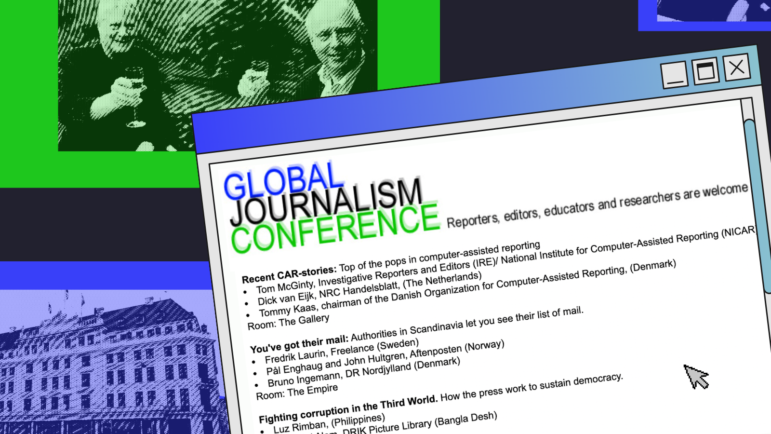
‘Everyone Who Became Leaders of the Global Investigative Journalism Movement was in Copenhagen’: An Oral History Of The First GIJC
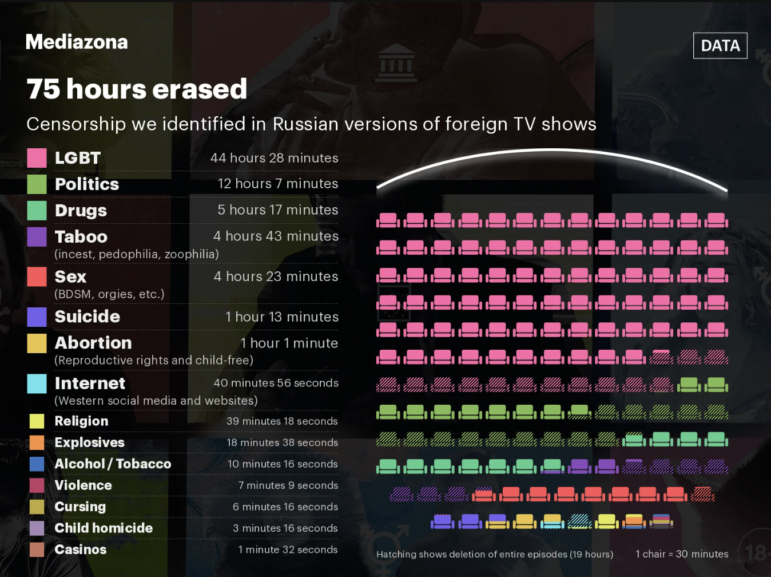
How Russia Censors Foreign TV, Midterm Battle for US Congress, Venezuela’s Collapsed Housing Towers, France’s Education Protests

Submissions Now Open for GIJC27 Global Shining Light Awards

How Gillian Brockell Investigates ICE Removal Flights from US

This work is licensed under a Creative Commons Attribution-NoDerivatives 4.0 International License
Republish our articles for free, online or in print, under a Creative Commons license.
Republish this article
This work is licensed under a Creative Commons Attribution-NoDerivatives 4.0 International License
Read Next
‘Everyone Who Became Leaders of the Global Investigative Journalism Movement was in Copenhagen’: An Oral History Of The First GIJC
The inaugural Global Investigative Journalism Conference 25 years ago came from a radical idea: gather reporters from around the world to share techniques and inspire each other. It changed everything.
Data Journalism Top 10
How Russia Censors Foreign TV, Midterm Battle for US Congress, Venezuela’s Collapsed Housing Towers, France’s Education Protests
Also highlighting police response to demonstrations in India, where European Nobel laureates do their research, and shrinking food budgets in Indonesia.
GIJC27
Submissions Now Open for GIJC27 Global Shining Light Awards
This award, sponsored by GIJN, honors investigative journalism in a developing or transitioning country, done under threat, duress, or in the direst of conditions. Deadline to apply is February 28, 2027.
My Favorite Tools
How Gillian Brockell Investigates ICE Removal Flights from US
Since August 2025, this former Washington Post reporter, now working freelance, has written dozens of stories mapping the Trump administration’s massive, third-country deportation apparatus.