
GIJN Masterclass Round-Up: Key Investigative Topics
In this round-up of recent GIJN Academy masterclasses, we share expert insights across a range of key topics: food insecurity, corruption, leaks, online scams, and historical archives.
In this round-up of recent GIJN Academy masterclasses, we share expert insights across a range of key topics: food insecurity, corruption, leaks, online scams, and historical archives.
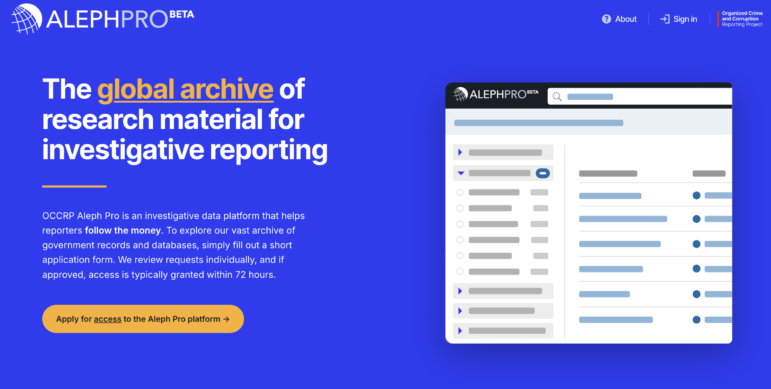
A step-by-step guide to using Aleph Pro, the latest iteration of OCCRP’s data platform, offering access to a massive trove of property and financial documents, as well as other records.

Despite myriad challenges, 2021 saw a number of remarkable investigations by German-language media. They uncovered scandals linked to the COVID-19 pandemic, investigations linked to big money and tax fraud, while others touched on morals and ethics. Other stories that made our list dug into the EU, working conditions at top restaurants, migration, and terrorism.

Across the data science community, knowledge graphs have become a growing phenomenon in recent years, driving many applications including virtual assistants like Siri and Alexa. Friedrich Lindenberg, from the Organized Crime and Corruption Reporting Project, writes about how its data platform Aleph makes use of knowledge graphs to help investigative reporters analyze and cross-reference data.

What’s the global data journalism community tweeting about this week? Our NodeXL #ddj mapping from February 10 to 16 finds The Guardian US analyzing food expenditure on the Democrats’ campaign trail, The Washington Post’s Steven Rich sharing the pains of cleaning spelling permutations in data, The International Consortium of Investigative Journalists explaining the process of handling the massive #LuandaLeaks records, and the Sigma Awards announcing its shortlist.
Throughout history, whistleblowers have played an important role in bringing corruption, fraud, waste, and other improprieties to light worldwide. But journalists face serious challenges in doing this kind of reporting, especially when it involves world leaders and the federal intelligence community.

GIJN asked investigative journalists around the world to look ahead at what’s in store for 2020. Here are the trends, key forces, and challenges they expect will affect investigative and data journalism in the coming year, as well as the new skills and approaches we should be thinking about.
What’s the global data journalism community tweeting about this week? Our NodeXL #ddj mapping from December 2 to 8 finds The New York Times visualizing particle pollution in augmented reality; various media outlets investigating #29Leaks, a global reporting project based on a massive data leak from an offshore services provider; Columbia Journalism Investigations and ProPublica digging into the problem of sexual predators lurking in dating apps; and The International Consortium of Investigative Journalists breaking down the significance of the China Cables.
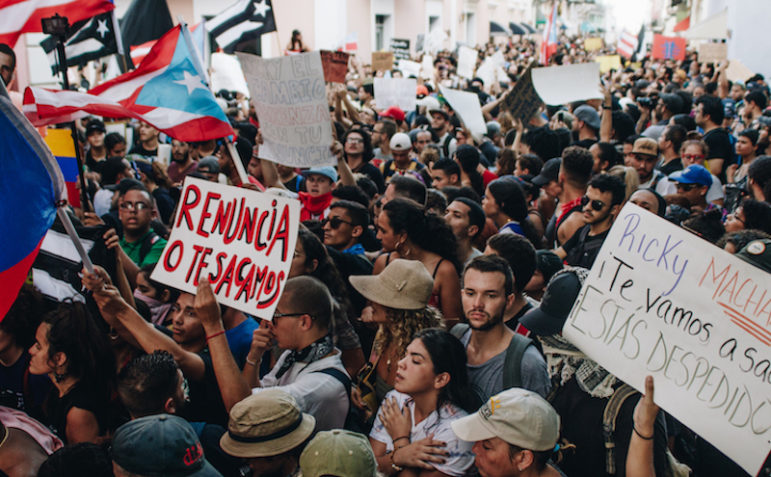
When reporters for Puerto Rico’s Centro de Periodismo Investigativo — its Center for Investigative Journalism — first published hundreds of pages of a leaked Telegram chat involving high-ranking officials, they had no idea this would lead to massive street protests and end in the governor’s resignation. This huge story followed the Center’s award-winning work exposing how the death toll from Hurricane Maria in 2017 was far in excess of what officials admitted. GIJN’s Gaelle Faure spoke to CPI’s executive editor Carla Minet to find out what’s next for her team.

Investigative journalism in this wired world is vastly different from what it used to be. Cobrapost editor Aniruddha Bahal writes about how journalism has changed over time, from postcard complaints to internet trolling, meeting sources in parking lots and using apps and being highly competitive versus collaborative.