

GIJC23
8 Tips for Upping Your Game as Investigative Editor
Great investigative editors make stories stronger, protect and motivate reporters, and make investigations more efficient.
Great investigative editors make stories stronger, protect and motivate reporters, and make investigations more efficient.
Here, Jane Lytvynenko, investigative reporter and an instructor for GIJN’s Digital Threats course, talks about how to start investigating online manipulation.
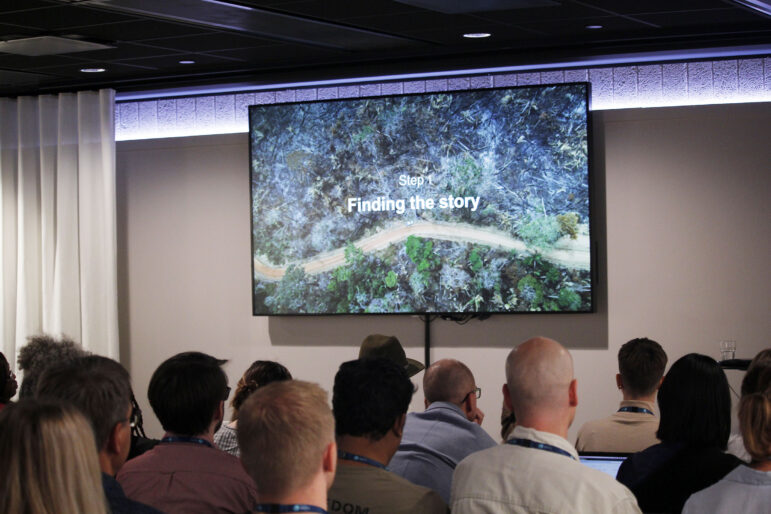
Two reporters whose investigative work has exposed systemic land grabbing and illegal mining in the Amazon share their tips.

Historians have always used archival documents to study what happened years, decades, or even centuries ago. But sometimes journalists are the ones digging into the past and uncovering truths that are big enough to “rewrite history.”

Communities are often considered merely our audience in journalism. But local communities can be engaged to help report impactful stories, provide tips and resources, and even boost the finances of watchdog media around the world.

From cold-pitching to collaborating, and from promoting your work to getting top commissions, being a freelancer brings a whole series of challenges, especially for investigative journalists.
The influence of extremist groups on mainstream politics is on the rise, and journalists need tools to face this threat to healthy democracies.

In this introductory session, you’ll learn how to use Google Sheets to do basic analysis — and leave with the ability to do quick data work for daily stories or longer-term projects.
Have you been curious about working with data but haven’t taken that first step? Here’s a great opportunity — we have three of the best data trainers in the biz who know how to get you started. In this introductory session, you’ll learn how to use Google Sheets to do some basic analysis — and […]

Pinpoint is a powerful tool for converting unstructured data (text and other forms of messy data) into datasets that can be analyzed and used for stories.