

Resource Video
GIJC23 – AI: Perils and Promise
The rise of AI-powered chatbots has prompted hot debates about whether these technologies will reshape or unmake our world.
The rise of AI-powered chatbots has prompted hot debates about whether these technologies will reshape or unmake our world.
If we follow the headlines, AI is either going to kill us all or solve all our problems. Meanwhile, in the real world, algorithms deployed in hospitals, schools, courts, and even refugee camps are creating new forms of discrimination and exclusion among the most vulnerable citizens. Actual, life-changing harm, not doomsday futuristic scenarios. In this […]

Do you have too little time to do investigative stories? Try L-ai-la, the new AI research assistant, trained to find news fit to print. (You may be both lazy & forgetful, but Laila never misses a story.) Is this about GPT4? Generative AI? No, forget about it. We are talking about LHF (the LowHangingFruit AI […]

As GIJC23 wraps up in Gothenburg, Sweden, it’s clear that investigative journalism has grown stronger and more intelligent, and reporters have become more collaborative and united than ever before.
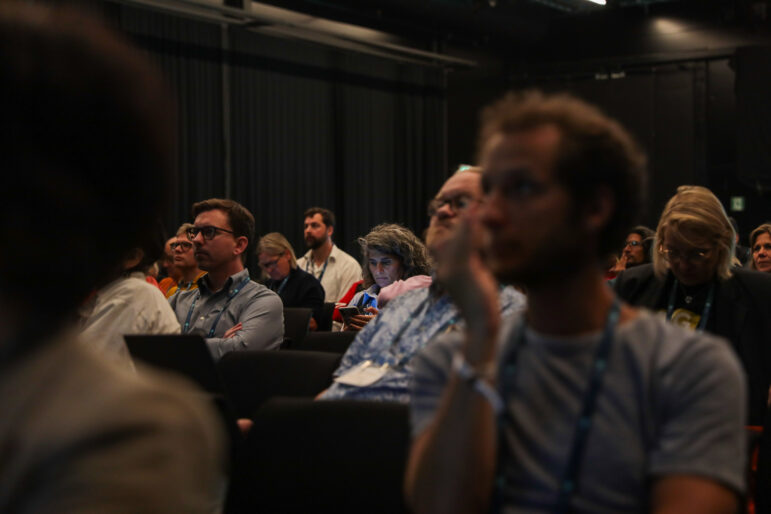
Three veteran journalists shared tips on maximizing the potential and navigating the pitfalls of artificial intelligence and cross-border collaborations.
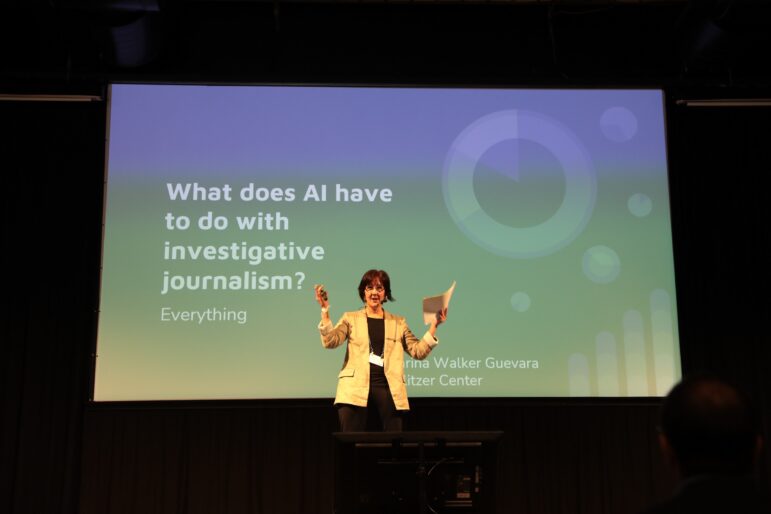
Exploring how the technology can help newsrooms, how investigations have revealed the impact of AI on communities, and how journalists can move beyond narratives of hype or despair.
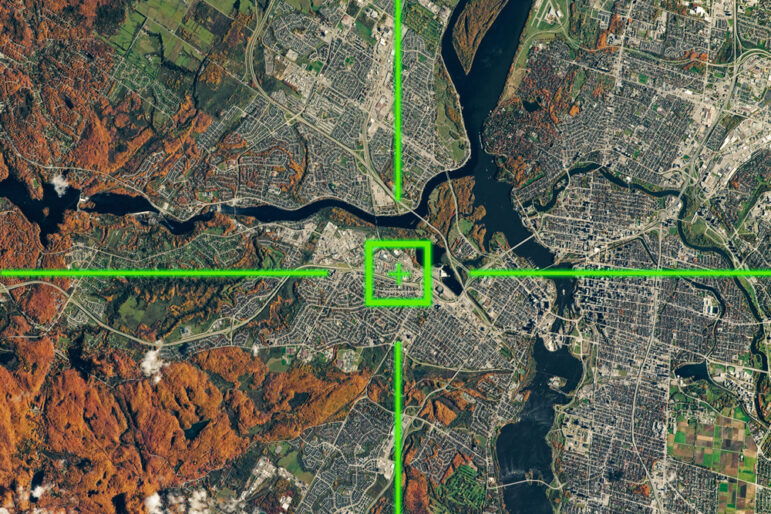
Bellingcat fellow Dennis Kovtun tests the online geolocation capabilities of two popular AI chatbots — Microsoft’s Bing AI and Google’s Bard — and finds both have some serious drawbacks.

In a panel discussion at the IRE23 Conference, experts shared tips on how reporters can identify and investigate algorithmic harm and AI bias, and hold the human masters of these systems accountable.

GIJN associate editor Laura Dixon and GIJN Francophone Africa editor Maxime Domegni round up seven key takeaways from the 2023 Centre for Investigative Journalism’s 2023 summer conference in London.
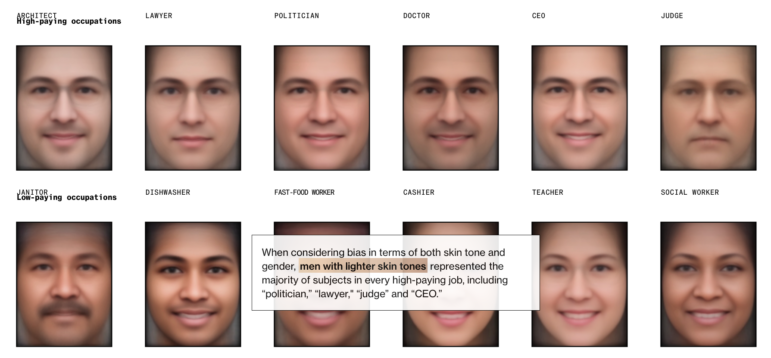
In this week’s Top 10 in Data Journalism, GIJN features a look at racial and gender bias in generative AI, how targeted advertising labels consumers, remote work trends post-pandemic, and the nascent Korean space industry.
In 2001 GIJN was born, as investigative journalists from around the globe met for the very first time to share ideas, tips, and best practices to strengthen their reporting in a world where journalism was increasingly under threat.
Today the threat has multiplied, and at GIJN we find ourselves under the same pressures as our member organizations. Most urgently: available funding for investigative journalism has been impacted as some longtime funders who supported journalism in the past are no longer doing so or have closed. Yet our work continues, more important than ever before.
GIJN serves as the global hub for the world’s investigative reporters. Our core mission is to support and strengthen investigative journalism—with special attention to those from repressive regimes and marginalized communities.
We are embarking on our first-ever campaign initiative to help us expand our revenue by the end of the year through individual donors. If you have ever joined one of our free webinars, used one of our free resources, learned a new skill thanks to a GIJN training, or simply believe that press freedom is essential to civil society, we ask you to show your support for GIJN’s work with a donation of your choosing. Called “Friends of GIJN,” this campaign includes a more personalized experience, starting in 2027, for individuals who answer the call to join with us during this unprecedented time.
Truth and democracy are under attack around the world. You can fight back by helping GIJN support investigative journalists with free access to the latest tools and techniques — so they can foster justice and hold accountable those who abuse the public trust.
With a staff based in 24 countries, GIJN works in a dozen languages each day, linking together the world’s most enterprising journalists, offering state-of-the-art training, webinars, tip sheets, and a Help Desk that responds to 2,000+ requests for assistance each year. More than 84% of GIJN’s operating budget goes directly to our program work.
Please make a gift today to support journalists on the front lines of the fight for accountability and human rights.