

Lotta Närhi, (left) an investigative journalist for the independent Finnish media outlet Long Play, with a former colleague. Photo: Ben Marsden
Nordic Countries Are a Press Freedom Haven. What Do They Get Right (And Wrong)?
Read this article in

Reporters Without Borders: Amid Widespread Erosion of Democracy, 2026 World Press Freedom Index Drops to 25-Year Low
At GIJC25, Nobel Prize Laureate Maria Ressa Calls for ‘Radical Collaboration’ to Combat Disinformation and Preserve Press Freedom
Why Journalists in Autocracies Should Report as If They’re in a Democracy

International Research Guide: How to Find Experts and Hidden Documents on Any Topic
“You have a healthy economic situation for the media. You have the trust of the public, strong media literacy policies, and politicians that respect the work of the press,” Thibaut Bruttin, Director-General of Reporters Without Borders says, as he explains why the Nordic countries dominate the World Press Freedom Index, year after year.
With longstanding constitutional provisions and public policies that favor a free press, these countries have an enviable reputation for media freedom and for stability. This year — for the 10th consecutive year — Norway nabbed the top spot. Most other Nordic countries place in the top 10, with Denmark in fourth place, Sweden fifth, and Finland coming sixth. Iceland was the exception, qualifying in still-highly-respectable 12th place.
Bruttin says that while there are several factors that explain why this tiny region of the world dominates the top end of the rankings, the results for these countries have been fairly stable over the past decade. But aside from stability and consistency, what keeps them there? And what do investigative reporters in each of these countries feel about the press freedom environment they find themselves in?
GIJN spoke to reporters in four countries to better understand the situation, and where other countries, who are slipping down the index, can learn from them.
Norway
Image: Shutterstock
“Norwegians generally have a high trust in the media. We trust the authorities, the press, and societal institutions,” says Mona Grivi Norman, an investigative journalist at Verdens Gang (VG) newspaper, where she specializes in health, crime, and foreign affairs.
In turn, the authorities in general respect the role of journalists, she explains, and government officials can be helpful, especially in the health sector, where she says people and institutions are often more forthright because “the vast majority working in healthcare settings do it because they care about people and their patients.”
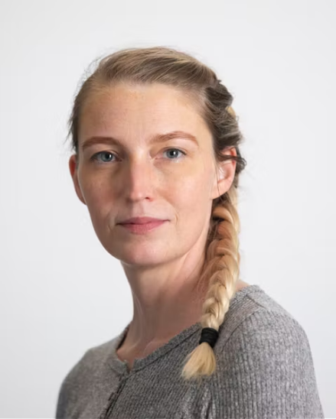
Investigative journalist Mona Grivi Norman specializes in health, crime, and foreign affairs. Image: Courtesy of Grivi Norman
The respect between the media and authorities in Norway is also something Reporters Without Borders has noted, as Norwegian politicians “generally refrain from disparaging journalists.” Bruttin also highlights how the Norwegian authorities give newspapers and magazines an exemption from VAT, which helps to strengthen the sector and makes it more accessible to the public. There is also a high rate of media consumption in the country, and audiences that are prepared to pay for quality reporting, with 42% of Norwegians paying for news.
Journalists in the country follow a code of ethics, which calls on reporters to critically consider their choice of sources and aims for diversity in who they speak to. It also emphasizes the importance of being clear about your intentions when carrying out an interview. When meeting a potential case study or source, Grivi Norman takes it back to basics, explaining what a journalist does and how she works. She also contacts the target of the investigation at an early stage. Although it risks the person going public, for example on social media, she says even that type of response can be used as part of the storytelling. “I have very few bad experiences of contacting the person we are criticizing at an early stage. I think it has nearly always been worth hearing both sides,” she says.
But even Norway has its Achilles’ heel. Earlier this year, the country was shaken by several royal scandals, including the future queen’s close ties to Jeffrey Epstein, and her son from a previous marriage facing trial for serious drug and domestic abuse allegations. It was reported that some journalists were aware of the son’s alleged escapades, yet it would take until his arrest before any story was published.
“We have a lot of respect for people’s private lives. Some things are private, some are not. When I think about the investigations concerning the royal family, it has usually been about finances,” and not gone broader than that, says Grivi Norman, adding that this also applies to politicians to a certain extent.
But there is a culture of openness among journalists, which Grivi Norman says may be the reason Norway beats its Nordic counterparts, and it’s a tradition that contributes to a healthy working environment that focuses on trust and collaboration, which allows the media sector to flourish.
Every year, SKUP, the Norwegian Foundation for Investigative Journalism, organizes a conference where journalists present their stories from the past year. “We don’t just present the investigation, we explain our workings,” Grivi Norman notes.
After each investigation, it’s also common for journalists to produce a document detailing how they went about their investigation, which is available publicly.
Governmental access also gives Norwegian journalists a clear edge. The constitution guarantees freedom of expression and the right to public information. “When I speak to colleagues in Denmark, they are envious of our Freedom of Information Act,” Grivi Norman says.
Denmark
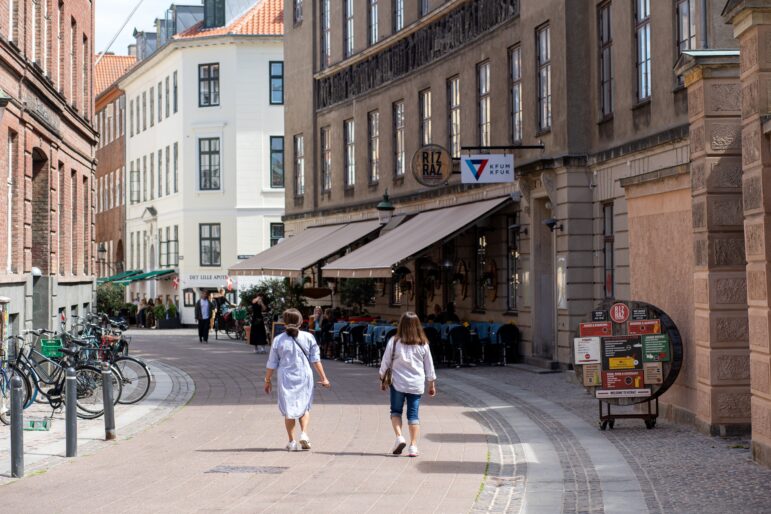
Image: Shutterstock
This is echoed by her Danish counterparts.
“There’s a different attitude, I think, in the public institutions [in Norway], that media should get access, and fast,” says Sebastian Stryhn Kjeldtoft, who works at the Politiken broadsheet. Norwegians also seem more keen to pay for their journalism, he adds, and although Danish media have tried to emulate their Norwegian counterparts, “we have not cracked the code to the same extent that some Norwegian newspapers have.”
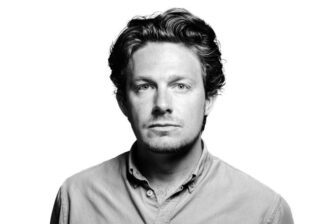
Sebastian Stryhn Kjeldtoft is setting up an investigative team at Politiken. Image: Courtesy of Stryhn Kjeldtoft
The 1960s were a pivotal moment in the development of the country’s media landscape, as newspapers shifted from politically affiliated mouthpieces to independent news outlets. Today, if a member of the public is dissatisfied with the media coverage, they can complain to the Danish Press Council, which consists of lawyers and representatives of the media. This allows for formal complaints to bypass the legal system. Additionally, it “creates a sort of self-correcting mechanism, where if we get criticism, then we have to take that in, we have to publish it in the paper, and we have to reflect upon it in our media,” Stryhn Kjeldtoft says. “It’s by no means perfect, but I think it’s a pretty decent system.”
After four years as a China correspondent, he is currently setting up a new investigative team at the paper. But back in 2022, he was one of several journalists summoned by the Danish National Unit for Special Crime. The reason?
They wanted to know the sources behind stories related to the Danish Defence Intelligence Service.
Stryhn Kjeldtoft refused to attend, and ultimately, the case against him collapsed. Although instances like this are rare, it is still a cause for concern. In general, he urges a serious stance on attacks against the freedom of the press because “fundamentally, it’s difficult to find a better place in the world to do investigative journalism than in the Nordics. And I think it’s important that we really think about that as a society and protect it.”
Sweden
Image: Shutterstock
Nils Hanson led the Swedish public broadcaster’s investigative program, Uppdrag Granskning, (“Mission Investigate”) for 22 years. The program has uncovered many injustices throughout the years, including forcing a prime minister to resign. No, not a Swedish one, but a foreign one — the Icelandic Prime Minister who stepped down following an interview with the program questioning his involvement in the Panama Papers.
You could even call Hanson the godfather of investigative journalism in the country. He laughs when the nickname is brought up, but admits that structures that he implemented during the program’s early days are still in place in the newsroom, including a bulletproof fact-checking process that helped to strengthen the public’s trust in their journalism.

Nils Hanson led the Swedish public broadcaster’s investigative program Uppdrag Granskning (“Mission Investigate”) for 22 years. Image: Courtesy of Hanson
“I notice that everyone in the newsroom finds it very exciting and enjoyable to work on improving the editorial quality and standards of our work, to ensure that our output is as precise and impartial as possible,” he says.
In terms of policy, Sweden pioneered the world’s first Freedom of Information laws and the Press Act from 1766 is even enshrined in its constitution.
But the golden years of investigative journalism in the country are arguably now, according to Hanson, as “the commercialization of investigative journalism” has also ensured its success. Twenty years ago, the appetite for investigations would stem from individual reporters. Now it comes from management “because they recognize that investigative journalism leads to exclusive revelations that the public are prepared to pay for,” he explains.
Hanson also believes that the way Swedish investigative journalists demand responsibility from those accused helps with trust. He refers to stories in other countries which may show a written statement at the end as a right-to-reply. “I think that’s letting down your audience. To not seek out those responsible and try to get them to explain themselves on camera,” he says. In Sweden, if a person refuses to do an on-camera interview, it is not uncommon for the journalist to seek them out and surprise them.
Finland
Image: Shutterstock
Lotta Närhi works as an investigative journalist for the independent Finnish media outlet Long Play, specializing in environmental stories.
With a degree in a non-journalism field, she says support structures at work, and more established journalists having time to answer her queries, have been vital in her career development since entering the workforce four years ago. In that sense, she says investigative reporting has been passed down from person to person, with new methods and techniques unfolding along the way.
But as journalists face more pressure to work to tighter deadlines, the water cooler moments, or in Finland, the highly important coffee breaks, are becoming a rarity. Närhi thinks it’s a shame “because those are the moments when you sit down together, and when all the quiet information is passed on.” To address this, she took part in a mentorship program, which was transformational for knowledge sharing because it allowed her to “finally hear all of the things that everybody quietly knows, but nobody has the time to sit down and communicate, because we’re all so busy.”
Närhi has chosen to specialize in the environment, in a country that is officially classified as 95% rural, and where three-quarters of Finland is covered in woodlands.
“We have a lot of forest. But that obviously means lots of conflicting interests, as well,” she says. “Specifically, we have a long history of forestry being a very important part of the Finnish economy. But increasingly more and more voices are saying that there are other values attached to forests as well, other than just the economic ones.” She adds that it’s a timely moment to be focusing on environmental investigations, “because it’s really the moment when all these conflicting interests are present, and navigating those is really interesting.”
Finland boasts a substantial amount of official resources and research on the environment, spanning several decades, allowing Närhi to work with a lot of official data. Often she simply contacts the research institutes and is directed to online resources which informs her work — something unthinkable in many parts of the world where the fight for official data and statistics can be a constant battle. But she says this official openness is the case for many subjects related to Finnish society: from the environment, to education, to housing.
Närhi also uses the country’s Freedom of Information Act, when it’s needed, but the current pressures of the economic climate have started to show, she says. She has “been in situations where I’ve requested information, but the authority is really struggling to find the workforce to do that task for me, because they’re under such strain economically.”
Finland did drop one spot in the rankings this year, although it still maintains its position within the top 10. One of the reasons, RSF’s Bruttin says, is a court case against journalists from the biggest newspaper in the country, Helsingin Sanomat, for revealing state secrets.
But in world where press freedom is getting ever more complex and under assault, Bruttin believes the Nordic countries should capitalize on their success to work towards an independent and autonomous media landscape worldwide: “We think that the Nordic countries should really use their diplomatic power, their public development support, to favor a free press globally,” he says, highlighting how Norway especially goes above and beyond in their efforts. “It’s also important to be a champion.”
Emilia Jansson is a journalist and producer at the BBC.
Reporters Without Borders: Amid Widespread Erosion of Democracy, 2026 World Press Freedom Index Drops to 25-Year Low
At GIJC25, Nobel Prize Laureate Maria Ressa Calls for ‘Radical Collaboration’ to Combat Disinformation and Preserve Press Freedom
Why Journalists in Autocracies Should Report as If They’re in a Democracy
International Research Guide: How to Find Experts and Hidden Documents on Any Topic
Collaborating to Uncover ‘Putin’s Shadow War’ in Scandinavia

Charting New Paths for Baltic Investigative Journalism
‘Denies Her the Justice She Deserves’: A Shocking Verdict in the Trial Over Daphne Caruana Galizia’s Murder
After a Government Suspension, What’s Next for Uganda’s Premier Journalism Training Organization?

This work is licensed under a Creative Commons Attribution-NoDerivatives 4.0 International License
Republish our articles for free, online or in print, under a Creative Commons license.
Republish this article
This work is licensed under a Creative Commons Attribution-NoDerivatives 4.0 International License
Read Next
Case Studies Reporting Tools & Tips
Collaborating to Uncover ‘Putin’s Shadow War’ in Scandinavia
A unique collaboration between four Nordic public broadcasters sought to uncover the scale of Russian covert spying operations in the region.
Member Profiles
Charting New Paths for Baltic Investigative Journalism
Re:Baltica, a nonprofit newsroom based in Riga, has experimented with different forms of storytelling and types of funding to sustain its work over the past eight years. Its co-founder Inga Springe shares what she’s learned along the way.
Press Freedom
‘Denies Her the Justice She Deserves’: A Shocking Verdict in the Trial Over Daphne Caruana Galizia’s Murder
Nine years after her assassinaton, the businessman who was charged with conspiring in Daphne Caruana Galizia’s killing has been acquitted after a lengthy trial.
Member Profiles Press Freedom
After a Government Suspension, What’s Next for Uganda’s Premier Journalism Training Organization?
The African Centre for Media Excellence fills a critical gap between journalism schools and newsrooms, but earlier this year Ugandan authorities ordered it to shut down and it’s now fighting for its survival.