
Image: Shutterstock
The Threat of a Broad Legal Assault by Government Against a News Organization — What Newsroom Leaders Need to Know

GIJN Webinar: Q&A Session with Reporters Shield, a Service to Fight Against SLAPPs and Other Legal Threats

A Journalist’s Guide to Avoiding Lawsuits and Other Legal Dangers

International Research Guide: How to Find Experts and Hidden Documents on Any Topic

Guide to Investigating Tech and AI in Modern Warfare
What to Do Before a Crisis
Establish a crisis management team — News organizations should establish a senior crisis management team well before they need one. The team should cover key functions that might need to be drawn on during a broad legal assault, including: newsroom leadership, legal, internal and external communications, human resources, information technology, editorial safety (if such a team or position exists), finance, and so on. A first step to establishing a crisis management team could be to create a group chat on a secure platform like WhatsApp or Signal. If possible, members of the team should have assigned delegates in case they are not available in an emergency. Each member should have a clear understanding of their role in a crisis.
Run a table-top exercise to test the crisis management team — Going through an escalating, realistic crisis scenario in a two- to three-hour session can be illuminating. Even the best-prepared newsroom will have gaps in its defenses that might be identified by discussing a problem that could arise and what the organization has in its inventory to address it. Auditing the sort of information and data available to authorities if a work laptop or mobile phone were to be seized and accessed can help a news organization understand its potential infosec vulnerabilities and make some decisions.
Review legal resources — Newsrooms should sit down with their lawyers to discuss potential scenarios that could occur and review the legal defenses they have available. They should make sure they have access to outside counsel both for the organization and for individual journalists caught up in an investigation or prosecution.
Conduct a compliance audit — They should check their compliance in several key legal areas, such as with regard to employment contracts and use of freelancers, corporate governance, tax compliance, commercial revenue streams, intellectual property policies, data and privacy protections, federal funding and public policy shifts, state registrations, and fundraising.
Put together a crisis communications plan — If newsrooms have internal expertise in crisis
communications, they should ask that person to put together a crisis communications plan for a major attack on the news organization. If not, they should look outside for strategic communications experts who may be able to help with this. They should talk to funders about whether they can assist with this aspect of pre-planning for a crisis as strategic communications expertise will be as essential as having lawyers and information security experts.
Build emotional resilience in your newsroom and organization — News organizations need to build resilience that will help their staff resist, support each other, back their leadership and report the news with vigor and determination during a major legal assault aimed at shutting a newsroom down. This can be achieved through various steps that address safety and wellbeing, including: making sure there are procedures in place for dealing with incidents like arrests and raids and informing staff about the plans; making sure there is a risk assessment process for potentially risky news assignments that allows the newsroom to put in place mitigations ahead of time for physical, digital, legal, and emotional risks; providing a newsroom-based program of psychological support that can help journalists get therapy if needed; and training managers and editors in both leadership and mental health awareness.
Communicate with staff beforehand — Journalists in the newsroom will need to know how to react to legal action against them because of their work or a raid on the newsroom. They will also need to have some confidence in their leadership’s ability and readiness to fight an attack. Senior management in news organizations should decide how to discuss the possibility of a legal assault on the newsroom with their staff and how to prepare them to react. The newsroom will also need to know what it can do to report on the story as this may be a big part of a news organization’s counteroffensive strategy.
Review technology setup and information security practices — The data available on seized devices or through digital storage accessed via subpoenas is a genie that cannot be stuffed back into the bottle. Scrubbing or remotely deleting data or devices once a legal action has begun could make a news organization vulnerable to sanctions affecting the availability of legal defenses and contempt charges. The information that journalists collect as they go about reporting and the sources who give it to them must be protected in advance. Among the information security topics news organizations should review are: their data retention and classification policies: their data storage mechanisms for audio files, interview transcripts, source documents, story drafts, email editing chains, and records of reporters’ communications with contacts; their policies on the use of private laptops and phones that lie outside a company’s security perimeter; the use of secure communications and disappearing messages for sensitive chats; whether cloud backups are end-to-end encrypted or just encrypted at rest and therefore vulnerable if your provider hands over the encryption keys; and whether their agreements with providers of third-party telecommunications, software, and internet services offer any defenses or a degree of collaboration in the event of a subpoena or warrant being served.
Try to build coalitions — A broad, united front standing up against government overreach and violations of press freedoms will be stronger than a single news organization, no matter how well resourced, fighting off an attack all on its own. News organizations that come under concerted assault are going to need the support of the community they report on and for. But their resistance and resilience is likely to be stronger if they can also lean on a broad coalition of interest groups and peers that could bring collective pressure on the administration or exert influence on its supporters.
What to Do During a Crisis
Activate the leadership team — News organizations should be able to do this with a single message sent to a pre-arranged and prepared group of key leaders and managers.
Mobilize your legal team — If a newsroom has a legal insurance policy, they should contact their broker immediately and activate the policy. They should get online with their inside or outside counsel to guide their legal steps as quickly as possible. If data and devices have been seized, they might need to get before a judge that very day to try to prevent access to sensitive, protected information.
Decide what to inform the staff — There may be limits to what newsroom leaders can say, including not talking about the merits of any criminal case, but it will be imperative to respond quickly and address internal concerns. They will need to make sure journalists in the newsroom know not to talk externally or post, and that they know what they can report. Transparency, within legal limits, will be important to managing morale and newsroom resilience. Regular staff meetings, including someone from the legal defense team, will help to manage expectations and concerns. Internal communications may also involve quickly getting in touch with the families of any journalists directly impacted by a legal investigation or prosecution and knowing what you can tell them.
Communicate the news to your board — News leadership will have to figure out a cadence for updates to their boards. A member of senior leadership may need to be dedicated to this task.
Figure out your external communications strategy — Does the person leading a newsroom on communications have experience with crisis communications or do they need some help? Can someone guide your news organization on strategic positioning? Does it need a PR firm? Can coverage of the news story be part of the strategy? The primary stakeholder of the news industry is the public and drawing the dots between the people’s right to be well informed, and an attack on a news organization may help to garner support and mobilize pushback against the government’s actions. Journalists do not like to be the story but in these cases, they already are and news outlets should use that to try to win back public trust, engage with their communities, and perhaps even recruit those normally critical of the media to their fight. Who can be enlisted as allies or third-party spokespeople? Are there allies in the media world prepared to stand up for the news organization and raise the volume of opposition to the attack?
Communicate with union leadership — The union, if a news organization’s workforce has one, can be an important partner in managing staff expectations, reactions and resilience.
Lobbying and pressure campaigns through third-party press freedom groups — News organizations should consider when and how to work with advocacy groups like the Committee to Protect Journalists, Reporter’s Committee for Freedom of the Press, Freedom of the Press Foundation, and Reporters Without Borders, to amplify their protest and lobbying efforts. (See resources and links section below).
Figure out your message to donors/business partners/clients — Nonprofits may want to discuss whether the assault represents a fundraising opportunity. While this may seem opportunistic or even unseemly, the intention of legal action may be to drain resources. Converting the attack into a fundraising opportunity is therefore a way of fighting back.
Supporting reporters — Newsroom leaders will need to decide how to support any reporters caught up in the legal actions and speak plainly to them about their commitment to their safety and wellbeing. Will their families need support? In some cases, a news organization may need to assign a senior manager to be the lead liaison with a journalist’s family and this could become a full-time job. Do they need emotional support or financial aid of some kind? Do they need to be moved to a secure location? If the journalist is a freelancer, the news outlet will have to decide the level of support it is willing to commit to. This may have to be a higher degree of commitment than its labor lawyers might like in normal times. If the journalist or their family insists on using their own attorneys, a news organization must decide how it can make sure its institutional interests are also represented. If the journalist targeted is from an underrepresented group, managers should consider whether reaching out to journalism affinity groups would be helpful. There may be situations in which large fines are levied on a journalist by a court, and their employer is barred from paying the fine or compensating the journalist. The news organization will need to decide in these cases what it can do.
Supporting the newsroom — Rapidly providing any journalist caught up in the law enforcement action with legal support will reassure the wider newsroom that the news organization will stand with all of them. Newsroom leaders should proactively make counseling resources available to any journalist who needs them, rather than just relying on journalists to decide for themselves whether to go through their health insurance or use the company’s Employee Assistance Program to seek support.
Your sources — What, if anything, will the news organization do about any sources caught up in an investigation? Does it have any responsibilities toward them? Is it safe to contact them, or legal to warn them?
Information technology response plan — Does the news organization know what data might have been compromised? Is there any other data that needs to be secured, and can the news organization do so legally?
Online hate campaigns — Does the organization need to prepare a reporter or the newsroom for online harassment or doxxing, or support them in any way while they are being targeted online?
Physical security — Are there any steps that need to be taken on physical security to protect reporters or offices?
What to Do After a Crisis
Share insights — The lessons a news organization may have learned while coming under a sustained legal assault can be helpful to other news organizations seeking to build up their defenses. Industry associations such as INSI (International News Safety Institute) and the ACOS Alliance for freelance journalist safety can be excellent forums for collaboration.
Learn from mistakes and from victories — News organizations should conduct an honest after-action review to see what could have been done better and what steps were particularly effective but could be improved or bolstered. They should allow staff journalists to provide feedback from their perspective.
Longer-term support for affected reporters — A major life event like a criminal prosecution, a detention, or serious threats to their own safety and that of their families, can have a long-term impact on a journalist’s wellbeing. The emotional toll does not end with the conclusion of the crisis. News organizations should put in place mechanisms to keep an eye on affected reporters in the medium to longer-term, such as having debriefs shortly afterwards and a check-in with them several months down the road. Extended time off, or a sabbatical, may be needed, or a rotation to a different beat. Emergency resources for individual journalists are also available from organizations like the International Women’s Media Foundation while the Global Center for Journalism and Trauma can provide guidance to news organizations.
Editor’s Note: This article is excerpted and lightly edited from a longer research paper of the Journalism Protection Initiative at CUNY’s Craig Newmark Graduate School of Journalism. You can read the entire document here. Additional support was provided by Kate Parkinson, the JPI’s risk and safety manager, and Joel Simon, the founding director.
 Mike Christie is an experienced communicator, crisis manager and global team leader with an international journalism career on five continents. He covered or led multimedia news coverage of some of the biggest global stories of the past 30 years, including the US invasions of Afghanistan and Iraq, and Hurricane Katrina. He led the management and culture of safety at Reuters, the world’s largest multimedia news agency, through a multi-pronged, multi-year strategic plan. he also helped turn Reuters into an industry leader in the management of the emotional and mental welfare of journalists and designed and ran journalist safety courses for up to 700 journalists a year.
GIJN Webinar: Q&A Session with Reporters Shield, a Service to Fight Against SLAPPs and Other Legal Threats
A Journalist’s Guide to Avoiding Lawsuits and Other Legal Dangers
International Research Guide: How to Find Experts and Hidden Documents on Any Topic
Guide to Investigating Tech and AI in Modern Warfare
How Journalists Can Protect Against Slapp Cases and Other Legal Threats
What We Learned Building a Chatbot for La Silla Vacía’s Newsroom Archive

Fiquem Sabendo: ‘An Engine for Brazilian Journalism in the Search for Information’

How We Investigated the Hidden Costs of the World’s Farmed Seafood

This work is licensed under a Creative Commons Attribution-NoDerivatives 4.0 International License
Republish our articles for free, online or in print, under a Creative Commons license.
Republish this article
This work is licensed under a Creative Commons Attribution-NoDerivatives 4.0 International License
Read Next
GIJC23 Legal Defense & Emergency Aid Press Freedom
How Journalists Can Protect Against Slapp Cases and Other Legal Threats
How journalists can identify whether they’ve been hit with a SLAPP suit — and resources for helping journalists fight back.
Tech & AI
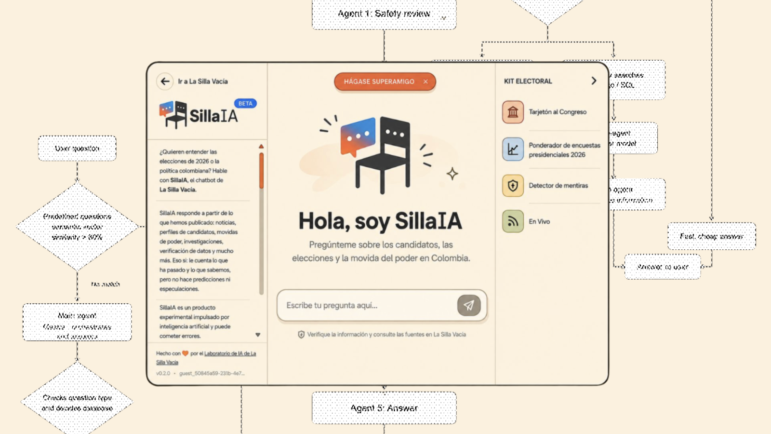
What We Learned Building a Chatbot for La Silla Vacía’s Newsroom Archive
We spent 12 months building an AI tool for our independent news site in Colombia. Here’s what it taught us about running a newsroom in the age of AI.
Member Profiles
Fiquem Sabendo: ‘An Engine for Brazilian Journalism in the Search for Information’
Journalist Léo Arcoverde started a blog in 2015 publishing one story a day based on information obtained through Brazil’s new access-to-information law. The initiative eventually became Fiquem Sabendo.
How They Did It
How We Investigated the Hidden Costs of the World’s Farmed Seafood
Over the past five years, an international team of journalists at The Outlaw Ocean Project has examined the largely overlooked $313-billion food-for-feed aquaculture industry.