

GIJN Masterclass Round-Up: Artificial Intelligence
GIJN’s Global Academy is your gateway to investigative journalism training. Through masterclass videos, training programs (in person or online), webinars or mentorship programs, the Academy helps journalists at every stage strengthen their investigative skills, connect with peers, and continue learning. In this post, we’ve gathered some of our recent expert masterclass videos that tackle different aspects of investigating AI as well as responsibly and ethically using it in your reporting.
Tips and Tools on Investigating Government Use of AI
In this masterclass video, Gabriel Geiger, investigative journalist at Lighthouse Reports, shares practical tips for reporting on how governments use algorithms and AI systems in public services such as policing, welfare, and healthcare.
Geiger explains how reporters can start investigating these systems by identifying government processes that may rely on automation, such as benefits decisions or risk assessments. Key reporting strategies include requesting documents and data about the systems, filing targeted freedom-of-information requests, and building sources inside institutions that interact with the technology.
- Interview: Sarah Ulrich
- Video Editing: Quentin Egloff
- Music: Lionel Marçal
- Filming: Ron Lopez, Reynald Ramirez, Hashim Hakeem
- Supervision and Coordination: Sandrine Rigaud
- Special thanks: Glenn Chong
- With the support of The Konrad-Adenauer-Stiftung
AI Narratives Reporters Should Deconstruct
In this masterclass video, investigative journalist Karen Hao, author of the bestselling book Empire of AI, shares practical guidance for reporters covering artificial intelligence. She explains why journalists should question the dominant narratives promoted by tech companies, such as claims that Artificial Intelligence is inevitable, neutral, or purely immaterial. Hao encourages reporters to investigate the power structures behind AI systems by using power as a lens. She highlights overlooked angles for investigations, including data extraction, hidden labor, and the environmental footprint of AI infrastructure. The session offers a practical mindset to help journalists cut through industry hype and identify stories that hold AI companies accountable.
Credits:
- Interview: Sarah Ulrich
- Video Editing: Quentin Egloff
- Music: Lionel Marçal
- Filming: Ron Lopez, Reynald Ramirez, Hashim Hakeem
- Supervision and Coordination: Sandrine Rigaud
- Special thanks: Glenn Chong
- With the support of The Konrad-Adenauer-Stiftung
Investigating AI-Generated and Manipulated Images
In this masterclass video, Craig Silverman, investigative journalist and co-founder of Indicator, shares practical techniques for analyzing and verifying images in an era of misinformation and AI-generated content.
He explains why identifying the origin of an image — its source, location, and timing — is often the most critical step in any verification process. Silverman walks through key methods, from close visual analysis and reverse image searches to checking metadata and using specialized tools.
Additional resources / tools mentioned in this video:
Reverse search:
Image analysis:
Credits:
- Interview: Sarah Ulrich
- Video Editing: Quentin Egloff
- Music: Lionel Marçal
- Filming: Ron Lopez, Reynald Ramirez, Hashim Hakeem
- Supervision and Coordination: Sandrine Rigaud
- Special Thanks: Glenn Chong
- With the support of The Konrad-Adenauer-Stiftung
The Rise of AI: A Cost to Journalistic Identity
In this masterclass video, we’re in conversation with Christo Buschek, an award-winning programmer and investigative journalist at Der Spiegel.
Buschek shares insightful knowledge from his work with data and technology, and what journalists should know about working with AI. He explains why he considers AI mainly a marketing term and why reporters should keep this in mind when they conduct data investigations. You’ll learn why technology is not neutral and why a prompt does not equal a methodology.
Credits:
- Interview: Sarah Ulrich
- Video Editing: Quentin Egloff
- Music: Lionel Marçal
- Filming: Ron Lopez, Reynald Ramirez, Hashim Hakeem
- Supervision and Coordination: Sandrine Rigaud
- Special thanks: Glenn Chong
- With the support of The Konrad-Adenauer-Stiftung

Guide to Investigating Tech and AI in Modern Warfare

Tech Focus Project

Reporter’s Guide to Detecting AI-Generated Content

How to Identify and Investigate AI Audio Deepfakes, a Major 2024 Election Threat
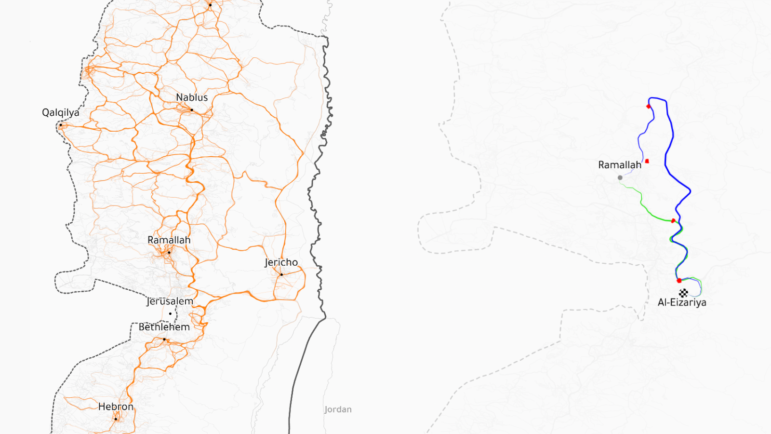
Israeli Checkpoints in the West Bank, Arctic Global Warming, Brazil’s Women Legislators, Inventing a Migrant Crisis in Ukraine

Two Years Ago, Meta Killed CrowdTangle. Can a New AI Tool Fill the Void?

German Far Right’s TikTok Reach, Iran War’s Impact on Cooking Gas, Mapping the Nepal Floods, and ‘Strongest’ Country Passports
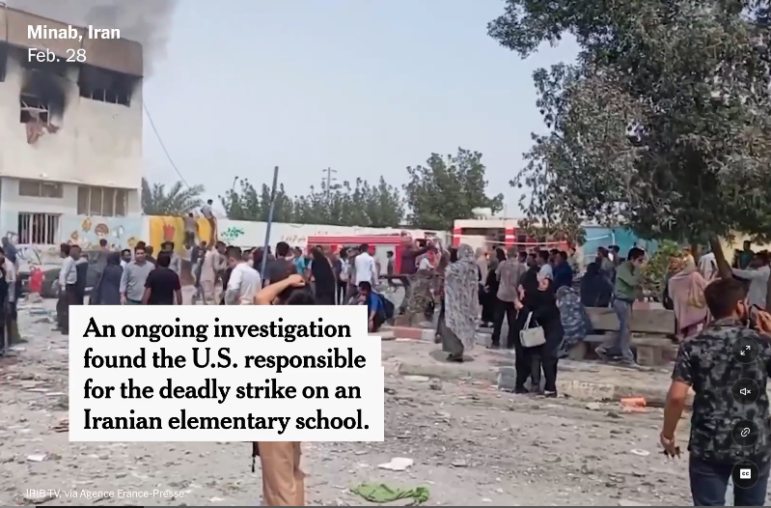
New York Times’s Malachy Browne on the Future of Visual Investigations in the Age of AI

This work is licensed under a Creative Commons Attribution-NoDerivatives 4.0 International License
Republish our articles for free, online or in print, under a Creative Commons license.
Republish this article
This work is licensed under a Creative Commons Attribution-NoDerivatives 4.0 International License
Read Next
Data Journalism Top 10
Israeli Checkpoints in the West Bank, Arctic Global Warming, Brazil’s Women Legislators, Inventing a Migrant Crisis in Ukraine
Also highlighting how pro-Russian channels fabricated a mass migration threat in Ukraine, charting South Africa’s micro schools, and how beliefs in an afterlife vary around the world.
Two Years Ago, Meta Killed CrowdTangle. Can a New AI Tool Fill the Void?
A new crop of AI-powered tools is trying to fill the void left by CrowdTangle, which let journalists tack how content spread across Facebook and Instagram. Arbiter is one of the projects leading the way.
Data Journalism Top 10
German Far Right’s TikTok Reach, Iran War’s Impact on Cooking Gas, Mapping the Nepal Floods, and ‘Strongest’ Country Passports
Also highlighting coverage of Nvidia’s role in financing AI companies, how US adults engage with AI chatbots, and a story investigating children’s care homes in the UK.
Methodology
New York Times’s Malachy Browne on the Future of Visual Investigations in the Age of AI
What began as the niche practice of verifying shaky mobile phone footage in an era of social media chaos has since become one of the most consequential developments in modern journalism.