Resource Guide Chapter
Investigating War Crimes
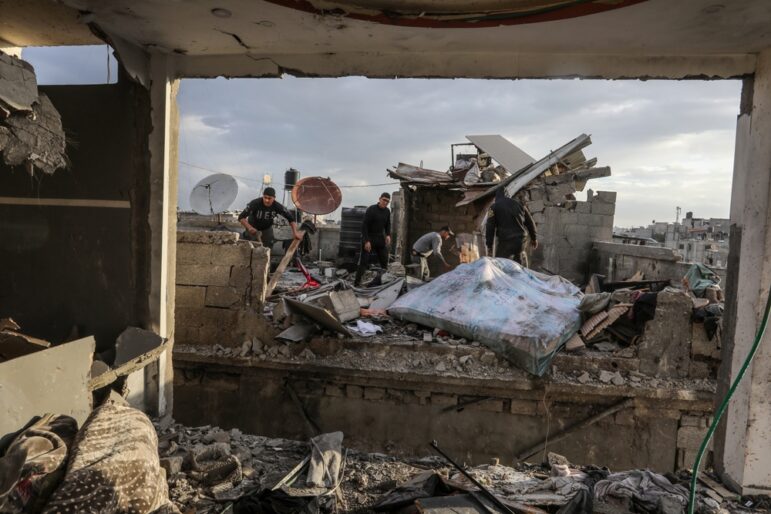
This webinar shares methodologies for investigating war and conflict, and provide a briefing on the laws that govern what, in popular usage, are called “war crimes.”
A guide to some US government data sources that can help foreign and US journalists covering US wars, arms sales, and the impact of US foreign policy.
Uyghur abuse and internment in China. Luxury properties in Austria owned by Belarus’s oil minister. Criminal exploitation of London’s company services industry. These investigations were all possible because of hacked data dumps. As a journalist, how do you negotiate with hackers or hacktivists? What questions do you ask? What are the ethical considerations? What are […]
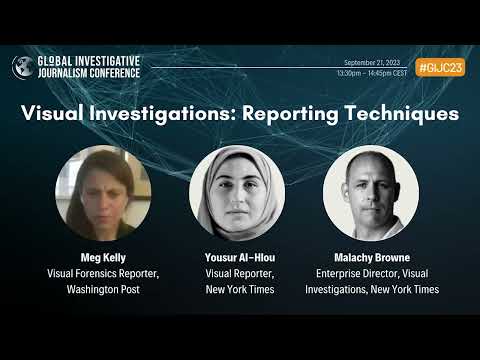
Once considered merely a form of fact-checking, forensic visual investigation has rapidly become a critical method of journalistic inquiry, thanks to new technologies, innovative skills, and the global ubiquity of social media imagery. In the chaos of dramatic public events, forensic visual reporting teams can now often answer the question: Who did exactly what, and […]
In this global economy, it’s become easy to hide one’s assets overseas, whether you’re a Mexican crime boss or a Russian oligarch. Backgrounding an individual’s holdings is essential, but ferreting out front companies, tax dodges, and hidden assets can be a tough undertaking. Here are two of the best at doing this. ———————– The Global […]
A raft of new tools are helping journalists track shipping and aircraft around the world. The numerous ways to track ships and planes open a whole new range of stories for journalists to investigate, from following billionaires’ private planes to uncovering the details of refugee boats capsizing. ———————– The Global Investigative Journalism Network is an […]
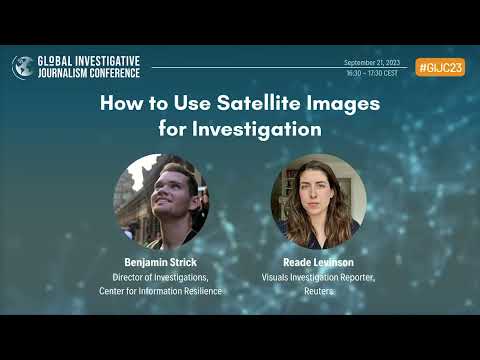
Satellite images play a crucial role in many investigations. Reporters are using them to analyze battlefields and war crimes. Eyes from above also are invaluable for many kinds of climate change stories, such as to document methane emissions, drought, and sea level rise. Our expert panelists will discuss many possible opportunities for using satellite images. […]
There are numerous investigative topics to explore between the farmer’s field and the grocery store – and, indeed, the plate – and several recent projects have exposed abuses in the production, distribution, and access to food. This expert panel offers deep experience in issues from fisheries and pesticides to food security and biodiversity — with journalists based in Tunisia, the UK, the US, and Southeast Asia.
We are in the midst of a decade-long global backlash against democracy and human rights. A new extremism has taken hold, characterized by radical right-wing groups and ultranationalist political movements. These groups are not only growing but are becoming more organized. International ties among them are also growing — digitally, ideologically, financially — but their networks are poorly understood and investigative journalism in this area is lacking.
If there was just one panel to attend at GIJC23, this might be it. We’re witnessing a global assault on democratic institutions and a sustained global decline in democracies. Investigative journalism, in partnership with civil society, has emerged as a last line of defense for human rights and democratic principles in countries around the world — even where we thought we were secure. This panel features giants in the push-back against fascism and authoritarianism. We have an extraordinary lineup — Lina Attalah, Vinod Jose, and David Cay Johnston. — who will offer inspiration and tools to fight for a free and accountable future.
The rise of AI-powered chatbots has prompted hot debates about whether these technologies will reshape or unmake our world. But instead of engaging in the hype cycle, journalists can demystify these tools for their audiences by sticking to basic reporting principles: investigate the artificial intelligence models themselves and cover their real-world impact. Burke will discuss […]
This workshop might just emerge as the one that changes your life as a watchdog journalist. Misinformation and disinformation on “closed” social media networks — such as WhatsApp and Telegram – have already had devastating consequences for democratic processes in places like India, Nigeria, Russia, and Brazil.
This session will address how to convert unstructured data (documents) into structured data that can be filtered, summarized, and visualized.
Do you have too little time to do investigative stories? Try L-ai-la, the new AI research assistant, trained to find news fit to print. (You may be both lazy & forgetful, but Laila never misses a story.) Is this about GPT4? Generative AI? No, forget about it. We are talking about LHF (the LowHangingFruit AI […]
Online research expert Henk van Ess has created a seven-chapter guide that offers reporters step-by-step instructions on how to use social media search to perform investigations of people and subjects and he’s also created a detailed tutorial on using facial recognition technology and best practices for putting these tools together in verifying claims online.
Verification is all about accurately assessing claims and statements.
Internet research expert Hank van Ess offers his tips for navigating the social media site LinkedIn from his forthcoming open source guide on online searching.
When disaster strikes, corruption occurs, or social injustice happens, facial recognition technology can expose hidden truths. The technology can, however, provide false information as well.
Satellite images are powerful tools for discovery and analysis, plus provide vivid illustrations. Discover GIJN’s favorite resources.
GIJN senior reporter Rowan Philip shares accumulated best practices from reporters around the world, on how to investigate culprits of war, human rights abuses, and other conflict.
Committing to a long-term investigation — also known as “greenlighting” — does not always involve a specific moment of decision. At IRE23, GIJN spoke with five veteran investigative editors to ask them what information they need before giving a project the the go-ahead.
For every human source who assists investigative journalists, there are dozens of officials, victims, and potential whistleblowers with vital information whom reporters never engage.
Tips for navigating the social media site Instagram from GIJN’s forthcoming guide to open source researching online.
Tips for navigating the social media site Twitter from GIJN’s forthcoming guide to open source researching online.
Tips for navigating the social media site LinkedIn from GIJN’s forthcoming open source guide on online searching.
Based on an interview with Wayback Machine’s director, Mark Graham, ProPublica’s Craig Silverman shares more essential tips on using it, including how to bulk archive pages, compare changes, and see when elements of a page were archived.
This chapter covers misinformation and disinformation and tools to counter them, as well as case studies.
Required disclosures by public officials about their income and assets can be invaluable to investigative journalists. And information about wealth and its sources can play a vital role in uncovering corruption. Official filings are often the starting point for classic follow-the-money stories. However, disclosure laws have gaps, so the public records don’t always reveal the […]