

Investigating a female right-wing extremist group in Germany. Image: Screenshot, ARD, YouTube
Uncovering the Transnational Networks Behind a Women’s Right-Wing Extremist Group in Germany
Read this article in


Sometimes an investigation simply starts with a look at social media. In this case, an Instagram account where young women, usually blond-haired and blue-eyed, post instructions for braiding hair, fashion inspiration, and majestic landscapes.
But this seemingly harmless content contains political messaging. These young women are members of an organization called Lukreta, which, according to an Instagram bio, is an independent women’s group that promotes “strength for women’s safety” and “classic gender roles,” with motherhood front and center. But behind the hashtag #frauenfürfrauen (‘women for women’), they call for “remigration” — the forced mass deportation of minority or migrant populations, a far-right preoccupation that some figures and politicians in the movement are hoping to make mainstream.
The messaging becomes clearer upon a closer look: A young woman in a knitted sweater poses in misty farmland behind the superimposed words “Send Them Back;” a talking head reels off alleged crime statistics of various immigrant groups. But what does Lukreta really do, and how much influence does it have?
Three other women reporters and I teamed up to look deeper into how Lukreta’s links to right-wing extremist networks in Europe and beyond, and the role women play in these networks. Our documentary Heimat, Häkeln, Hetze: Undercover Unter Rechtsextreme Frauen (“Homeland, Crochet, Hate Speech: Undercover Among Far-Right Women” was released in February 2026 on the German public broadcaster ARD’s investigative channel, team.recherche, and as an article for the ARD site.
We scoured online content, met with anonymous sources, talked to experts and former associates, and went undercover at the International Women’s Congress in Germany and a secretive white-nationalist conference in Portugal. We discovered a well-connected network of young, ambitious female right-wingers in Europe with links spanning the European Parliament and international neo-Nazi circles.
Lukreta uses the familiar visual language of social media influencers and positivity to normalize anti-migrant hate speech by framing remigration as a matter of women’s rights. That remigration is part of the policy agenda for some members of Germany’s far-right Alternative für Deutschland (AfD) party — and the topic discussed by AfD officials and powerful sympathizers at a secret meeting in 2023 — is not a coincidence.
Lukreta purports to be independent, but it is part of the AfD “sphere of influence,” notes Juliane Lang, an extremism researcher at the University of Giessen, whom we interviewed. Lang describes the group as a “classic front organization” and its carefully curated social media as a recruitment strategy for the AfD party — to put a gentler face on its agenda. We also found that similar groups are expanding and strategically forming networks across Europe and beyond.
Of course, diving into right-wing extremist networks comes with high stakes and obstacles. “Investigative reporting in far-right circles is always particularly challenging and requires careful consideration,” says Luise Hermann, editor-in-chief of production company Labo M and an editor on this project. “Reporters are operating in an environment that largely views journalists as the enemy,” she adds. This calls for extra precautions when going undercover, among other considerations.
From planning and teamwork to safety tips for undercover reporting, here are important lessons we learned conducting this investigation.
Define Team Roles Clearly
For a collaborative investigative project, it’s essential to define clear roles within the team. In our case, there were four reporters: Lisa Genzken and I, both freelance reporters, and Alissa Küsters and Kim Stoppert, who work for broadcaster Saarländischer Rundfunk (SR).
Each of us has different expertise and was therefore responsible for different tasks in the project. We also worked with editors from Labo M and the SR. When you have a production deadline and certain requirements — such as standard production elements required for team-recherche shoots — it’s really helpful when everyone knows their job and sticks to their role, whether it’s finding sources, researching online, focusing on the script and storytelling, or keeping sight of the investigation’s common thread.
“It wasn’t always easy to focus on certain aspects,” says SR reporter Kim Stoppert. But in the end, being able to focus on one angle to tell the story is crucial for a successful investigative project.
Going Undercover: Safety and Planning Are Key
To fully understand the group, its ideology, and network, we had to investigate from within, so some of the team went undercover. This requires detailed planning and risk assessment beforehand.
“Clear agreements within the team and legal guidance are crucial from the very beginning,” says Hermann, head editor at Labo M for team.recherche. She coordinated the production. “Especially when conducting undercover and on-site investigations, it is essential to carefully weigh the risks,” she adds. As these networks are especially hostile to journalists, we considered carefully whether going undercover was the only way to conduct certain parts of the investigation.
The first undercover reporting we did was in June 2025 at the “International Women’s Congress” in western Germany, which Lukreta had promoted on its social channels. It was co-organized by the European Sovereign Nations (ESN) — a faction of far-right political party members in the European Parliament — and Irmhild Bossdorf, an AfD member of the ESN, whose daughter, Reinhild Bossdorf, is Lukreta’s founder. We discovered that such conferences are partly funded by taxpayer money, and that new far-right women’s groups from the United Kingdom and France were also present.
Reporting undercover at the International Women’s Congress, where, to blend in, we wore conservative, knee-covering dresses, was not as daunting as Lisa Genzken’s mission in Porto, Portugal, where she attended a clandestine conference held by the Portuguese white nationalist group Reconquista, where she observed attendees giving Nazi salutes.
“The militancy of the far-right extremists there really scared me,” says Genzken. “We were very afraid of being discovered.”
Our undercover reporting helped us reveal the links between Lukreta’s leader, Reinhild Bossdorf, who works as an assistant to an AfD member in the European Parliament, and international far-right figures — her fellow “VIPs” at the Reconquista conference, such as Martin Sellner, the leader of Austria’s Identitarian movement, and Keith Woods, an Irish national and self-described “raging antisemite.” We also observed that Nazi ideology and symbols were disseminated unchallenged at the International Women’s Congress. We received a form response from the European Parliament’s press office regarding the use of taxpayer funding for events without addressing our specific query; Boßhold did not respond to a request for comment about her presence at the Reconquista conference.
This environment can be hostile to journalists — especially those undercover. “Reporters should never be left alone, but should be closely supported and well-prepared,” says Hermann.
We conducted a detailed risk assessment and planning for the undercover operation. This included:
- Assessing the location, infrastructure, and possible exit routes
- Talking to local colleagues who might know more context
- Appropriate clothing, a hidden camera, a watertight backstory, and aliases (Alina and Felix, a German couple on vacation in Lisbon and big fans of Lukreta)
- Additionally, Lisa Genzken was accompanied by a male colleague, Caspar Dudek, a safety measure that helped her blend in at the male-dominated Reconquista conference
- Establishing a back office and sharing the location of the reporters at all times, as well as regular check-ins via messenger
One final tip: “Acting naive is a good strategy while undercover,” says Genzken. “People love to explain the world to others — and when you feel like you have the upper hand in a relationship, you’re more likely to reveal what you really think, plan, and want.”
Investigating Online: Navigating Social Media
It was clear from the beginning that Lukreta and their fellow extreme right women’s groups are highly active online. They use social media to promote far-right talking points and politics and organize campaigns to recruit new female voters for parties such as the AfD. (Currently, only about one in five AfD members are women; an internal AfD strategy paper we encountered identified “housewives and mothers” as potential recruits.)
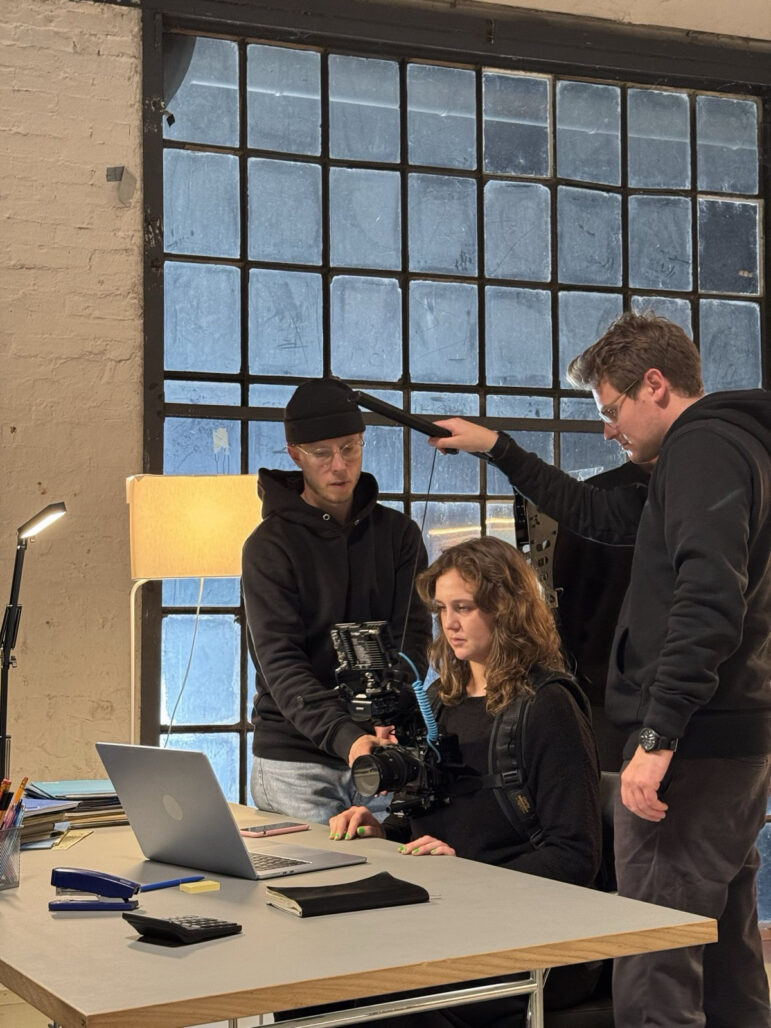
Filming a scene for the documentary with reporter Lisa Genzken, who went undercover at far-right conferences in Germany and Portugal. Image: Courtesy of Genzken
“It was challenging to read daily in right-wing to far-right Telegram groups how people who don’t fit into this worldview are spoken of in a discriminatory and, at times, violence-glorifying manner,” says Alissa Küsters, a reporter for SR who monitored social media activities for the investigation. “I was surprised by how strategically far-right activists operate,” she adds.
To understand and monitor these strategies, Küsters suggests building up a solid, right-wing-targeted social media algorithm early in the investigation. Follow important accounts such as influencers, search for the right keywords (e.g. #rechtefrauen / #frauenrechte or “right women” / “women right”) and start liking their content. “That way, you can quickly get a handle on the topic and gain an overview of the scene and its dynamics,” she explains.
Remember to take a step back to spend some time offline and remember the facts. “These groups post at a rapid pace,” says Stoppert. “Because they post every day, it’s easy to get the impression that you can’t go out on the street without being attacked.” While we should be aware of the danger of these groups and the potential threats that arise, we should always portray a realistic understanding of the activities and dangers of the group you’re investigating.
Double-Check What Sources Tell You
A tip that every investigative reporter probably already knows, but always bears repeating: verify your sources — and be upfront to readers about the limits of that verification.
During our investigation, we connected with a source online, through a contact we considered dubious. We discussed the credibility of the source thoroughly. The only way to make meaningful use of what they told us was to meet in person, confirm their identity, and cross-check their claims against other material.
We did this with OSINT methods such as investigating image metadata, geolocating the alleged addresses, and finding out more about the involved people or organizations and their alleged activities, companies, and holdings, etc.
Even then, not everything could be fully verified. In such cases, be transparent with your audience: clearly distinguish what you were able to confirm from what remains unproven.
Stay Organized, and Don’t Be Fooled
Our investigation reveals that in several European countries, including France, Spain, Italy, and Switzerland, new far-right women’s groups like Lukreta are emerging, exchanging ideas, and spreading similar narratives.
We were able to show that this is not a matter of isolated groups, but rather a Europe-wide network that acts deliberately and strategically. Be aware that these groups are adept at bending facts to serve their own narratives. (Lukreta and similar groups co-opting women’s rights don’t tend to engage with the issue of violence against women in general, much less anti-democratic and anti-feminist rhetoric from some on the far-right who say publicly that women should not have the right to vote.)
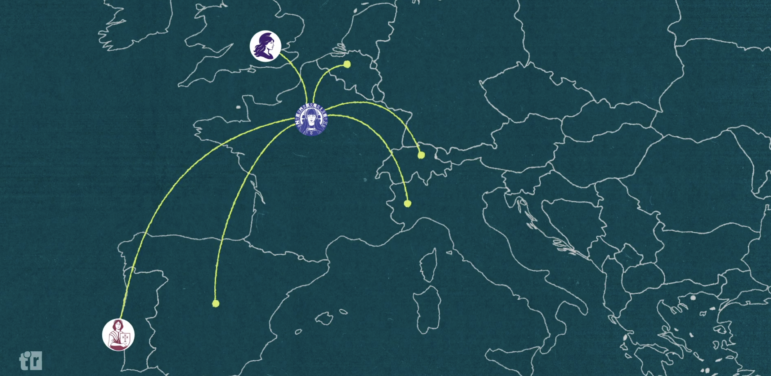
Lukreta, which falls under the German right-wing party AfD’s “sphere of influence,” has helped to connect other like-minded extremist groups across Europe, in countries like France, Belgium, Switzerland, Italy, Spain, Portugal, and the UK. Image: Courtesy of TR
They mention only incidents of violence committed by migrants. “They take on major cases, dramatize them, or twist them slightly,” says Stoppert. “These groups often talk about actual events, but through omissions or the dramatization of certain details, it sounds like a much bigger, if not international, problem.”
While the growing international networks of these groups are crucial to the investigation, it can be challenging to portray this element to an audience, especially in documentary format, where it’s crucial to present complex issues in a clear, compelling, and understandable narrative. To avoid getting lost in the vast connections between people, organizations, and events, a solid piece of advice is simply to stay organized. Some like to work with mind maps; others prefer spreadsheets or dossiers. Make sure everyone in the reporting group has access to the findings.
With that in mind, you should know the limits of your investigation. “It was particularly challenging to keep track of everything,” says Stoppert. “Lukreta is so extensively connected that it would have taken a great deal of effort to convey the full extent of it.”
Stoppert encourages journalists to dig further into these networks and find out things we weren’t able to fully uncover. Lisa Genzken would give the following advice to future investigators: “Don’t be fooled by these groups’ harmless image, their distorted statistics, and their strawman arguments. What they stand for is a far-right ideology — and they’re quite good at sugarcoating it.”
 Sarah Ulrich (she/her) is a freelance journalist and investigative reporter. Her work focuses on abuse of power, right-wing (and far-right) networks, and gender-based violence. Through her reporting, she aims to bring a feminist perspective to underrepresented issues and gender-specific inequalities. Ulrich has reported from various regions around the world, including Ukraine, Guatemala, El Salvador, and Albania. She is a fellow of the International Women’s Media Foundation (IWMF), Journalismfund, Intern

This work is licensed under a Creative Commons Attribution-NoDerivatives 4.0 International License
Republish our articles for free, online or in print, under a Creative Commons license.
Republish this article
This work is licensed under a Creative Commons Attribution-NoDerivatives 4.0 International License
Read Next

Gender How They Did It
Using Data to Expose Systemic Gender-Based Violence — in 10 Steps
Reporters at the Center for Collaborative Investigative Journalism explain how they used data to reveal systemic gender-based violence in Eswatini in southern Africa.
How They Did It
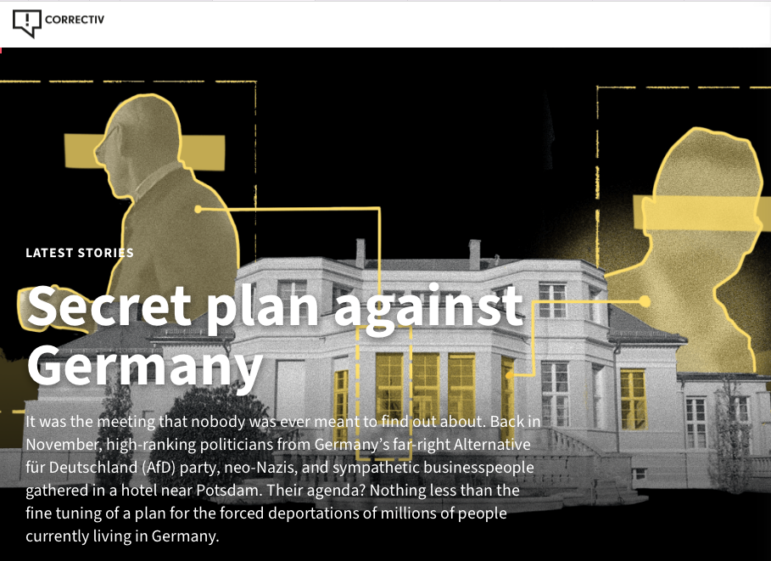
Going Undercover to Reveal a Secret Meeting of Germany’s Far Right
Behind the scenes of the blockbuster CORRECTIV investigation that revealed a disturbing far right ‘master plan’ to expel millions of people from Germany.

Reporting Tools & Tips Safety & Security
Investigative Tips for Safely Tracking Far-Right Extremist Chatter
Veteran journalists share tips on how to monitor online chatter among white supremacists and other far right extremists — and how to stay safe while doing so.
How They Did It
Tracking Far-Right Suspects Across Continents: A 10-Year Hunt for Spanish Fugitives
As Spain transitioned to democracy, a series of attacks were carried out by the far-right. In some cases, the culprits were never found. To provide some measure of accountability, two journalists from El País have worked for a decade tracking down fugitives in cases forgotten or closed by the authorities.