
Image: Screenshot, Barracuda Media
How a Global South-Led Reporting Collective Broke the ‘Inside Deutsche Bank’ Mega-Leak
This week, a blockbuster global investigation into suspicious high-level financial activity and illicit cross-border money — Inside Deutsche Bank — broke across dozens of countries around the world. And the impact of the collaborative mega-project, which has already implicated major political figures in wrongdoing, is only going to grow, with 56 media outlets set to publish more than 150 investigative stories in total, from bank cover-ups to the looting of public funds in numerous countries.
The year-long project was built from a world record leak of 15.6 million documents on the bank’s own internal investigations — probes into everything from bank services for sanctioned oligarchs to alleged money laundering — which were legally shared by two bank whistleblowers. The leak shows, for instance, almost US$600 million in suspicious payments linked to sex trafficker Jeffrey Epstein. It is comparable in data scale to the iconic Panama Papers investigation in 2016, where hidden offshore wealth was exposed via the leak of 11.5 million documents. (Deutsche Bank’s response to the project can be read in full.)
Pioneering Structure
However, Inside Deutsche Bank is also different from other prior complex leaks collaborations — this investigation into a major Western institution and its global clients was driven by investigative journalists in the Global South.
In an exclusive series of interviews, the project’s core team and several project partners told GIJN how the investigation came together; revealed the innovative methodologies that worked; and explained the pioneering, collaborative architecture behind it.
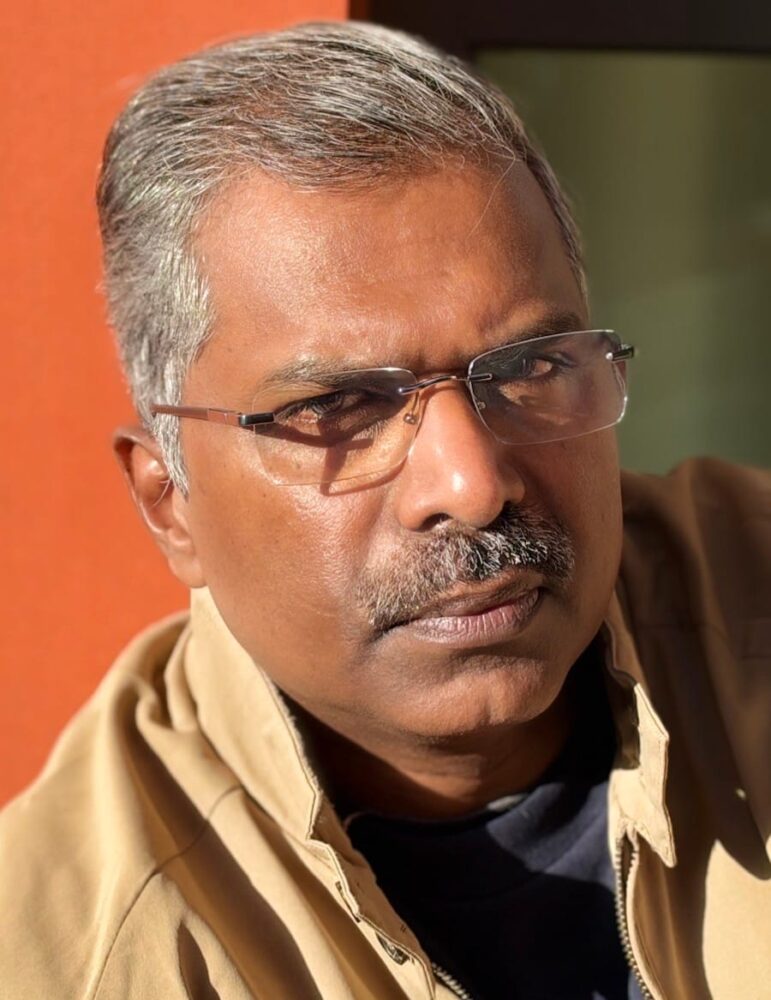
Josy Joseph, Indian journalist and founder of The Confluence Media, acquired the Deutsche Bank leak and was co-custodian of the data. Image: Courtesy of Barracuda Media
“Journalism, like everything else, is shaped by privilege, power and access: non-Western journalists are expected to stay in their lane while Western journalists are entitled to cover the world,” says Josy Joseph, the co-custodian of the leak. “It can lack truth. We needed to develop the leak from a global perspective. We wanted to challenge that inequity. The Western instincts of journalism have created exclusionary structures that undermine the very democracies they claim to defend. We sought to disrupt that pattern.”
“With this project, we wanted people to understand: the world’s biggest bank leak? It’s not something that came to a Western journalist; the investigation is not organized from within the West,” adds Khadija Sharife, the project’s principal investigator and co-custodian. “It was received and developed using the resources of the majority-world / Global South, because we are capable of doing it, and we’re doing it in a way that is most equitable to journalists there.”
The massive leak was initially received by Joseph, an Indian author, investigative journalist, and founder of Confluence Media, in late 2025. He then shared it with Sharife, an award-winning veteran of leaks projects who previously worked with Joseph on an investigation into India’s Bank of Baroda. (Sharife is also an at-large member of GIJN’s board of directors.)
“When the lawyer first approached me, I immediately knew I couldn’t be the bottleneck or build this alone,” Joseph recalls. “I needed a partner whose journalistic judgement I trusted completely, and who was better than me. Khadija Sharife was the obvious choice.”
“The whistleblowers were risking everything to bear witness. It was a decision they could never undo, and we had a responsibility to do their stories justice,” adds Sharife.
Conscious of the global harms suggested by the leak — and the danger of Global South media being under-resourced in a mass collaboration — the two journalists decided that a coordinating entity would be needed to even the playing field for newsrooms in developing countries.
In a key innovation, a South Africa-based NGO called Barracuda Media was established specifically to coordinate and organize the global project — but not to act as a publisher — along with regional coordinators in other Global South nations in Latin America and South Asia. Emma Prest, the former CTO of the Organized Crime and Corruption Reporting Project (OCCRP), built the consortium and secured funding as its overall director, and Karina Shedrofsky, co-founder of the Berlin-based Data and Research Center (DARC), became the project’s lead researcher, tasked with supporting each media outlet as they developed their stories, to include finding missing documents or building out investigations.
Funded by a grant from the International Fund for Public Interest Media (IFPIM), the nonprofit was established not only to ensure equal access to the data but also equal resourcing for media, providing services from financial support and translation to security, leak search tools, fact-checking, and legal assistance. Media partners were generally chosen in terms of evidence in the leak, and the bulk of the funding was distributed to Global South and other under-resourced media in the consortium.
“We provided full newsroom services in a way that Western media would provide them,” Sharife explains. “Under Emma’s leadership, Barracuda Media assembled an exceptionally committed and experienced team. This included Karina Shedrofsky, who leads research at DARC; Jan Strozyk and Simon Wörpel, who lead data and technology; investigative editor Brian Fitzpatrick; and Jason Norwood-Young from South Africa, who oversaw cyber and security. Our exceptional regional coordinators followed. It mattered to us that every single member of our team cared deeply about the journalists — some already imprisoned like Mohammed Adel and Daniel Okukwa — and the stories.”
“From China to Myanmar; from Senegal to Germany, from South Africa to Russia, we had partners,” she adds. “We had investigative coordinators such as Aidila Razak in Southeast Asia and Maria Fernanda Cruz in Latin America. We also brought in some specialist media like Data Desk and Finance Uncovered; coordinating and forensic editing help from El CLIP in Latin America (the Center for Latin American Investigative Journalism) and Confluence Media in South East Asia.”
In all, the investigation involved 235 reporters and 56 outlets — 60% of which were from developing countries.
On the project’s second day of publishing, which followed an initial consortium blitz of major revelations, Turkey’s The Black Sea was among dozens of outlets that produced local stories based on the leak: an exposé on the client status of Turkey’s state-owned bank, despite risks associated with US sanctions on Iran.
“The core strength of this project was its capable coordinators,” says Zeynep Şentek, an investigative journalist at The Black Sea. “They weren’t just skilled cross-border project coordinators but also very capable journalists who, firstly, did a lot of heavy lifting, and then included newsrooms. They were extremely hands-on in putting pieces together when we asked for help. DARC’s data work was excellent and they also helped locate specific bits of info from within the data and researched together with us.”
Nikita Saxena is one of several independent Indian reporters who will be publishing leak-related investigations via various outlets in the days ahead.
“Many of the emails and reports [from the leak] were written in what a member of the core team referred to, very aptly, as ‘bankish,’” Saxena explains. “It frequently felt like we were trying to decipher a language designed to mystify. Thankfully, the core team and DARC members had prepared an array of resources that made this task feel less daunting. Painstakingly collated research guides unpacked everything from the bank’s troubling history to the kinds of violations one could encounter; an ever-expanding glossary of terms clarified unwieldy acronyms; and an evolving repository of tips kept pace with the kinds of documentation emerging from the data.”
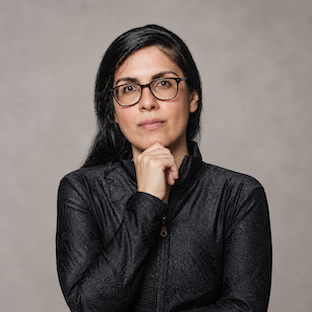
Africa-based Khadija Sharife, a former global investigator with OCCRP, was the lead investigator and co-custodian of the leaks for the Inside Deutsche Bank reporting project. Image: Courtesy of Barracuda Media
She adds: “Beyond the technical know-how, much of the work that has taken shape from this project seems to have called on the same instincts that journalists rely on for all kinds of stories: curiosity, patience, and a slightly unhinged obsession with making better sense of the world.”
While security rules were the same across the consortium, Sharife says individual media outlets were empowered to pursue their own angles, and to reframe harms that are often glossed over by Western media.
“Agency was important: we wanted journalism from within,” she notes. “For instance, on issues like the bank financing significantly large weapons deals to the Israeli government that corresponded to a timeline of harm in Gaza or the West Bank; investing in a company that made white phosphorus — we wanted to make sure the angle and the language was that of the journalists in those places.”
The Leak
“This data is the internal investigations of a bank; it is the thing they tried hardest to conceal,” explains Sharife. “The whistleblowers leaked 15.6 million documents after they made disclosures to the US and UK governments; it was lawfully obtained by the whistleblowers; it was lawfully submitted as protected disclosures; and we lawfully received it through their legal representatives. This process was clearly documented. We don’t want reporters to be accused of stealing or hacking data; that was not the case.”
She adds that the leak revealed hundreds of projects with bank codenames that were related to internal probes.
“Whenever an internal whistleblower blew a case that was hot — when governments were beginning to investigate, for instance — the bank would panic and create internal investigations with these codenames,” Sharife explains. “Like, Trump was Project Broadway; Jeffrey Epstein was Project Parrotfish; other codes [were] for the hiring of sons and daughters of key Russian politically exposed people. These codenames became crucial investigative markers, helping us connect fragmented evidence scattered across millions of emails.”
Core Methodology

Jason Norwood-Young was the project’s tech and security lead, and designed the custom “Gunther” AI tool to extract useful data from the leak documents. Image: Barracuda Media
DARC built the technical infrastructure to turn millions of complex, often hidden records into searchable intelligence. This meant extracting embedded files, translating, making vast spreadsheets and email archives searchable, improving document translation, and screening records against sanctions and politically exposed persons databases.
Norwood-Young says that, with the exception of the encrypted Signal messaging system and the purchase of one adapted collaborative work system, all the digital tools used for the project were either custom-built or custom-adapted from open source platforms, in order to protect the data and sources from potential future exposure.
Interviews with Sharife and Norwood-Young revealed that major steps in the handling of the leak included these:
- A member of the Barracuda team flew to Iceland in late 2025 to receive several hard drives containing the documents from whistleblower attorneys.
- In order to ingest the data, the tech and data team at DARC in Berlin used the OpenAleph collaborative data infrastructure. They built a custom version capable of rapid ingestion and indexing. “DARC played a hugely important role — taming email chaos through email parsing — showing the real senders and recipients; grouping messages into conversations; breaking language barriers by building on-premises document translation for sensitive material; helping journalists decode banking jargon and track down elusive documents,” details Sharife. Norwood-Young adds that the drives had been poorly, even clumsily, formatted by the whistleblowers, which created the false impression of a truly gigantic amount of data — more than 10 terabytes — and that a painstaking ingestion process by the DARC team revealed a smaller, but still huge trove of more than 15 million documents. “So each file was much bigger than it should have been,” he notes. “Jan and the team at DARC did amazing work.”
- The core team met in Europe in late 2025 to sketch out an effective and equitable structure for the collaboration.
- Having identified “bank speak” as a hurdle for future partners and their leak searches — including arcane industry terms such as “permanent waivers,” “shadow account,” and “sanctions risk acceptance process” — they began developing a research guide of several hundred pages.
- Early on, Norwood-Young made it a project rule to avoid all US technology platforms or cloud services. “We couldn’t let this data touch the US providers: the US had passed the CLOUD Act, which gives the US government access to any data stored by a US company, no matter where in the world it sits,” Norwood-Young explains. “Given the state of US politics, it was completely untenable to trust that the investigation would stay confidential until we were ready to publish. Instead, the rule was for digital infrastructure to be hosted entirely in Europe, and exist on extremely secure servers.
- As the first in a series of security procedures, Norwood-Young then created private and secure wiki servers to host a secure, collaborative website where project reporters could safely work together.
- For major, secure video conferencing, the team also created “our own private Zoom”: a customized form of Jitsi which did not keep user logs.
- Norwood-Young conducted one-on-one security training with almost all the 56 media partners, which included strict digital hygiene procedures such as disabling all AI on their operating systems (like Windows Copilot and Apple Intelligence and Siri). In addition, he says project security rules required partners to work entirely online without downloading or using a platform like Excel, and instead stick to OpenAleph.
- The team also tapped several experienced collaborative journalists as advisors, including Marina Walker Guevara and Sheila Coronel, for guidance on data challenges and consortium conflicts as they arose. However, advisors were deliberately excluded from access to the data itself to prevent legal exposure. “Frederik Obermaier and Bastian Obermayer of Paper Trail Media also played a vital role,” Sharife points out.
- The one tool the project paid for was Docmost: a tool Norwood-Young describes as “a Notion-like platform that became our collaborative wiki,” whose developers worked with the project tech team to ensure it included all the features the leak required. “This is one platform that we did pay a license for to get some of the more advanced features, but in most cases, the free, open source version is sufficient,” he adds.
- Norwood-Young then created the project’s own, private artificial intelligence assistant — “a secure AI environment” called ‘Gunther’ — with access to the source documents on OpenAleph and the collaborative work on Docmost. Based on the open source system Sourcery.info, Gunther allowed reporters to explore the data without the need for knowledge of OpenAleph, or the bank. It also allowed searches in multiple languages. “Gunther had to understand how the bank was structured, and the types of documents it would likely find there,” Norwood-Young explains. “It also turned out that there were deals done in multiple languages, so we needed to be able to search queries in German, Japanese, French, etc. We couldn’t exactly use Google Translate and also a lot of the reporters were not English speakers.”
“Running our own infrastructure wasn’t expensive to run,” Norwood-Young notes. “The technology we used and the infrastructure we built is not complicated, using open source software and European hosting providers.”
Saxena, who also serves as India lead for the Inside Deutsche Bank project, says several region-specific stories will run in various outlets the weeks ahead, including two arms-related stories that will be published in the initial story tranche.
“The first is on how the bank’s arms industry deals focused on public perception, and another is on how the bank bankrolled Israel’s attacks in Gaza,” she explains. “Both of these investigations involve journalists from multiple regions — including Lebanon, Malaysia, Italy, Germany, India — and have combined a tenacious examination of the leak with rigorous ground reporting.”
Zeynep Şentek says prior reporting by local journalists enabled a contextual understanding of leak disclosures.
“It was a real advantage to already have so much background knowledge as Turkish reporters,” he says. “This meant that much of what the bankers were discussing internally clicked for us very quickly. It gave us a rare peek into how Western financial institutions viewed a sanctions-evasion case that came close to bringing the entire Turkish economy down.”
As always, traditional reporting was needed to illuminate data developed from the courage of whistleblowers and the project’s advanced resourcing.
“Methodologically,” says Şentek, “the rest of the story came together through old-fashioned investigative work: Piecing together the information, building an interesting and well-thought out narrative, translating dense financial jargon into language people could actually understand, talking to experts, and writing it all up.”
Reflecting on the entire scope of the massive project, Sharife says it is notable that the core team was, for the most part, led by women from diverse skillsets and backgrounds and that equitable collaboration was the guiding principle from the beginning. “Emma was key,” says Sharife. “In the space of a year, Emma led the creation of Barracuda Media, a virtual global investigative newsroom that focused on the highest standards of resourcing journalism and the extraordinarily high risks journalists face. Every problem was her problem, literally. There were no days off, and everyone pulled their weight.”
 Rowan Philp is GIJN’s global reporter and impact editor. Rowan was formerly chief reporter for South Africa’s Sunday Times. As a foreign correspondent, he has reported on news, politics, corruption, and conflict from more than two dozen countries around the world, and has also served as an assignments editor for newsrooms in the UK, US, and Africa.

Follow the Money: Investigating Shell Companies
Working with Whistleblowers
How Journalists Can Fight Back Against the Rising Tide of Money Laundering
SECOND COURSE: The Basics of Follow the Money

‘True Justice is Years in the Making’: 10 Years on from the Panama Papers

‘Praise Colleagues, Delegate, and Know That Mistakes are Inevitable’: Tips for Managers in Investigative Journalism
What I’ve Learned: Lessons and Advice from a Veteran of the Panama Papers Investigation
How Just an Email’s Tone Can Threaten Collaboration — and Other Lessons Learned from Seven Years of Multi-Partner Investigations

This work is licensed under a Creative Commons Attribution-NoDerivatives 4.0 International License
Republish our articles for free, online or in print, under a Creative Commons license.
Republish this article
This work is licensed under a Creative Commons Attribution-NoDerivatives 4.0 International License
Read Next
News & Analysis
‘True Justice is Years in the Making’: 10 Years on from the Panama Papers
A look back at a decade of changes after the Pulitzer-Prize winning exposé sent shockwaves through the offshore world, spawning criminal probes and bringing down governments.
News & Analysis
‘Praise Colleagues, Delegate, and Know That Mistakes are Inevitable’: Tips for Managers in Investigative Journalism
Managing teams in journalism is not easy. You can master what you do, but guiding people is quite a different thing and it requires another set of skills.
10 Questions
What I’ve Learned: Lessons and Advice from a Veteran of the Panama Papers Investigation
Several years ago a whistleblower reached out to the German newspaper Süddeutsche Zeitung with an enticing message: “Hello, this is John Doe… Interested in data?” That story would become the Panama Papers, the first in a number of international collaborations for investigative reporter Frederik Obermaier. Read his tips and advice about investigative reporting.
Methodology
How Just an Email’s Tone Can Threaten Collaboration — and Other Lessons Learned from Seven Years of Multi-Partner Investigations
From working on projects that have real world impact, to ensuring clarity on joint bylines, our recent survey shows what journalists hope for when they come together for an international investigation.