

Illustration: Emil Hasnain for GIJN

Resource Guide
Tech Focus Project
Resource Guide Chapter
The Investigative Agenda for Tech and AI Journalism
Resource Guide Chapter
Radical Collaboration: Why It’s the Antidote to Big Tech
Resource Guide Chapter
Holding the Power of Big Tech Accountable
Resource Guide Chapter
Gabriel Geiger Shares Tips and Tools on Investigating Government Use of AI

Resource Guide Chapter
Making Tech Surveillance a Reporting Beat
Resource Guide Chapter
John Scott-Railton Shares Tips and Tools to Protect Yourself Digitally

Resource Guide Chapter
Investigating Location-Tracking Surveillance Systems

Resource Guide Chapter
Investigating Disinformation in the Age of AI
Resource Guide Chapter
Karen Hao on AI Narratives Reporters Should Deconstruct

Resource Guide Chapter
Leveraging AI and Technology to Investigate Power
Resource Guide Chapter
Tips for Using AI as a Reporting Tool to Uncover Wrongdoing
Resource Guide Chapter
Gina Chua on 4 Tips for Innovative Journalism in the Age of AI
Global Academy Webinars Resource Guide Chapter
Webinar: Detecting AI-Generated Content – Updated Tools and Techniques
Resource Guide Chapter
Athandiwe Saba Shares Practical Tips on Investigating Big Tech in Africa

Resource Guide Chapter
Investigating the Human Cost of Tech

Resource Guide Chapter
Techniques for Investigating Data Centers

Resource Guide Chapter
Credits and Acknowledgments
Editor’s Note: This is the first excerpt from GIJN’s in-depth research report on “The Investigative Agenda for Technology and AI Journalism,” which is based on a day-long pre-conference event held on November 20 at GIJC25, where 100 investigative journalists, editors, tech experts, and researchers from nearly 50 countries and territories convened to examine the most urgent technology-related challenges and opportunities facing investigative journalism today. Credits and acknowledgments for this project can be found here.
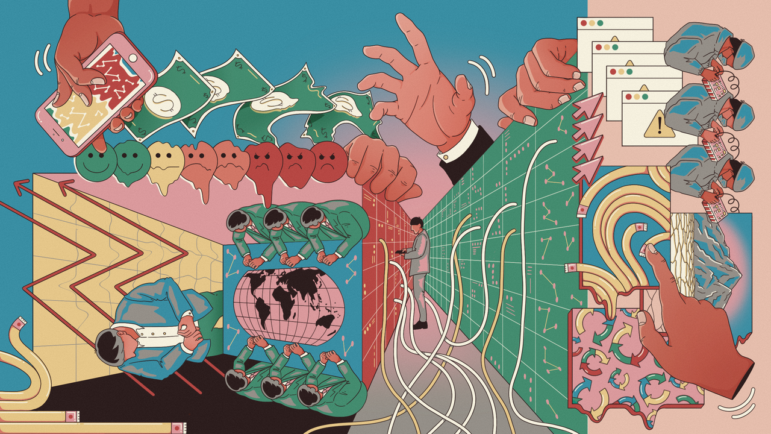
Holding power to account is at the core of investigative journalism. Today, power has become more concentrated than ever before in the hands of Big Tech companies, whose economic -and increasingly political- influence has reached unprecedented levels.
A few figures, among many, illustrate the scale of this concentration. In October 2025, Nvidia became the first company to reach a market capitalization exceeding US$5 trillion (before later falling back), a historic record that even surpassed the GDP of countries such as Japan. In Europe, lobbying by major technology platforms has reached record levels: according to a report published by the Corporate Europe Observatory in October 2025, Big Tech companies now employ more lobbyists in Brussels than there are Members of the European Parliament (890 full-time equivalent lobbyists compared with 720 elected MEPs at the time of the publication of the report). As early as 2018, the Cambridge Analytica scandal served as a textbook case for understanding the extent of the power accumulated by Big Tech, and, crucially, how this power can be mobilized for political purposes with little democratic oversight.
The rapid expansion of artificial intelligence since 2022, and the launch of ChatGPT in particular, has further amplified the immense and opaque power of Big Tech, built on an unprecedented accumulation of personal data, a power that remains only weakly challenged.
Against this backdrop, the Global Investigative Journalism Network convened a full-day pre-conference workshop, “The Investigative Agenda for Technology Journalism,” held on November 20, 2025, in Kuala Lumpur, Malaysia alongside the 14th Global Investigative Journalism Conference (GIJC). The session brought together 100 investigative journalists, editors, tech experts, and researchers from nearly 50 countries and territories to examine the most urgent technology-related challenges and opportunities facing investigative journalism today. As Gabriel Geiger, from Lighthouse Reports, noted during this event: “This isn’t reporting for technical journalists. It’s reporting for journalists who cover politics, health, and criminal justice, because AI intersects with so many fundamental parts of our society.”
The workshop was designed as a collective effort to “think together” as a community. The discussions revealed a central tension for investigative journalists: the “AI and tech paradox.” On one hand, technology has become one of the most powerful forces shaping our world, necessitating deep investigations into its major political, social, and environmental impacts. As Karen Hao, the author of “Empire of AI,” who took part in the conference, argues: “We need to center power as the main lens for covering this industry, we aren’t actually covering simply a technological artifact.”
On the other hand, these same technologies, including AI, have become indispensable tools that journalists must harness to hold Big Tech companies and governments power to account. Paul Radu, co-founder and director of innovation at the Organized Crime and Corruption Reporting Project (OCCRP), explained that when “used critically, AI can help investigative journalists see patterns, connections, and abuses of power that would otherwise remain invisible.”
The agenda was organized around several key pillars and panels.:
- Investigative priorities: A cross-regional panel to identify the most urgent subject areas for global coverage.
- Artificial intelligence: Deep-dive sessions into the history of AI, technical concepts, and frameworks for cutting through the “hype.”
- Responsible tech use: Practical discussions on the ethical use of tech and AI within newsrooms.
- Thematic challenges: Dedicated sessions on algorithmic accountability, government surveillance, online hate/misinformation, and the impact of technology on labor, climate and vulnerable groups.
- Brainstorming: The day concluded with small group sessions where participants brainstormed solutions and shared methodologies.
Below are the key priorities, challenges, and solutions identified during these meetings,
outlining a shared investigative agenda focused on accountability and practical strategies for reporting on AI and technology responsibly.
In addition to the pre-conference day’s sessions, video interviews were conducted with some of the experts in attendance, and a survey was subsequently circulated to participants and follow-up conversations held by the GIJN team after the conference. (Note: The pre-conference day’s discussions were conducted under the Chatham House Rule; all quotations included are public or have been used with the permission of those who made them.)
The key priority themes identified:
- AI accountability and algorithmic power (public and private)
- Government surveillance, disinformation, and digital repression
- Corporate responsibility across the AI supply chain (data, labor, infrastructure)
- Impact of technology on vulnerable communities, labor, and the environment
- Responsible and ethical use of AI and technology in investigations
Main challenges:
- Lack of transparency around AI systems and algorithms
- Rapid technological change outpacing journalistic capacity
- Unequal access to tools, data, and expertise, especially in the Global South
- Surveillance and digital threats targeting journalists
- Legal risks for journalists facing rich and powerful companies
- Resource constraints and dependency on Big Tech platforms
- Ethical risks in using AI
- AI limitations and pitfalls
Emerging solutions and recommendations:
- Shared investigative framework and methodologies on AI accountability
- Collective standards for ethical AI use in investigative journalism
- Expanded training, mentoring, and peer learning
- More digital and computational skills in newsrooms
- Collaborations between journalists and with other partners (universities, users of technology, tech experts)
- GIJN’s role as a hub for tools, guidance, and convening on AI and tech
Beyond serving as a record of the pre-conference, this report is intended to inform GIJN’s future programs, training, and partnerships, helping to shape capacity-building efforts that are grounded in investigative needs, critical thinking, and a clear focus on holding power to account.
 Sandrine Rigaud is the program director at GIJN. She is an investigative journalist, director and Emmy-winning producer who served as editor-in-chief of Forbidden Stories from 2019 to 2024. In that position, she led international collaborations to continue the work of assassinated or under threat reporters, coordinating investigations involving up to 100 journalists and 30 media outlets, including Le Monde, The Washington Post, The Guardian, Der Spiegel, Haaretz, and El País. She teaches investigative journalism at the School of Journalism of Sciences Po Paris and is co-author of “Pegasus: How a Spy in Your Pocket Threatens the End of Privacy, Dignity, and Democracy.” A Nieman Fellow at Harvard in 2024/2025, she worked on global investigative collaborations, leaked data management, and Artificial Intelligence.
International Research Guide: How to Find Experts and Hidden Documents on Any Topic

Guide to Investigating Tech and AI in Modern Warfare
Turning Copernicus Satellite Data Into Public-Interest Climate Stories
10 Practical Tips for Verifying Scientific Claims
How We Investigated the Hidden Costs of the World’s Farmed Seafood
Israeli Checkpoints in the West Bank, Arctic Global Warming, Brazil’s Women Legislators, Inventing a Migrant Crisis in Ukraine

Journalism in Exile: How Newsrooms Can Balance Verification, Source Protection, and Credibility

Apply Now for a Fellowship to the 2027 Global Investigative Journalism Conference

This work is licensed under a Creative Commons Attribution-NoDerivatives 4.0 International License
Republish our articles for free, online or in print, under a Creative Commons license.
Republish this article
This work is licensed under a Creative Commons Attribution-NoDerivatives 4.0 International License
Read Next
How They Did It
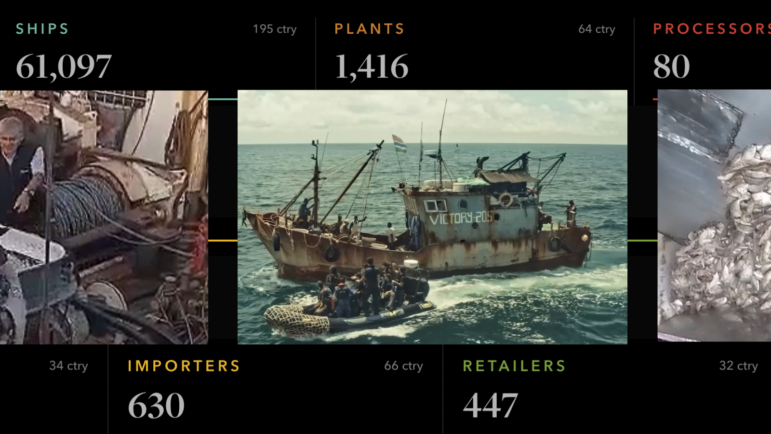
How We Investigated the Hidden Costs of the World’s Farmed Seafood
Over the past five years, an international team of journalists at The Outlaw Ocean Project has examined the largely overlooked $313-billion food-for-feed aquaculture industry.
Data Journalism Top 10
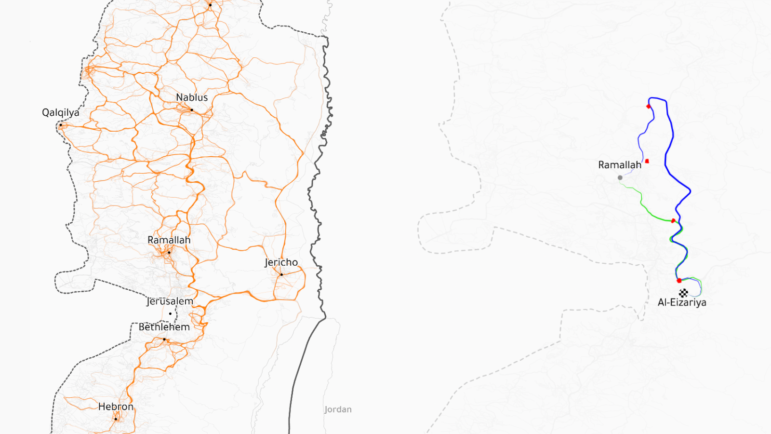
Israeli Checkpoints in the West Bank, Arctic Global Warming, Brazil’s Women Legislators, Inventing a Migrant Crisis in Ukraine
Also highlighting how pro-Russian channels fabricated a mass migration threat in Ukraine, charting South Africa’s micro schools, and how beliefs in an afterlife vary around the world.
News & Analysis
Journalism in Exile: How Newsrooms Can Balance Verification, Source Protection, and Credibility
Operating a newsroom hundreds or thousands of miles away from a country presents a challenge: how do journalists deliver accurate, reliable news to audiences when reporters can’t safely be on the ground?
GIJC27
Apply Now for a Fellowship to the 2027 Global Investigative Journalism Conference
More than 100 journalists from across the Global South received financial aid to attend our last global conference, apply now for the opportunity to attend GIJC27 on a fellowship.