

Resource Guide Chapter
Revised Elections Guide for Investigative Reporters: Where to Begin
This guide is designed to offer a broad array of tools, techniques, and resources to help reporters dig into almost any election or political campaign.
GIJN’s Resource Center is here to help journalists expand their knowledge and skills. The Center holds more than 2,000 items in 14 languages – from tip sheets and guides to instructional videos. Use the menu on the right to navigate it or the search box below to find topics you’re interested in.
This guide is designed to offer a broad array of tools, techniques, and resources to help reporters dig into almost any election or political campaign.

Covering rules and technical trends, such as how voting procedures are changing in different regions and how to spot evidence of foreign interference.

Featuring tools to unearth candidates’ campaign finance histories; tips to connect with key sources; and resources to find hidden assets and red flags.

Containing tips for tracking political conversations, campaign advertisements, and disinformation narratives online.
This webinar shares methodologies for investigating war and conflict, and provide a briefing on the laws that govern what, in popular usage, are called “war crimes.”

People with disabilities are the largest intersectional minority group, according to the UN, and virtually every reporting beat has a disability angle.

Investigative journalists play a crucial role in holding corporations to account, and have revealed labor abuses, environmental violations, corporate impunity and other instances of malpractice through deep-dives into companies and their owners.

Open source information can be a valuable method of reporting when investigating violations of international humanitarian law or war crimes.

A quick reference guide to reporting on attacks on civilians during armed conflicts as part of investigations into war crimes.

Concluding the data track of GIJC23, here’s a discussion on the tools that are coming to the forefront for doing data stories and predictions for what is ahead.

In this introductory session, you’ll learn how to use Google Sheets to do basic analysis — and leave with the ability to do quick data work for daily stories or longer-term projects.

Pinpoint is a powerful tool for converting unstructured data (text and other forms of messy data) into datasets that can be analyzed and used for stories.
Hundreds of journalists are forced into exile around the world by despots, autocrats, and crime cartels. Exiled editors and émigré media are an old story. But amid the modern backlash against independent media, journalists are taking advantage of a new era in tools and technology. These digital toolkits are proving a game-changer, enabling journalists to better report on their homelands, and their audiences to better access that reporting.

More than half of the world’s countries have laws that require officials to supply public documents on request, offering valuable windows for reporters.

In this panel session, attendees heard about the latest visual investigations techniques from three members of The New York Times and Washington Post teams.

The numerous ways to track ships and planes open a whole new range of stories for journalists to investigate.
There are numerous investigative topics to explore between the farmer’s field and the grocery store – and, indeed, the plate – and several recent projects have exposed abuses in the production, distribution, and access to food. This expert panel offers deep experience in issues from fisheries and pesticides to food security and biodiversity — with journalists based in Tunisia, the UK, the US, and Southeast Asia.
We are in the midst of a decade-long global backlash against democracy and human rights. A new extremism has taken hold, characterized by radical right-wing groups and ultranationalist political movements. These groups are not only growing but are becoming more organized. International ties among them are also growing — digitally, ideologically, financially — but their networks are poorly understood and investigative journalism in this area is lacking.

One of the great spin-offs of the digital age is that journalists can tap into crowds and communities in ways unimaginable only a few years ago.

The rise of AI-powered chatbots has prompted hot debates about whether these technologies will reshape or unmake our world.

The impacts of climate change everywhere. But how to do in-depth reporting on the widespread human costs — both immediate and longer-term? Speakers from Asia, Africa, and Europe will discuss how to cover topics such as sea level rise, heat, drought, and extreme weather with an eye to the impact on humanity and the environment. […]
This workshop might just emerge as the one that changes your life as a watchdog journalist. Misinformation and disinformation on “closed” social media networks — such as WhatsApp and Telegram – have already had devastating consequences for democratic processes in places like India, Nigeria, Russia, and Brazil.

Hear from some of the world’s most imaginative climate change journalists. Mongabay’s Rhett Ayers Butler presides over a newsroom producing a constant stream of articles on climate change worldwide. Elisângela Mendonça recently has connected the production of the anti-aging cure collagen with deforestation in Brazil. Emilio Godoy’s multi-faceted portfolio includes investigations of gas leaks and […]

Online research expert Henk van Ess has created a seven-chapter guide that offers reporters step-by-step instructions on how to use social media search to perform investigations of people and subjects and he’s also created a detailed tutorial on using facial recognition technology and best practices for putting these tools together in verifying claims online.

Satellite images are powerful tools for discovery and analysis, plus provide vivid illustrations. Discover GIJN’s favorite resources.
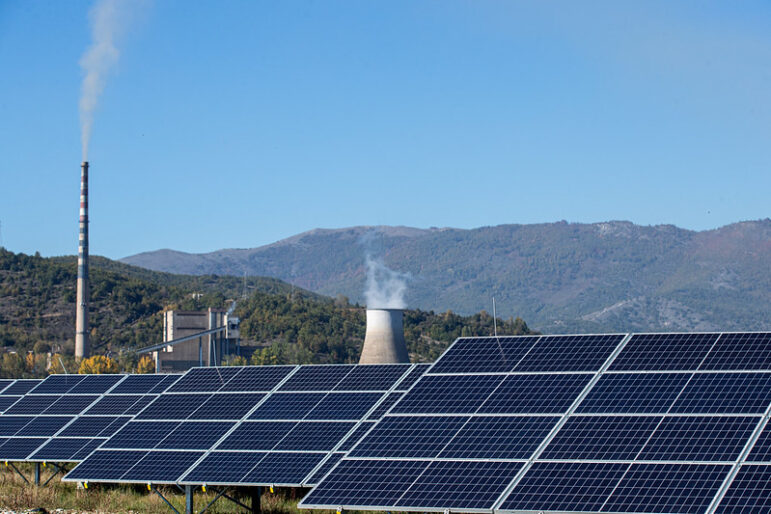
In this abridged version, GIJN offers tips from our latest reporting guide, on how journalists can investigate their country’s climate change pledges and hold governments accountable.

Based on an interview with Wayback Machine’s director, Mark Graham, ProPublica’s Craig Silverman shares more essential tips on using it, including how to bulk archive pages, compare changes, and see when elements of a page were archived.

Featuring tools and resources for protecting your reporting — and your sources — from surveillance and other online attacks.