

Resource Guide Chapter
Business Tools — Chapter 6
These tools can record and edit audio and video, as well as integrate them into your site.
These tools can record and edit audio and video, as well as integrate them into your site.

Here are tools for directly receiving input and feedback from site visitors, whether you’re looking to do a survey or add a moderated comments section.

Tools that both assess site traffic data and help optimize pages to increase traffic and to improve visitors’ experiences.

In the US, the two most popular accounting and invoicing programs are QuickBooks and Xero, neither of which offers a free option. But there are some low or no-fee alternatives.

An overview of messaging and communications tools, from Element to Zoom.

An overview of the myriad platforms and tools for general organization, project management, and scheduling.
This guide was produced thanks to support from the Google News Initiative. It was researched and written by Talya Cooper, a researcher based in New York who has worked as the archivist of the Edward Snowden archive at The Intercept and as archive manager at StoryCorps. She is the co-author, with Alison Macrina, of “Anonymity,” a […]
GIJN is publishing a new business tools guide focused on helping news outlets solve their administrative needs. Written by Talya Cooper and illustrated by Chafiq Faiz, the guide includes useful software and applications – many of which are free – for small newsrooms. Tools included cover administration, management, communication, file sharing, accounting, SEO, audience engagement, audiovisual, content management, subscriber management, design and data visualization, social media and email marketing, site security, and password management.

The war in Syria has dragged on for a decade, which has led to more than six million people being displaced within the country’s borders, and a similar number have fled the country as refugees. But what has happened to the money raised to help rebuild the country? Journalist Mohammed Bassiki dug deep into the documents and followed the money trail to find out.
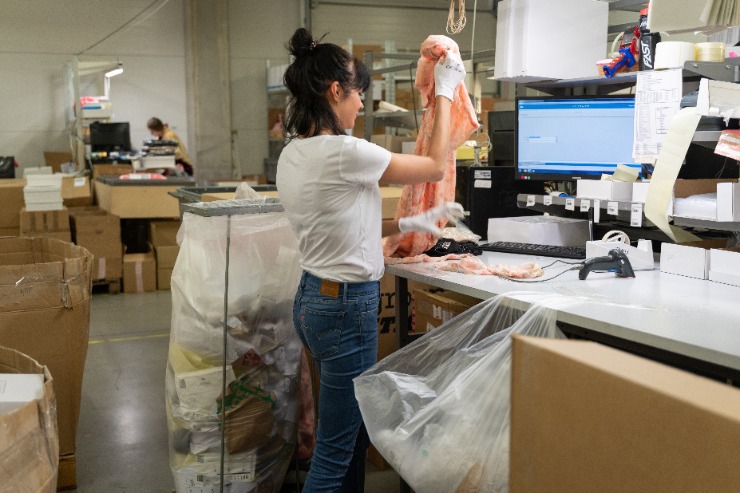
What happens to the clothes we donate to charity? Or the clothes we buy online, try on, and then return? Two Finnish journalists used tracking devices in order to investigate these post-consumer supply chains, finding that many items make their way on a complex journey to Africa and the Middle East before sometimes ending up in landfill.
In 2001 GIJN was born, as investigative journalists from around the globe met for the very first time to share ideas, tips, and best practices to strengthen their reporting in a world where journalism was increasingly under threat.
Today the threat has multiplied, and at GIJN we find ourselves under the same pressures as our member organizations. Most urgently: available funding for investigative journalism has been impacted as some longtime funders who supported journalism in the past are no longer doing so or have closed. Yet our work continues, more important than ever before.
GIJN serves as the global hub for the world’s investigative reporters. Our core mission is to support and strengthen investigative journalism—with special attention to those from repressive regimes and marginalized communities.
We are embarking on our first-ever campaign initiative to help us expand our revenue by the end of the year through individual donors. If you have ever joined one of our free webinars, used one of our free resources, learned a new skill thanks to a GIJN training, or simply believe that press freedom is essential to civil society, we ask you to show your support for GIJN’s work with a donation of your choosing. Called “Friends of GIJN,” this campaign includes a more personalized experience, starting in 2027, for individuals who answer the call to join with us during this unprecedented time.
Truth and democracy are under attack around the world. You can fight back by helping GIJN support investigative journalists with free access to the latest tools and techniques — so they can foster justice and hold accountable those who abuse the public trust.
With a staff based in 24 countries, GIJN works in a dozen languages each day, linking together the world’s most enterprising journalists, offering state-of-the-art training, webinars, tip sheets, and a Help Desk that responds to 2,000+ requests for assistance each year. More than 84% of GIJN’s operating budget goes directly to our program work.
Please make a gift today to support journalists on the front lines of the fight for accountability and human rights.