

Resource Video
GIJC23 – Dealing with Online Harassment
Online harassment of investigative journalists who identify as women has reached crisis proportions.
Online harassment of investigative journalists who identify as women has reached crisis proportions.
GIJN associate editor Laura Dixon and GIJN Francophone Africa editor Maxime Domegni round up seven key takeaways from the 2023 Centre for Investigative Journalism’s 2023 summer conference in London.
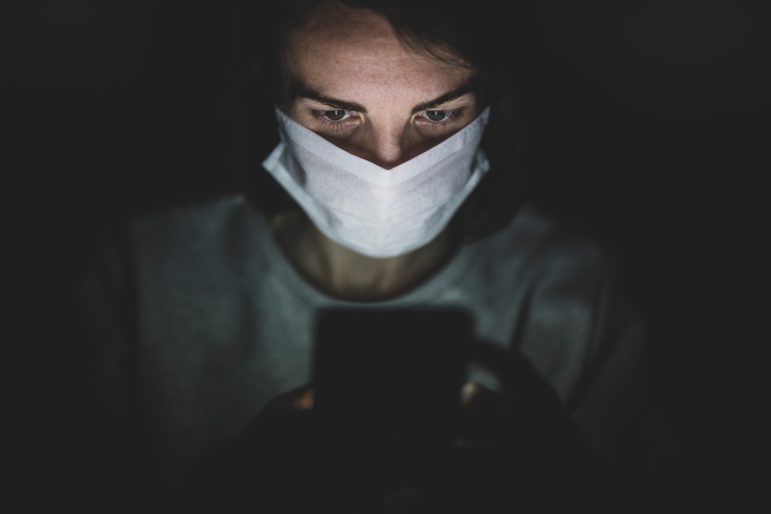
Wisconsin-based freelance reporter and writer Howard Hardee writes about the inextricable link between online harassment and disinformation, and what individual reporters and newsrooms can do about it.
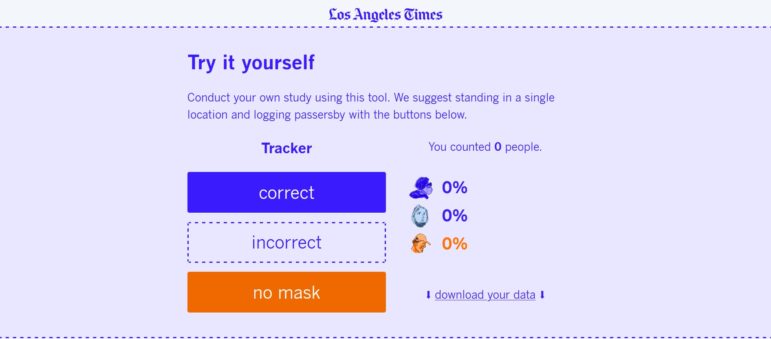
Satellite imagery has become increasingly useful in establishing evidence of human rights abuses and in shining a light on dubious activities being conducted in secretive parts of the world. Our NodeXL #ddj mapping from August 17 to 23 finds NBC News utilizing satellite data to solve a long-standing mystery about North Korean “ghost boats” washing up on Japanese shores, The New York Times analyzing footfall data to determine how the coronavirus pandemic has influenced consumer spending, and Bellingcat revealing a coordinated network of attacks on Twitter against the director general of the World Health Organization (WHO).
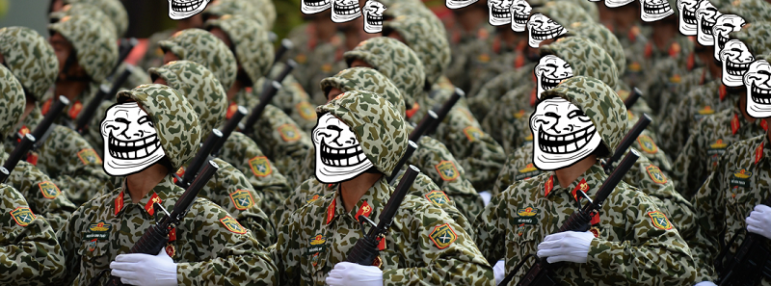
Reporters Sans Frontieres published, for the first time, a list of press freedom’s 20 worst digital predators in 2020. Whether state offshoots, private-sector companies, or informal entities, they reflect a reality of power at the end of the 21st century’s second decade, in which investigative reporters and other journalists who cause displeasure risk being the targets of predatory activity by often hidden actors.
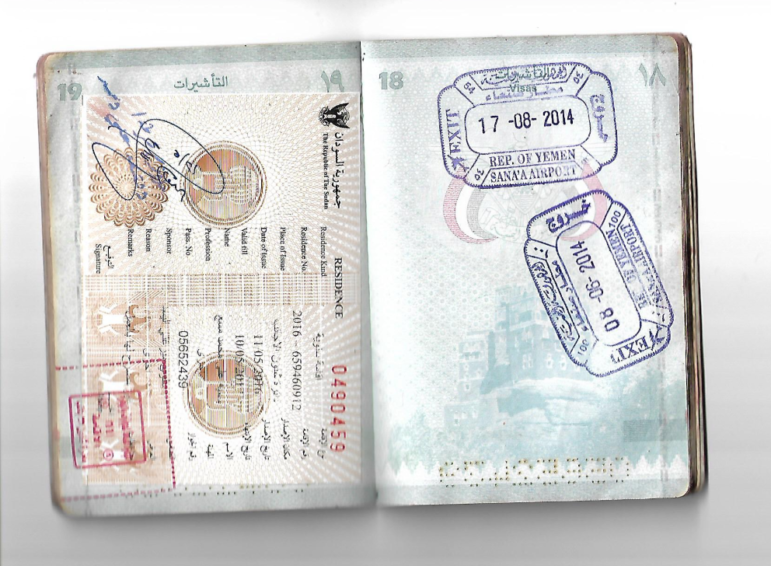
Yemeni journalist Fuad Rajeh, who is based in Jordan, decided to expose threats to freedom of expression in his country by looking into the cases of two activists and two journalists who faced online threats — and, in one case, ended up being killed — for speaking their minds on social media. Here’s how he did it.
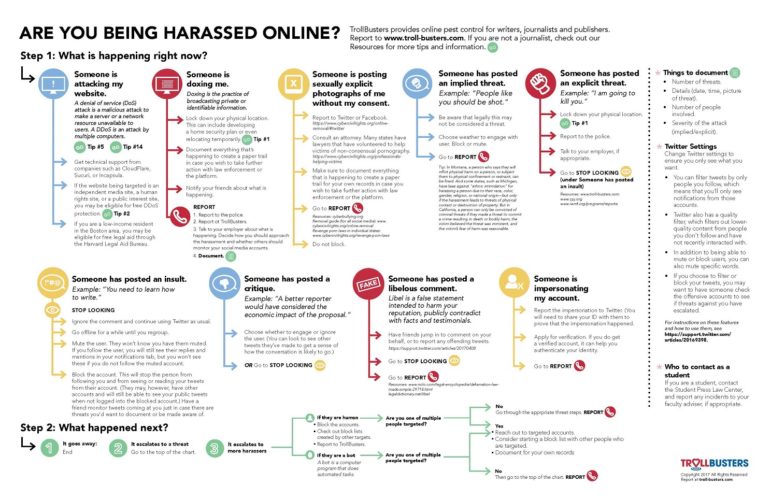
It is unfortunately becoming easier and easier to harass journalists online through the use of technology such as bots, with the intent to intimidate and silence truth-tellers. These attacks can be relentless and if left unchecked, can be a real threat to journalists’ mental health and reputation. To deal with these online “pests,” TrollBusters created an infographic that offers clear steps on how to deal with various types of cyberviolence ranging from doxing to sexually explicit photos.
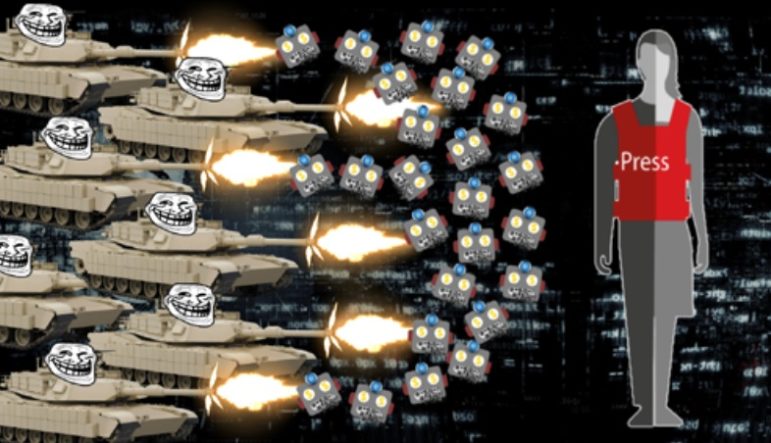
A new report by Reporters Without Borders is helping to shed light on the latest danger for journalists – threats and insults on social networks that are designed to intimidate them into silence. The organization has put forth these 25 recommendations for governments, international organizations, online platforms, media companies and advertisers to respond to these virulent online campaigns.
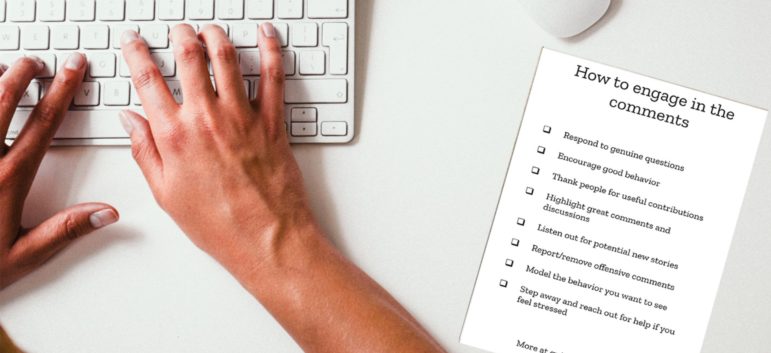
Journalists can increase people’s trust and create a loyal audience by engaging with their readers in the comments section. This guide by The Coral Project has tips on how journalists can best interact with their audience, deal with potential abuse and find real value in the comments.
It’s been a year of great reads on GIJN, from “how they did it” to the best tips and tools on everything from mojo to mapping. Here’s a curated list of top ten reader favorites from stories published in 2017.
In 2001 GIJN was born, as investigative journalists from around the globe met for the very first time to share ideas, tips, and best practices to strengthen their reporting in a world where journalism was increasingly under threat.
Today the threat has multiplied, and at GIJN we find ourselves under the same pressures as our member organizations. Most urgently: available funding for investigative journalism has been impacted as some longtime funders who supported journalism in the past are no longer doing so or have closed. Yet our work continues, more important than ever before.
GIJN serves as the global hub for the world’s investigative reporters. Our core mission is to support and strengthen investigative journalism—with special attention to those from repressive regimes and marginalized communities.
We are embarking on our first-ever campaign initiative to help us expand our revenue by the end of the year through individual donors. If you have ever joined one of our free webinars, used one of our free resources, learned a new skill thanks to a GIJN training, or simply believe that press freedom is essential to civil society, we ask you to show your support for GIJN’s work with a donation of your choosing. Called “Friends of GIJN,” this campaign includes a more personalized experience, starting in 2027, for individuals who answer the call to join with us during this unprecedented time.
Truth and democracy are under attack around the world. You can fight back by helping GIJN support investigative journalists with free access to the latest tools and techniques — so they can foster justice and hold accountable those who abuse the public trust.
With a staff based in 24 countries, GIJN works in a dozen languages each day, linking together the world’s most enterprising journalists, offering state-of-the-art training, webinars, tip sheets, and a Help Desk that responds to 2,000+ requests for assistance each year. More than 84% of GIJN’s operating budget goes directly to our program work.
Please make a gift today to support journalists on the front lines of the fight for accountability and human rights.