

Case Studies
Google News Initiative Grants in Africa and the Middle East Yield Mixed Results
A study found many Google News Initiative projects in Middle East and Africa struggle to become more than makeshift versions of the original idea.
A study found many Google News Initiative projects in Middle East and Africa struggle to become more than makeshift versions of the original idea.
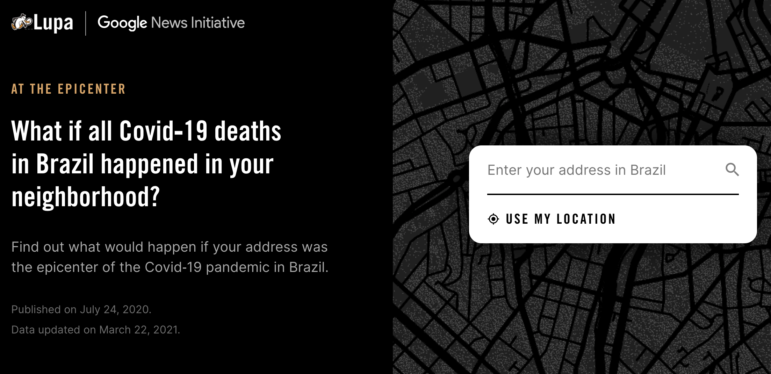
When the COVID-19 pandemic first hit Brazil, a team of data journalists set out to illustrate what the death toll looked like by creating a data visualization that presented something beyond the numbers. The team considered various ways of displaying the story. Here’s a behind-the-scenes look at how they created At the Epicenter.
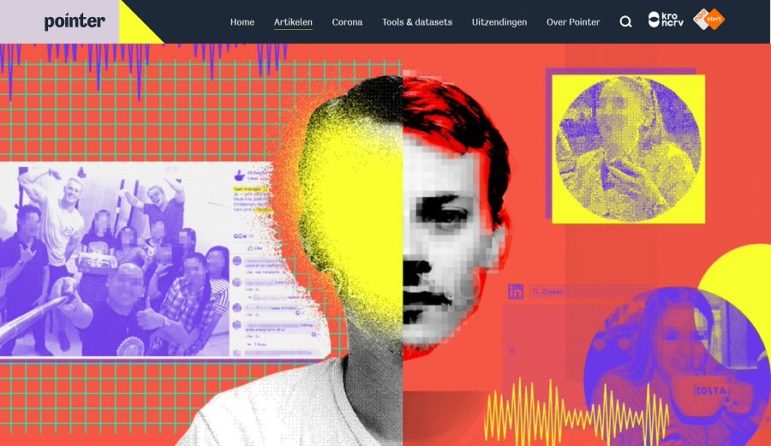
Our NodeXL #ddj mapping from June 22 to 28 finds The New York Times analyzing travel patterns and genetic data to show how the disease spread across the United States, and the impact it has had on nursing homes and elderly care facilities. The Washington Post is responding to the increasing importance of visual data communication by expanding its data and graphics team, and the Pulitzer Center is calling for data journalism story proposals.

What’s the global data journalism community tweeting about this week? Our NodeXL #ddj mapping from April 8 to 14 finds a zine focused on machine learning-powered investigative journalism produced by @bxrobertz, a video explainer from @FT on whether big corporations are really generous or just avoiding taxes, @knowtheory and @amandabee reviewing seven optical character recognition tools and @workbenchdata offering a tutorial on visualizing @Twitter data.
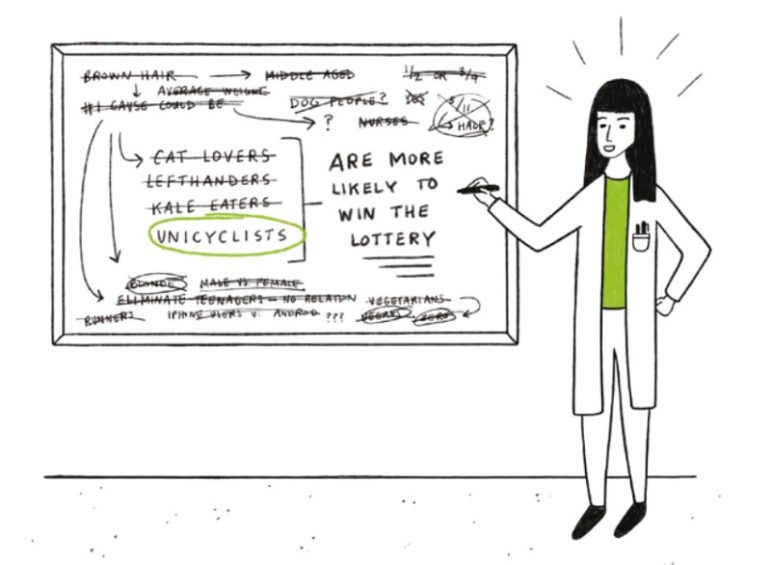
What’s the global data journalism community tweeting about this week? Our NodeXL #ddj mapping from November 26 to December 2 finds @VRCCrimCam mapping London’s medieval murder hotspots, @geckoboard illustrating common data fallacies to avoid, @ddjournalism teases the beta launch of the Data Journalism Handbook 2.0, and @GoogleNewsInit displays its data journalism courses.
What’s the global data journalism community tweeting about this week? Our NodeXL #ddj mapping from October 15 to 21 finds @Esri’s @AllenCarroll talking the power of maps in storytelling, @visualizingdata’s catalogue of charts and corresponding tools to help information designers, and @ericwilliamlin’s deep dive into the data of casting decisions in Shakespearean plays since the 1900s.

What’s the global data journalism community tweeting about this week? Our NodeXL #ddj mapping from June 18 to 25 finds a visual story about fixing household stuff by @xocasgv and @GoogleNewsInit, another about fixing political stuff by @Washingtonpost and @paulbradshaw on teaching data journalism.
In 2001 GIJN was born, as investigative journalists from around the globe met for the very first time to share ideas, tips, and best practices to strengthen their reporting in a world where journalism was increasingly under threat.
Today the threat has multiplied, and at GIJN we find ourselves under the same pressures as our member organizations. Most urgently: available funding for investigative journalism has been impacted as some longtime funders who supported journalism in the past are no longer doing so or have closed. Yet our work continues, more important than ever before.
GIJN serves as the global hub for the world’s investigative reporters. Our core mission is to support and strengthen investigative journalism—with special attention to those from repressive regimes and marginalized communities.
We are embarking on our first-ever campaign initiative to help us expand our revenue by the end of the year through individual donors. If you have ever joined one of our free webinars, used one of our free resources, learned a new skill thanks to a GIJN training, or simply believe that press freedom is essential to civil society, we ask you to show your support for GIJN’s work with a donation of your choosing. Called “Friends of GIJN,” this campaign includes a more personalized experience, starting in 2027, for individuals who answer the call to join with us during this unprecedented time.
Truth and democracy are under attack around the world. You can fight back by helping GIJN support investigative journalists with free access to the latest tools and techniques — so they can foster justice and hold accountable those who abuse the public trust.
With a staff based in 24 countries, GIJN works in a dozen languages each day, linking together the world’s most enterprising journalists, offering state-of-the-art training, webinars, tip sheets, and a Help Desk that responds to 2,000+ requests for assistance each year. More than 84% of GIJN’s operating budget goes directly to our program work.
Please make a gift today to support journalists on the front lines of the fight for accountability and human rights.