

Image: Shutterstock
When the Story Is Canceled: 8 Practical Tips from RightsCon and World Press Freedom Day
Why Journalists in Autocracies Should Report as If They’re in a Democracy
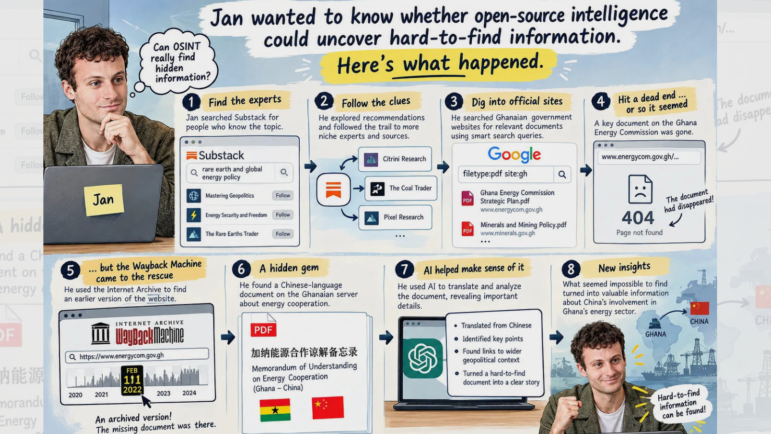
International Research Guide: How to Find Experts and Hidden Documents on Any Topic

Guide to Investigating Tech and AI in Modern Warfare
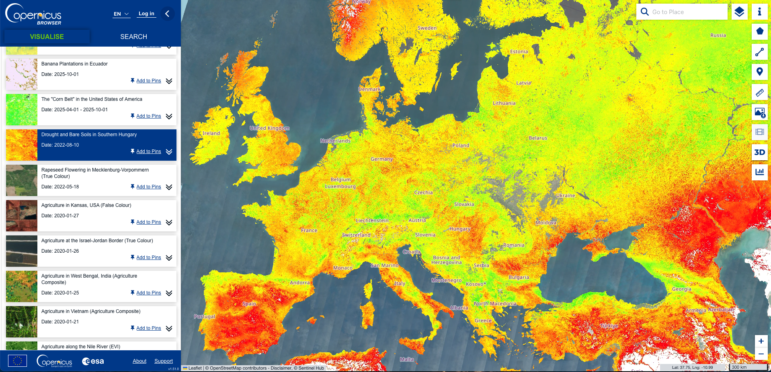
Turning Copernicus Satellite Data Into Public-Interest Climate Stories
RightsCon 2026, the global digital rights summit scheduled for May 5-8 in Lusaka, Zambia, was supposed to follow UNESCO’s World Press Freedom Day conference (WPFD) in the same location. The back-to-back timing promised a rare convergence: press freedom advocates, digital rights defenders, journalists, academics, civil society groups, and platform specialists all convening in the same city, discussing surveillance, artificial intelligence, safety, platform governance, and freedom of expression.
Then, on April 29, while I was en route to Lusaka, a WhatsApp message from a conference contact suddenly changed the assignment: “What happens now that RightsCon is canceled?”
The following tips draw on public statements, preserved program changes, interviews, and observations from Lusaka, where I attended WPFD in the aftermath of the RightsCon cancellation.
1. Make the Cancellation the Story
Just days before RightsCon was due to begin — and with conference officials already on the ground— the Zambian government began to send ominous and confusing signals about the future of the event. (RightsCon and AccessNow have published a full timeline of their interactions with the Zambian government.)
First, Zambian ministry officials announced what it called a postponement, citing the need for “comprehensive disclosure of critical information” and alignment with “national values, policy priorities, and broader public interest considerations.” Access Now later released a statement saying the summit would not proceed in Zambia or online and alleged that “foreign interference” connected to the planned participation of Taiwanese civil society groups was the reason. The Associated Press and Reuters also reported on Access Now’s account of Chinese pressure. The NetRights Coalition and more than 130 other signatories condemned the disruption in a joint statement.
Practical tip: When unexpected changes or powerful forces interfere — a cancellation, contradiction, silence, schedule change, access problem, or sudden shift in tone — pause, observe with all your senses, and let the reporting environment redirect your questions to the observable impacts: Who is suddenly unavailable? What voices are no longer being heard? How has the mood in the physical spaces changed? And what new power structures have just become visible?
2. Treat the Disruption as Evidence
Organizers planned for back-to-back events in Lusaka, Zambia: RightsCon 2026 and UNESCO’s World Press Freedom Day conference. Image: RightsCon
When a conference, hearing, court case, election event, or public meeting is canceled or altered at the last minute, do not treat the disruption as separate from the story. Treat it as evidence. Preserve the first notice you receive, the timestamp, the platform, the exact wording, and the chain of communication.
For journalists on the ground in Zambia, the cancellation was not just a logistical problem. It became the reporting frame. In this case, my first alert came via an unofficial WhatsApp message before I had seen any formal statement. That mattered because it showed how quickly uncertainty moved through informal networks before official explanations caught up.
Practical tip: Build a live chronology in real time. Set up informal networks before major events, and then document each update as it arrives. The point is not only to prove that something changed. It is to show, as much as possible, who knew what, when they knew it, and who was left unable to make informed decisions.
3. Map Who Is Missing from the Room
Investigative journalists often focus on who speaks. In Lusaka, the more revealing question was also who was no longer present.
By May 3, it was clear that the WPFD conference would continue, but not as originally planned. Program changes became part of the RightsCon cancellation fallout. I preserved versions of the schedule, compared them, and followed up with interviews.
Nikki Gladstone, RightsCon director, told me that Access Now declined to participate in WPFD after deciding RightsCon could no longer proceed. Arzu Geybulla, Access Now’s co-executive director, had been scheduled to speak on the WPFD’s Digital Transformation, AI, and Information Integrity panel, Gladstone said, but recused herself. At least two other panelists on the same panel who had planned to attend RightsCon afterward also withdrew after the news. Several presenters from the academic sessions were notably absent, though the reasons remain unclear.
Practical tip: Make a disappearance list. Compare early programs, updated schedules, printed programs, moderator scripts, speaker bios, and attendance. Then contact absent speakers or organizations. A missing panelist is not automatically evidence of pressure, but a pattern of absences can reveal the practical impact of a political decision.
4. Define Safety Beyond Physical Violence
UNESCO’s World Trends data, highlighted during the Lusaka WPFD conference, records a 10% decline in freedom of expression since 2012, a 63% rise in journalist self-censorship, and a 48% increase in efforts by governments and powerful groups to control newspapers, television, radio, and digital media. UNESCO also reported that 310 journalists were killed between January 2022 and September 2025, including 162 in conflict zones, and that 91 journalists were killed in 2025, the highest annual toll since 2018.
The Southern Africa Press Freedom Report, launched during WPFD in Lusaka, brought that global crisis into regional focus by assessing media conditions in 11 southern African countries and identifies growing pressures on journalists, including market failure, digital surveillance, weaponized legislation, technology-facilitated gender-based violence, and shrinking economic sustainability. Reporters Without Borders added another warning: press freedom is at a 25-year low, with more than half of countries and territories classified as either “difficult” or “very serious.” In the 2026 index, Zambia ranked 77th out of 180 countries.
Journalist safety was one of the dominant themes at WPFD, but the cancellation of RightsCon made another journalist safety issue visible: uncertainty itself can create risk. Delegates were left to decide whether to cancel, seek refunds, continue to Lusaka, speak publicly, remain quiet, or change their digital and physical security plans. Gladstone told me participant safety requires respecting different risk profiles. “Informed consent is always the most important element,” she said, adding that journalists must be mindful that media exposure “isn’t always beneficial for people.”
Practical tip: Before interviewing activists, organizers, whistleblowers, or community members in a volatile environment, ask what level of visibility they consent to. Confirm whether they can be named, photographed, recorded, paraphrased, quoted, or used only as background. Reconfirm consent before publication when circumstances change.
5. Listen to the Local Information Environment
The official program is only one layer of a story. Local radio, taxi conversations, WhatsApp groups, social media posts, rumors, moral panics, and silences can reveal how official language is being interpreted by the public.
A local radio segment in Zambia on May 6, which discussed the legal and social ramifications of two women kissing, offered one example of how questions of sexuality, public morality, law, and media visibility were being debated in Zambia at that moment. Bonfess Ngalasa, identified on air as counsel and advocate of the High Court, argued that “any art, media publication, or public performance” interpreted as advocating for or normalizing LGBTQ relationships could be viewed as unlawful under Zambia’s criminal law and public morality framework. The broadcast did not explain the RightsCon cancellation, but it helped illuminate the local atmosphere in which official language about “national values” was being received, contested, and circulated.
Practical tip: When official language is broad or euphemistic, investigate how that language is being translated locally. Radio, local newspapers, legal commentary, public forums, social media, and ordinary conversations may not prove causation, but they can help reporters understand the cultural and political contexts shaping the story.
6. Ask Local Partners What Safety Looks Like Before Violence Occurs
One of the most useful interviews came from Richard Mulonga, founder and CEO of Bloggers of Zambia, RightsCon’s local partner. Mulonga described the cancellation as creating an “information void” that was both local and global because some delegates had already packed, boarded flights, reached airports, or begun connecting journeys. “We couldn’t provide any specific information that would have facilitated decision-making,” he said.
Mulonga also connected safety to everyday relationships between reporters and police. His organization, Bloggers of Zambia, has worked to bring local police commands, media associations, media unions, and journalists into dialogue before high-risk reporting contexts, including demonstrations, riots, VIP coverage, and shutdown threats.
Practical tip: Safety planning cannot begin only when a reporter enters a conflict zone or country with unstable press freedoms. It begins earlier: in accreditation, travel routes, digital communications, source protection, consent, and data storage.
7. Separate Access from Accountability
Yvonne Jere Kunda of Zambia News and Information Services reported that only three foreign journalists were accredited to cover both RightsCon and WPFD after many RightsCon-focused journalists postponed their trips. Mulonga described a broader foreign-media disruption, saying his team was involved in press accreditation, but did not yet have final numbers before the postponement interrupted the process.
Being physically present in Lusaka became a form of access. As a WPFD delegate and academic panelist, I had access to speaker lunches, waiting rooms, side conversations, and informal exchanges that helped me understand how people were processing the RightsCon cancellation beyond the official stage. But privileged access creates an ethical problem. Clear boundaries must be set before material enters a story.
Practical tip: Label notes immediately after each encounter: “on record,” “background,” “not for use,” “scene only,” and “needs confirmation.” If you are both participant and reporter, disclose that dual role when seeking quotes. Access is useful only if readers can trust how you got the information.
8. Treat Creators, Platforms, and Omissions as Part of the Press Freedom Beat
Amahle-Imvelo Jaxa, known as Jaxx of All Trades or Jaxx, was listed in the WPFD program as a young content creator from South Africa. Her presence mattered because it changed the room’s definition of who belongs in a press freedom conversation. She told me she is careful with the title “journalist”: “If the internet were switched off for a day, would I still be a journalist? And the answer is no.” Instead, she described herself as someone who simplifies complex news for people who may not read newspapers or go directly to legacy news pages. “I don’t think it should be a competition between journalists and content creators,” she said. “I genuinely believe we can help each other.”
Carlos Van Meek of Al Jazeera also pointed to the shift in how journalism reaches the public. “What content creators are doing now is they’re directly engaging the audience,” he said. “There is no filter.” He also warned that platform companies now shape whether journalism circulates, disappears, or reaches the public audiences it was meant to serve. “They are the new media barons,” he said.
Practical tip: When covering press freedom, do not limit your source list to newsroom executives, state officials, or expected institutional voices. Interview creators, academics, visual journalists, students, and local organizers. During WPFD, the academic sessions were, in some ways, more direct and more revealing than the formal plenary stage.
After presenting at my panel, “Building Democratic Media: Artistic Research and Para-Institutional Creator-Journalism,” to more than 70 students from the University of Zambia and other attendees, I left Lusaka more convinced that press freedom reporting has to expand its field of vision. As van Meek put it, “Journalists don’t have to come from a journalism background. They have to come with a curiosity background. And they have to come with a certain level of seeing the world, and just call it out.¨
 Becky Beamer is an award-winning documentary filmmaker, artist, and assistant professor of photojournalism at OsloMet University in Oslo, Norway. Her area of expertise is international investigatory storytelling, which encourages public discourse on personal identity, inequity, and cross-cultural communication. Beamer is interested in transformative multimedia projects that challenge the status quo. For over 20 years, Beamer has worked on documentary television for companies including National Geographic, Smithsonian, Discovery, and NHNZ. She received her BFA from Pratt Institute and an MFA from the University of Alabama. Becky´s collaborative work has been awarded support from the Puffin Foundation, Fulbright Commission, and Windgate Foundation. Her recent documentary feature film, “MACHINE: Vivat Apparatus” premiered in August 2022 at the International Sidewalk Film Festival.
Why Journalists in Autocracies Should Report as If They’re in a Democracy
International Research Guide: How to Find Experts and Hidden Documents on Any Topic
Guide to Investigating Tech and AI in Modern Warfare
Turning Copernicus Satellite Data Into Public-Interest Climate Stories

Reporters Without Borders: Amid Widespread Erosion of Democracy, 2026 World Press Freedom Index Drops to 25-Year Low

Piercing the Veil of Censorship in China as a Visual Investigator

Avoiding Censorship: How to Move Anonymously on the Internet
Inside an East African Investigative Newsroom That Has Defied a Decade of Pressure

This work is licensed under a Creative Commons Attribution-NoDerivatives 4.0 International License
Republish our articles for free, online or in print, under a Creative Commons license.
Republish this article
This work is licensed under a Creative Commons Attribution-NoDerivatives 4.0 International License
Read Next
Document of the Day Press Freedom
Reporters Without Borders: Amid Widespread Erosion of Democracy, 2026 World Press Freedom Index Drops to 25-Year Low
In its 25th edition, the Reporters Without Borders assessment notes a “widespread decline” in the global state of media freedom — but notes a few encouraging signs of optimism.
10 Questions
Piercing the Veil of Censorship in China as a Visual Investigator
As a member of The New York Times Visual Investigations team, Muyi Xiao reports on her native China using a combination of remote tools and interviews.
Press Freedom Reporting Tools & Tips
Avoiding Censorship: How to Move Anonymously on the Internet
The methods and tools that governments employ to censor and control the internet, and the tools and ways to get around censorship, are a constantly shifting battleground. But there is a set of evergreen best practices and helpful software that are useful.
News & Analysis
Inside an East African Investigative Newsroom That Has Defied a Decade of Pressure
Africa Uncensored has survived legal threats, intimidation, and politically motivated attacks on its funders to become a prominent force in Kenya’s investigative journalism landscape.