

Image: Courtesy of Li Sipan
Veteran Reporter Li Sipan on Censorship, the Great Firewall, and China’s Independent Media Landscape
Read this article in
In the late 1990s, China’s media landscape began a market-driven transformation. Across the country, a new breed of commercial news outlets emerged — distinct from the official party press. This broke a longstanding tradition in which the media served as mouthpieces of the Chinese Communist Party (the CCP), and briefly opened up a window of relative freedom. Facing pressure from both the market and the need to earn public trust, a generation of journalists began doing what had once seemed unthinkable: going into the field, pressing officials for answers, overturning wrongful convictions, and exposing the networks of interest behind major stories.
But the opening didn’t last long, and by 2008, the space for investigative reporting had started to close. Coverage linking shoddy school construction to student deaths in the Sichuan earthquake was heavily suppressed, while during the Beijing Olympics, nationalist narratives drowned out critical voices. Then in 2013, the propaganda chief in Guangdong intervened to rewrite an editorial in Southern Weekly before it went to print, replacing a call for constitutional reform with boilerplate praise for the CCP’s new leader Xi Jinping. The move sparked widespread protests from journalists and the public alike. While they were initially met with silence, soon the authorities launched a sweeping crackdown on liberal influencers on the microblogging site Weibo, systematically dismantling the spaces where public opinion had gathered.
Over the following years, investigative units at major outlets were quietly shut down, and veteran reporters left the industry in droves. After 2015, tightening laws and a rapidly shifting political climate moved in lockstep: NGOs, lawyers, and public intellectuals came under mounting pressure, and a once-vibrant civil society shriveled with alarming speed.
But while there was a void, there was not total silence. The COVID-19 outbreak became an unexpected flashpoint. In the early days of Wuhan’s lockdown, citizen journalists rushed to the scene, with their footage and reports filling vast gaps in the official narrative. Throughout the pandemic, countless ordinary people documented, shared, and supported one another on social media — sustaining a trickle of information through the constant friction of censorship and circumvention tools. But the crisis laid bare, in the most devastating way, what the absence of public information really costs — and with equal force, rekindled a hunger for independent reporting.
Journalists who had been driven out during the long media winter began to regroup in new forms: Chinese-language podcasts recorded overseas, independent newsletters, and narrative nonfiction platforms. On both sides of China’s Great Firewall, a new ecosystem of independent Chinese media began, painstakingly, to take shape.
The veteran journalist, founder, and advocate Li Sipan is one of the people best placed to describe this entire arc. She spent over a decade of her career at the Southern Media Group — a commercial media group that once commanded wide influence across China — both at 21st Century Global Herald, the in-depth investigation department of Southern Metropolis Daily, and at Southern Weekly. Her landmark series, The Shanmu Dynasty and The Dangerous Mentor, were among the earliest systematic investigations of workplace and campus sexual abuse in Chinese journalism — years before the #MeToo movement reached China.
At around the same time, she co-founded the Women Awakening Network with a group of women journalists in Guangzhou, and for the next 14 years, she moved between two identities: reporter and advocate. The group had some major successes — one campaign on sexual harassment in universities saw the network coordinate an open letter to the Ministry of Education signed by 256 scholars from around the world. The campaign ultimately led to China’s first ministerial-level policy document on sexual harassment in educational settings. She also played a central role in civil society advocacy around China’s landmark anti-domestic violence legislation. Her high profile, however, brought unwelcome attention, too. In 2017, as the Overseas NGO Management Law came into full effect in China, she was repeatedly called in for questioning and asked to leave the Network, while gentle persuasion was used to suggest that an academic path would be more suitable for her. After earning her PhD, she took on a teaching position in the school of journalism at Shantou University. Since 2022, she has served as a scholar-in-residence at the University of California, Berkeley, and as a visiting scholar at Stanford University.
Her life’s work amounts to an unusual historical archive. At a time when gender issues were barely acknowledged in China, she was among the first to bring women’s rights and a gender perspective into the professional development programs of China’s commercial media. She also lived through the full arc of that commercial media era — its rise, its brief flourishing, and its decline — and watched as independent journalists, NGO workers, and public intellectuals disappeared from urban civic life, wave after wave.
Today, from abroad, Sipan has founded an independent media outlet focused on in-depth reporting, and is involved in launching inVOC, an independent media support initiative — both aim to provide structural support for the ecosystem of Chinese-language independent media.
GIJN spoke to Li Sipan to hear how she navigated the various waves and transformations in the Chinese media landscape, and to hear her views on the current landscape and the challenges that remain. This interview has been lightly edited for style.
GIJN: Your career has spanned the full arc of Chinese journalism — from its golden age to near-total silence. How did you navigate that deterioration, and is there anything from that experience you can share?
Li Sipan: For most of my time in the media world, I existed in two roles simultaneously: a factual reporter embedded within institutions, and an independent commentator writing from a feminist perspective. That feminist lens also gave me a more critical view of the so-called “golden age” of Chinese journalism. My measure of that era included not just “freedom,” but also equality and inclusion — and by that standard, I had a lot of reservations about the liberal media consensus of that period. So when things started going quiet, my disillusionment didn’t hit as early or as hard as it did for some others.
Around 2014, as online outlets began producing original journalism and the mobile internet brought both innovation and an enormous appetite for content, independent journalists and advocacy organizations actually found more room to participate in reporting than before. For the Women Awakening Network, 2014 was the year we broke into the mainstream. We partnered with NetEase’s “Truth” channel to cover the Xiamen University sexual harassment case, and our undercover report on a so-called “female virtue school” drew national attention. Then in 2015, after Sixth Tone cited our commentary on the Gao Yanmin case [which detailed how a trafficked woman became the only elementary school teacher in a remote mountain area], media outlets across the country revisited a story that had first broken 20 years earlier.
None of that would have been possible before the monopoly of the traditional press began to loosen. For a long time, influence in Chinese media belonged to large institutions, male voices, and perspectives that leaned heavily toward the capital.
What I came to understand is that we had no choice but to find the space to do meaningful work within whatever shifts were happening — politically, technologically, commercially, and in terms of audience. The editorial latitude of the investigative golden age is genuinely something to mourn. But that relative press freedom and the democratization and diversification of media were never advancing in step with each other in China.
GIJN: In your long essay for The Ideas Letter on independent Chinese media, you made many sharp observations. One judgment stood out to me: the critical tradition of institutional journalism in China has nearly died out, while whatever independent voices remain are highly vertical — focused on specific topics or communities, scattered across corners of social media.
LS: The crisis in Western media is that institutional outlets are losing credibility and agenda-setting power. China’s crisis is different: credible news institutions have vanished altogether. That means journalism’s core function — sifting and prioritizing information about public affairs so that citizens can decide what deserves their attention — is simply gone. The public is highly fragmented, and so is their information environment. In today’s simplified Chinese media landscape, you genuinely cannot tell what the most important things happening right now actually are. Institutions with editorial licensing mostly function as party mouthpieces, while those that actually want to report have largely lost access to public-sector sources — and can’t even protect their own journalists.
Should we still be calling for something like the old Southern Weekly, or a Chinese equivalent of the New York Times? I don’t think that’s realistic, whether inside China or outside it. Institutionally grounded journalism in service of the public interest has lost its structural foundations — first the right to report and edit independently, and then through a whole body of law restricting the right to information. The number of credentialed journalists fell by nearly a quarter between 2014 and 2022. Among those under thirty, the drop was close to half. And the credentialed journalists who remain are mostly not doing journalism anymore.
GIJN: How would you describe the overall landscape of overseas Chinese-language independent media right now? Have these different types of outlets developed any kind of division of labor or complementary roles, or are they mostly operating in isolation? And within this ecosystem, what do you see as the most critical missing piece?
LS: The most glaring gap is in factual reporting. That’s where the work matters most — and it’s precisely why Chinese censors have fought so hard to control editorial licensing.
As I wrote in my essay, what exists in Chinese journalism today is a complete but fragile ecosystem. It includes small alternative outlets doing original reporting, narrative nonfiction platforms, current affairs channels on YouTube and in podcast form, news aggregators, fact-checking projects, and a wide range of commentary. There’s international news translation, alternative media tied to specific issue communities, and cultural and academic publications. Since critical legal reporting has all but disappeared from mainstream outlets, former legal journalists and lawyers running their own independent accounts have stepped in to fill that role.
Beyond content, there are also peer exchange programs — covering recent work, discussing developments in journalism practice, passing on skills, and training reporters. There are platforms supporting freedom of expression, including uncensored creative communities, fellowships, archives, and foundations. Some projects focus on archiving, curating, and analyzing content that has been deleted from the Chinese internet. [But] as an ecosystem, it would be hard to say any real division of labor or complementarity has emerged. When outlets resonate with each other, it tends to be coincidental. What this space needs, urgently, is ecosystem builders.
GIJN: Could you tell us about inVOC, the independent Chinese-language media initiative you’re involved in? What drew you to help launch it, and what gap is it trying to fill in the existing landscape of overseas Chinese media?
LS: The core idea behind inVOC is supporting the independent media ecosystem as a whole. There are already quite a few projects that support independent media, but it’s hard to say that any of them offer systematic, professional support specifically tailored to Chinese-language independent media. The censorship environment Chinese-language outlets face is very different from what media in other countries deal with, and many international organizations and foundations struggle to develop an immediate, granular understanding of what Chinese-language media actually face and what they need. On top of that, many outlets doing genuinely public-interest work can’t survive on platform revenue alone. None of them are large institutions running big operations — but together, they can add up to something more important than any single large organization could be on its own. What inVOC wants to do is take on the work that small outlets likely have no dedicated staff or resources to handle themselves: fundraising, connecting them with resources, providing expert consultation and training for specific needs, and facilitating international peer exchange. The goal isn’t to run media projects ourselves — it’s to support the conditions that let those projects function, and to gradually build more trust and collaboration among them.
GIJN: Drawing on your experience, what would you say is the hardest part of doing this kind of work abroad for audiences inside China? Is it funding sustainability, the talent gap, security threats, or simply reaching readers behind the firewall?
LS: The hardest thing is still the Great Firewall. If the wall didn’t exist, the other problems would be manageable. The firewall creates a complete separation between two content ecosystems. Inside the wall, you can sense the small, granular movements of society, but you can’t report or discuss what actually matters. Outside the wall, you can freely discuss the big questions, but your access to fresh, first-hand sources is limited. And the wall isn’t just a technical barrier — it operates through a combination of violence and commercial pressure as well.
For Chinese people, or anyone with meaningful ties to China, the most fundamental problem is this: whether you’re inside the country or outside it, you cannot genuinely enjoy freedom of expression. The rest of the world has very little sense of just how pervasive and routine that suppression really is.
GIJN: In your essay, you described the generation of journalists who came of age during China’s golden era of journalism — roughly 2003 to 2013 — as the best-trained generation so far. But many young journalists today have grown up entirely under comprehensive censorship. What channels do they still have for professional training and building a sense of professional identity?
LS: When I said that generation was the best-trained, I meant it in terms of structural conditions — job opportunities, access to the field, the relative latitude of censorship for publication, and the abundance of news sources.
Those were the real advantages of the golden age. Commercial media at the time was essentially an extension of Party media reaching into the market, drawing on the funding that came with China’s economic rise. But the logic of those outlets was different from purely market-driven media in Hong Kong or Taiwan — there was no strict cost accounting, and they were willing to invest heavily in reporting and editing. You could send a reporter to the scene for something utterly minor. I remember colleagues in Hong Kong and Taiwan actually envying us for our budgets back then.
Because of how media development was localized, that decade was also the period when officials, experts, and people across society were most willing to speak to journalists. Local media helped shape local political climates, and reporters were trusted by both officials and the public as go-betweens. That kind of access is hard to overstate.
That said, I think today’s younger journalists have their own advantages. Their educational backgrounds are generally stronger than the previous generation — many have studied abroad. In the newspaper era, timeliness mattered above all, space was limited, and polished longform writing was confined to a small number of outlets with strong humanistic traditions. But censorship, combined with the wave of narrative nonfiction that came with the internet transition, has actually raised the literary quality of the writing. Journalists doing longform work today are at least as good at writing as their predecessors, if not better. And since the work no longer offers the fame or income it once did, many of the people who stay are there because they genuinely love it.
That said, the space for outlets with real editorial independence is extremely limited now. The [mobile] internet transition has also brought its own set of problems: shrinking reporting budgets, faster turnaround times, and the shift toward interviewing sources through social media rather than in person. Fewer journalists are getting experience in complex, on-the-ground situations. That may be the most significant difference.
Changes in the education system and the broader shift in public discourse matter too. After 2016, many liberal-leaning journalism school deans were pushed out. Marxist journalism education was re-emphasized. Day-to-day surveillance of teachers and classrooms intensified, and academic exchange activities were suppressed. “Telling China’s story well” replaced watchdog journalism as the stated purpose of the profession.
Outside the classroom, the environment has changed just as much. There are no longer any liberal news outlets — if we define news outlets by whether they hold editorial licensing. Without liberal media repeatedly affirming the basic watchdog function of the press, many young journalists may focus too heavily on personal narratives and sometimes lose sight of news values and the media’s oversight role.
They’ve grown up shaped by social media, and that environment has marked them. It’s genuinely difficult, in today’s social media landscape, to teach someone how to identify information manipulation. Platform mechanisms are still primarily oriented toward public opinion management, with no meaningful tools for detecting manipulation or tracking rumors with significant public impact.
Many young journalists rarely get to interview real people face-to-face. They conduct interviews through social media, where neither side develops much real familiarity or trust. Add to that the frequent online pile-ons targeting journalists, and the psychological toll is real.
It’s genuinely hard for young journalists right now. Normally, reporters develop within news institutions, and that’s how professional knowledge passes from one generation to the next. That pipeline has largely broken down. But there are still some veteran journalists and journalism educators running programs to nurture the next generation, and of course, international journalism organizations like GIJN matter too.
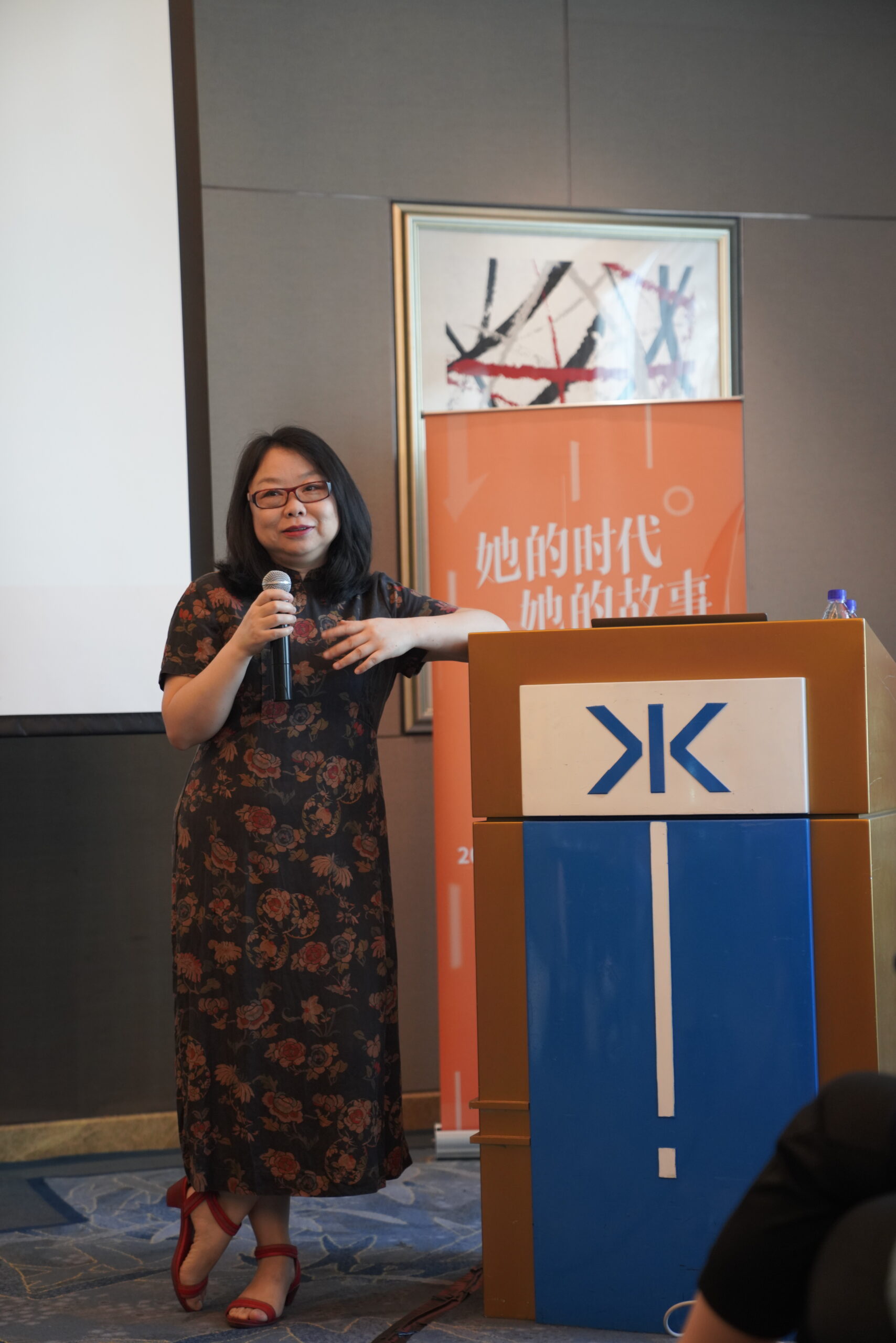
Image: Courtesy of Li Sipan
GIJN: Has there ever been a moment when you came close to giving up? And what has kept you going?
LS: Honestly, I never thought about giving up. But I also want to be honest that what I’ve done doesn’t really feel like “perseverance” built on sacrifice. I don’t think I’ve held on because of some firm spiritual conviction. It’s more that writing toward the truth, speaking on public issues, building public consensus through advocacy, nudging law and policy and culture forward even a little — that’s simply the state in which I feel most like myself.
After leaving China, I often thought back to my travels during the pandemic years — whether in Guangzhou and Shantou, where I lived, or elsewhere. Compared to a decade or two earlier, the infrastructure and the look of Chinese cities had improved enormously. For most people, measured purely in material terms, life has gotten better. And yet the people who once organized urban civic life — the newspaper reporters, the public intellectuals, the human rights lawyers, the NGO workers — had disappeared, wave after wave. That energetic atmosphere of wanting to participate and change society had vanished. I could see very clearly the hollowing out of that inner life. It’s deeply sad. As Chinese people, we take genuine pride in our cultural traditions, and many of us have a profound attachment to our homeland. But the growth of national power has come alongside a degradation of language and a narrowing of thought and culture.
In today’s information environment, it has become very hard just to describe something completely — to explain clearly what is happening, to tell people what occurred, to discuss something logically without substituting words to make it fit. The state determines the direction of culture and communication. When you work against that current, every project feels like starting a fire by rubbing sticks together. The basic conditions have to be built from scratch, by hand.
When you run an independent media outlet, you often don’t know where your readers are, or whether people even want to know about a given thing. Every specific piece of work feels like an experiment.
Recently, we published a story on Mongolian-language education policy — something that has almost never been discussed in mainstream Chinese public discourse. We thought the story mattered, but we also assumed no one would pay attention. What surprised us was the response. The article received a flood of comments and messages of encouragement. People wrote things like: “Please keep doing this for another ten years — your readers are grateful.” Many readers wrote about what their mother tongue meant to them personally. Mongolian readers left messages saying things like: “In these muffled, diminished days, someone actually wrote something like this. I feel both moved and ashamed.”
When a person’s private understanding of something is transformed into a shared public concern, that transformation is articulated through texts and discourse. Journalism is a key actor in the public sphere — it summons people’s imagination of what a more reasonable world might look like. Maybe that imagination is worth working for.
Joey Qi is the Chinese editor of GIJN and a journalist based in Vancouver. He has worked for multiple news outlets in Hong Kong, spanning various roles from reporter to editor to management roles. His work focuses on China politics, social issues, labor rights, and OSINT.
Open Source Guide to Investigating Chinese Companies
6 Tips When Investigations Lead to China

GIJN’s Guide to Undercover Reporting
International Research Guide: How to Find Experts and Hidden Documents on Any Topic

A Mysterious Poisoning, Contaminated Tanker Trucks, and a Death in Custody: 2024’s Best Investigative Stories About China

Piercing the Veil of Censorship in China as a Visual Investigator

Advice from a Pioneer of Investigative Journalism in the Chinese-Speaking World
Investigative Journalism in Asia: Resistance, Transformation, and Solidarity Amidst Mounting Press Challenges

This work is licensed under a Creative Commons Attribution-NoDerivatives 4.0 International License
Republish our articles for free, online or in print, under a Creative Commons license.
Republish this article
This work is licensed under a Creative Commons Attribution-NoDerivatives 4.0 International License
Read Next
Editor's Picks News & Analysis
A Mysterious Poisoning, Contaminated Tanker Trucks, and a Death in Custody: 2024’s Best Investigative Stories About China
Also featuring reporting on an elaborate con on a Chinese dissident, an academic credentials scandal, and trekking with Chinese migrants to the US border.
10 Questions
Piercing the Veil of Censorship in China as a Visual Investigator
As a member of The New York Times Visual Investigations team, Muyi Xiao reports on her native China using a combination of remote tools and interviews.
10 Questions Asia Focus
Advice from a Pioneer of Investigative Journalism in the Chinese-Speaking World
The award-winning reporter and deputy CEO of Taiwan’s The Reporter says public support is the “vital force” that ensures investigative journalism continues to exist.
Asia Focus
Investigative Journalism in Asia: Resistance, Transformation, and Solidarity Amidst Mounting Press Challenges
Asia serves as a unique laboratory in the global media landscape but journalists here face multiple challenges: censorship, threats, surveillance, and financial pressures.