
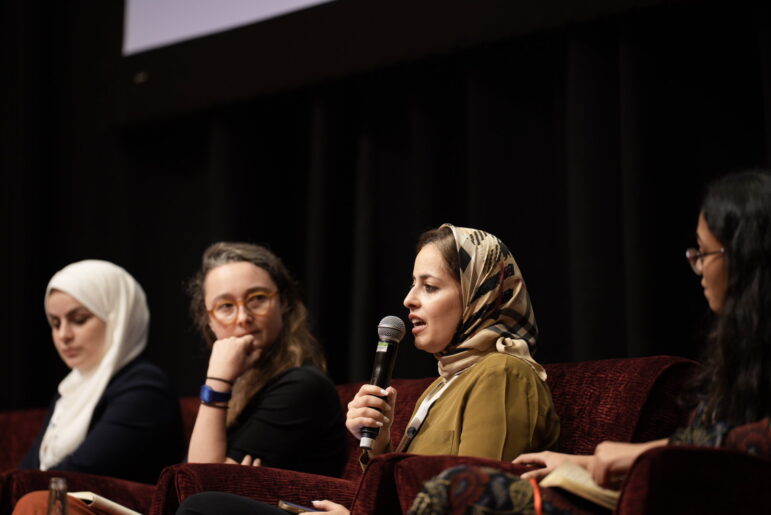
Al Jazeera's Laila Al-Arian, with microphone in hand, speaks during the session on Gaza at the GIJC in Malaysia. Image: Alyaa Alhadjri for GIJN
Documenting Gaza: How Journalists Can Collect Evidence Even When Denied Access

Deadly Gaza Aid Sites, Damascus Dossier, Exploiting Sudanese Refugees: 2025’s Best Investigative Stories from the Middle East and North Africa

Investigating War Crimes: Introduction

Investigating War Crimes: Collecting and Archiving Evidence and Information
Tipsheet for Investigative Journalists on War Crimes and Attacks on Civilians
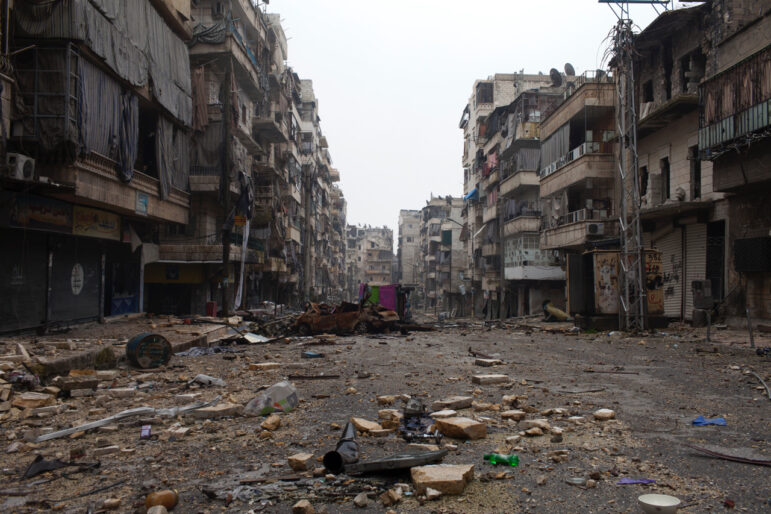
As airstrikes intensified on Gaza after October 7, 2023, international reporters were barred from entering the territory, leaving Palestinian journalists, medical workers, and civilians as the primary sources of information from the ground. Videos filmed on mobile phones, eyewitness accounts from hospitals, and images shared during brief windows of internet access became the raw material for documenting civilian harm, even as those recording it faced displacement, injury, and death.
That reporting reality framed the “Investigating War Crimes in Gaza” session at the 14th Global Investigative Journalism Conference (GIJC2025), where panelists discussed how alleged war crimes violations can be documented when access is restricted and journalists themselves are operating under direct threat. Speakers examined how local reporting, open source analysis, and forensic reconstruction are being used together to verify events, challenge official narratives, and preserve evidence for future accountability.
Moderated by Majdoleen Hasan, GIJN’s Arabic editor, the panel brought together perspectives of journalists from Gaza, investigative organizations, and forensic researchers, reflecting how war reporting has increasingly relied on collaboration across borders and disciplines during the conflict.
Reporting While Surviving The War
For Aseel Mousa, a Palestinian journalist from Gaza who reported from inside the Strip before being forced to leave in 2024, documentation and survival unfolded simultaneously.
“Separating being a journalist and a civilian wasn’t easy at all,” Mousa said. Displaced twice and having lost her home, she described reporting on hospital collapses and mass casualties while living through the same conditions as the people she interviewed.
“The stories I documented, I was living in the same circumstances as the people who I was interviewing,” she said.
With fuel cut off and movement restricted, Mousa said she often walked long distances to reach hospitals, schools, and displacement camps. Wearing a press vest felt unsafe, she added, given the number of journalists who had been killed. Communication blackouts forced her to rely on handwritten notes, uploading stories only when intermittent internet access became available.
“I was thinking that I am a victim and I need the world to know what’s going on in Gaza,” she said. “This was my only way to prove that the world cannot say we didn’t know.”
As local journalists documented events in real time, organizations working outside Gaza focused on verification and scale. Emily Tripp, executive director of Airwars, a nonprofit transparency watchdog that tracks and investigates civilian harm in conflict, said the organization’s role was to systematically listen to civilian accounts and test them against military claims.
“In conflict zones the world over, you have individuals who are putting online descriptions of the world around them,” Tripp said. “We see it as our job to make sure that we are listening to that.”
Airwars has documented more than 15,000 individual incidents in Gaza where civilians were allegedly killed or injured, she said. Its archive allows investigators to identify patterns that contradict official narratives. For example, in one investigation, Airwars examined Israeli military footage portraying a campaign of precision strikes. The team geolocated the sites shown and documented civilian casualties linked to those attacks.
“The [team] were able to identify 17 strikes,” Tripp said, adding that hundreds of civilians were killed in those incidents. Presenting civilian accounts alongside military statements allows the evidence to “speak for itself,” she said.
Airwars applied similar methods to strikes on schools sheltering civilians. The organization has published documentation on 90 such incidents, Tripp said, many accompanied by detailed military explanations. By compiling open source material and survivor testimony, Tripp said Airwars makes its verification process transparent for journalists and readers to examine.
Investigating Without Access
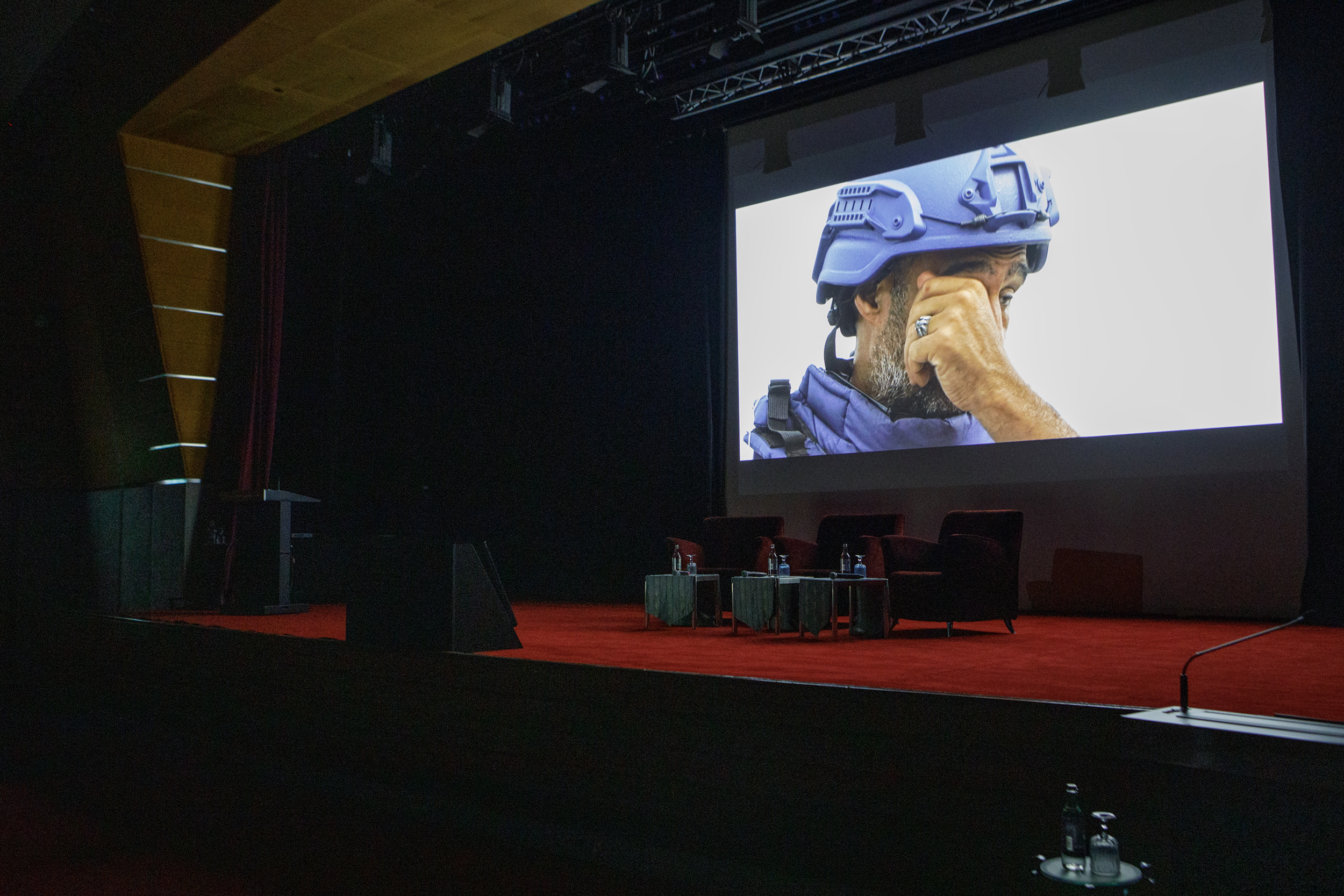
The GIJC25 program also featured a screening of the film “Inside Gaza.” Image: Samsul Said, ALT Studio for GIJN
With foreign reporters barred from entering Gaza, documentary investigations have relied on collaboration with journalists on the ground. Laila Al-Arian, executive producer of Al Jazeera English’s current affairs programme Fault Lines, said her team worked closely with Gaza-based journalists and local production crews to report on the war in their Peabody-award winning investigation “The Night Won’t End.”
“Without whom we would not know anything about what happened,” she said.
Al-Arian described how Fault Lines structured its reporting around specific cases, including airstrikes, forced displacement, and alleged executions. For one investigation, the team collected eyewitness testimony, videos of the aftermath, satellite imagery and metadata from messages to verify events.
“We knew that for this film, it had to be bulletproof and unimpeachable,” she said.
Ethical considerations shaped those decisions, particularly around graphic material. Al-Arian said families were asked for consent before images were used and interviews were conducted only when necessary to avoid re-traumatization.
“They want these images shown,” she said, citing the widespread denial of Palestinian accounts. “There’s so much denial of their experience, of their truth.”
Forensic Reconstruction and Accountability
Forensic reconstruction has become a central investigative tool in Gaza precisely because journalists and international investigators cannot access the territory, Jumanah Bawazir, a senior researcher at Forensic Architecture said.
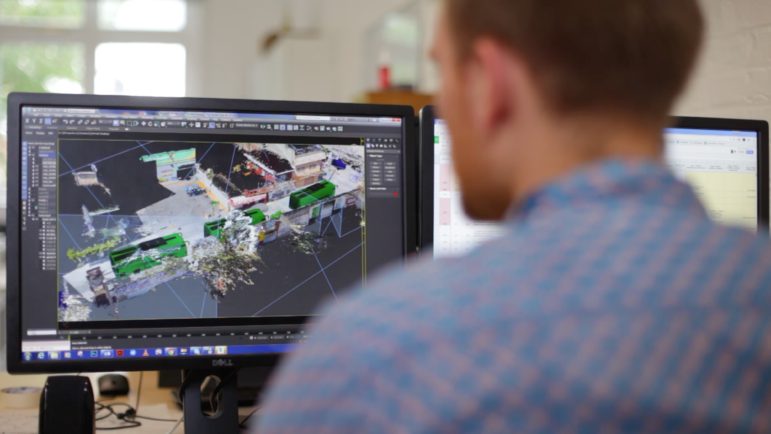
Her organization treats videos, photographs, audio recordings, and satellite imagery emerging from Gaza as evidentiary material that can be reconstructed spatially and temporally. “What happened, where it happened, and when it happened,” Bawazir said, describing how fragments of visual and audio material are synchronized into timelines and placed within three-dimensional models of the built environment.
Those reconstructions are not designed as narrative storytelling, she said, but as analytical tools that allow investigators to test claims made by state actors against available evidence. By mapping multiple incidents across different locations, Forensic Architecture looks for recurring patterns that can indicate broader conduct rather than isolated events.
In one report prepared for legal teams, Bawazir said the organization identified repeated patterns across time and geography. “These patterns reveal intentionality of that conduct,” she said, noting that such findings can be relevant to legal assessments of proportionality, targeting and systematic harm.
The work depends heavily on material recorded by journalists and civilians on the ground. Videos uploaded to social media, images shared during brief windows of internet access and audio recordings from eyewitnesses are often the only sources available. Those materials are then cross-referenced with satellite imagery, architectural plans, and publicly available data to establish location and sequence.
But the absence of access also creates limits. “If it is not captured by a journalist, we can’t analyze it,” Bawazir said, emphasizing how the killing of journalists and restrictions on reporting directly affect what can later be reconstructed or verified.
She also cautioned that forensic investigations move more slowly than the violence they document. Legal accountability, she said, unfolds over years, while the destruction continues in real time. “There is a lag between documentation and justice,” she said.
That gap, panelists noted, places additional weight on journalists and researchers to preserve evidence as events unfold. For reporters like Aseel Mousa, the urgency is immediate. “So many people came to me, and they wanted to tell their stories,” Mousa said. “They just need to be heard.”
You can watch the full GIJC25 panel below.
 Hanan Zaffar is a media practitioner, multimedia storyteller, and documentary filmmaker based in India. His work primarily focuses on South Asian politics, minorities, human rights, and the environment. His reporting has appeared in TIME Magazine, the Guardian, VICE, Al Jazeera, Business Insider, and other places. He has also had reporting stints in Southeast Asia, Africa, and Europe, and is the UN Foundation’s 2025 Polio Press Fellow.
Deadly Gaza Aid Sites, Damascus Dossier, Exploiting Sudanese Refugees: 2025’s Best Investigative Stories from the Middle East and North Africa
Investigating War Crimes: Introduction
Investigating War Crimes: Collecting and Archiving Evidence and Information
Tipsheet for Investigative Journalists on War Crimes and Attacks on Civilians

10 Questions with Mohamad Abu Shahma: Working — And Living — Inside Gaza as an Investigative Journalist

How BBC Open Source Journalists Investigate, Analyze, and Verify Information from Gaza

Investigative Journalism in MENA: Struggling Against Tyranny, Fighting to Survive
How Forensic Architecture Supports Journalists with Complex Investigative Techniques

This work is licensed under a Creative Commons Attribution-NoDerivatives 4.0 International License
Republish our articles for free, online or in print, under a Creative Commons license.
Republish this article
This work is licensed under a Creative Commons Attribution-NoDerivatives 4.0 International License
Read Next
10 Questions News & Analysis
10 Questions with Mohamad Abu Shahma: Working — And Living — Inside Gaza as an Investigative Journalist
GIJN spoke with the northern Gaza-based journalist about how he has managed to survive and work as a watchdog reporter under harrowing, life-threatening conditions.
How They Did It Methodology
How BBC Open Source Journalists Investigate, Analyze, and Verify Information from Gaza
GIJN talked with reporters doing the difficult work of covering the Hamas attack on Israel and its aftermath, including preparations for the October 7 assault.
MENA Focus Week News & Analysis
Investigative Journalism in MENA: Struggling Against Tyranny, Fighting to Survive
Investigative journalists across the region talk about their biggest challenges — from repressive laws and surveillance to funding cuts.
News & Analysis
How Forensic Architecture Supports Journalists with Complex Investigative Techniques
Since it was founded in 2010, Forensic Architecture has “hacked into the source code” of architecture to produce innovative and ground-breaking investigations that use 3D modelling, data mining, machine learning, and audio analysis. Working like a lab for the development of new tools, the outfit uses many of the forensic methods of investigation that have historically been the preserve of law enforcement to investigate social and political topics and injustices.