
Photo: Mariana Correia Pinto
Curiosity and the Long Road to the Truth: Lessons from an Award-Winning Portuguese Reporter
Read this article in
The tools Miguel Carvalho values most are not powered by artificial intelligence. They are shelves lined with paper archives, well-worn notebooks, countless hours spent reading and conversations held face to face. At a time when journalism is increasingly measured by speed, this award-winning Portuguese investigative reporter continues to place his faith in patience.
For more than 35 years, Carvalho has built a career around long-form investigations that privilege time over urgency and depth over immediacy. After spending almost 24 years at Visão — Portugal’s leading news magazine — he left the security of a permanent newsroom to pursue freelance journalism and long-form writing, convinced that meaningful reporting requires freedom as much as persistence.
His most recent book, “Inside Chega: The Hidden Face of Portugal’s Far Right,” reflects that philosophy. Drawing on thousands of internal documents and hundreds of interviews, the investigation offers an unprecedented look inside the country’s far-right movement and has become one of Portugal’s most talked-about works of investigative journalism in recent years.
In this conversation with GIJN, Carvalho reflects on the future of investigative journalism, the importance of slowing down in an age of permanent urgency, the journalists who shaped his thinking, the mistakes that made him a better reporter, and why he still believes that journalism’s greatest responsibility is not simply to inform, but to defend the public’s right to understand the world.
GIJN: Of all the investigations you’ve worked on, which has been your favorite and why?
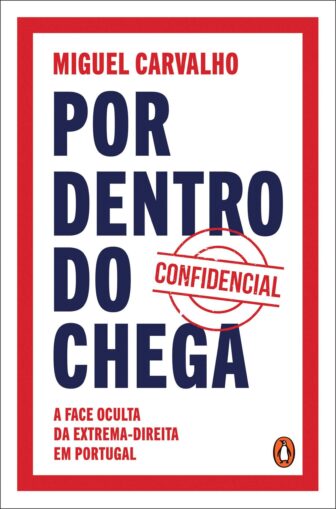
Miguel Carvalho’s book “Inside Chega: The Hidden Face of Portugal’s Far Right” was the product of five years of investigating. Image: Courtesy of Penguin Publishing
Miguel Carvalho: It was the investigation that led to my latest book, “Inside Chega: The Hidden Face of Portugal’s Far Right.” It involved more than five years of reporting on Portugal’s first far-right party to gain parliamentary representation, which is now the country’s second-largest political force. Although its leader, André Ventura, has attracted widespread media attention because of his xenophobic and anti-immigration rhetoric, much of the story behind the movement — its political rise, electoral base, and internal workings — remained largely unknown to the general public. I obtained thousands of pages of internal documents and conducted hundreds of interviews with both former and current party members. It required an almost obsessive level of dedication and persistence, as earning people’s trust and convincing them to speak openly was far from easy. This investigation consumed my professional and personal life for years, but seeing the work recognized has made every sacrifice worthwhile.
GIJN: What are the biggest challenges in terms of investigative reporting in your country?
MC: Unfortunately, the greatest challenge is the very survival of investigative journalism itself. The situation facing the Portuguese press mirrors the global challenges journalism is confronting under the “dictatorship” of Big Tech and the digital ecosystem, which have eroded democracy, weakened public scrutiny, and fueled polarization through hate speech and violence directed at others. Because of its peripheral [geographic] position, Portugal also suffers from its lack of global scale. Journalism is going through its most fragile period since the country’s return to democracy, while newsrooms face increasingly precarious working conditions and shrinking resources. In many cases, editorial judgment has given way to the pursuit of audience numbers. The media’s presence and relevance across the country — particularly among younger generations — have diminished considerably. Today, investigative journalism has become a luxury that many news organizations simply cannot afford in terms of time, space, or financial resources. Practicing it has become an act of resilience and civic commitment. It reflects the fragility of our institutions and, ultimately, of democracy itself.
GIJN: What’s been the greatest challenge that you’ve personally faced in your time as an investigative journalist?
MC: Becoming a freelance journalist. I had been a senior investigative reporter at Visão, Portugal’s leading news magazine, for nearly 24 years when I decided to leave. I could see that we were entering what felt like an endless crisis and I no longer recognized myself in the relentless churn of today’s news cycle. Although Visão was the best newsroom I ever worked in and I remained in a privileged position until the very end — one that allowed me to spend one or even two months reporting on a single story — the truth is that I had already begun a quiet process of letting go. Virtually my entire professional life had been spent as a staff journalist and I had never taken the risk of living without the security of a steady salary and a more or less predictable routine. I had to rethink part of my family’s finances and devoted most of my time to researching and writing my book. Having built a credible reputation for more than 35 years in journalism certainly helped and I received several interesting opportunities. But that is not the reality for the overwhelming majority of journalists. Many exceptionally talented reporters end up leaving the profession altogether in search of other careers.
GIJN: What is your best tip for interviewing?
MC: I honestly don’t have an answer to that question. And that, in itself, is part of the problem. The press, its owners, editors, day-to-day practices, and available resources have changed so profoundly that any young journalist trying to enter the profession today is almost guaranteed nothing more than low pay, job insecurity, and relentless workloads. The stories I hear from recent journalism graduates going from one job interview to another are deeply unsettling. No one seems to know how best to promote themselves or what they are expected to say. Even journalists who already have professional experience but find themselves unemployed tell me that their CV counts for less than nothing.
GIJN: What is a favorite reporting tool, database, or app that you use in your investigations?
MC: I have to admit I’m still a bit old-school in the way I work. I do use some digital resources, but none that I would single out in particular. Even when it comes to AI, I use it sparingly and with a healthy dose of skepticism. To me, it’s simply a tool that helps speed up certain tasks, nothing more. I’m still someone who accumulates paper. I clip articles from newspapers or print them from digital editions whenever I come across something I want to keep. Those files are scattered throughout my home and stored in two separate outbuildings, one of them away from where I live. I have dozens upon dozens of boxes organized by topic — from railways to national politics — containing material that, in many cases, even the depleted archives of some news organizations no longer hold. The collective memory of newsrooms, and, in many ways, of the country itself, is gradually disappearing. In some corners of journalism, there are already people who seem to believe that everything worth knowing can be found on Google or generated by AI. Fortunately, or perhaps unfortunately, that has never been my way of working. Mine is still built around two practices that are increasingly becoming obsolete: reading extensively and reading about everything; and talking to people face to face.
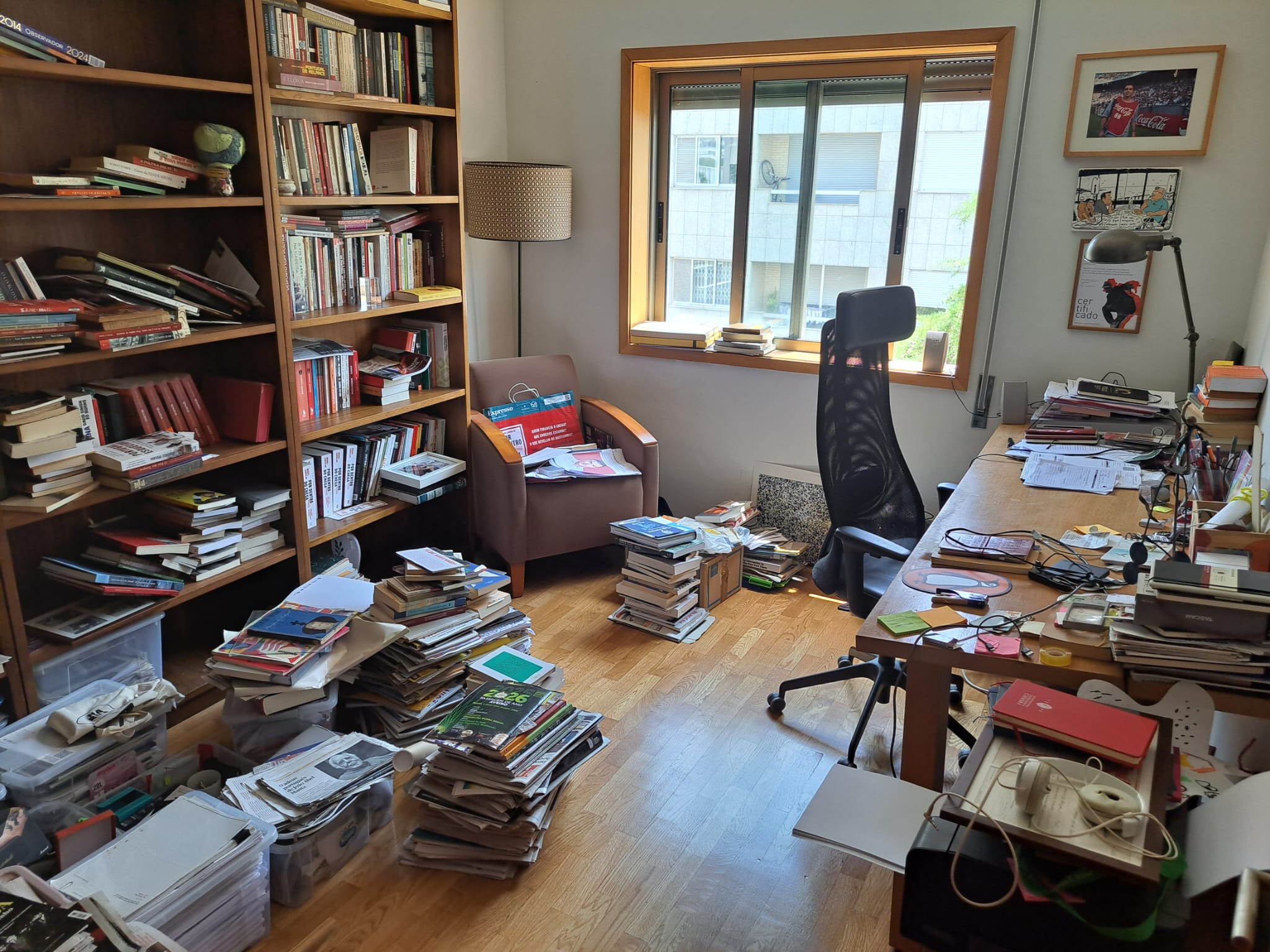
“I’m still someone who accumulates paper. I clip articles from newspapers or print them from digital editions whenever I come across something I want to keep. Those files are scattered throughout my home,” Carvalho explains. Image: Courtesy of Mariana Correia Pinto
GIJN: What’s the best advice you’ve gotten in your career and what words of advice would you give an aspiring investigative journalist?
MC: I often think of the journalist George Steer, whose reporting on the bombing of Guernica inspired one of the world’s most celebrated paintings. Whenever someone asks me — sometimes with an ironic or even cynical smile — whether I still believe journalism can change the world, I always answer with these words: “I don’t know. But it is my duty to write as if I could.” In these troubled times, if no one is willing to filter, verify, and report on the world with integrity, credibility, and depth — pushing back against the daily flood of misinformation and lies — the victims will not be journalists alone. The greatest victims will be citizens themselves, along with the public scrutiny on which our democracies depend. Because it would mean accepting a world in which truth and falsehood become indistinguishable.
GIJN: Who is a journalist you admire and why?
MC: There are many and they continue to inspire me to this day. I regularly revisit their books and reporting, always discovering something new. Martin Caparrós, Leila Guerriero, Gay Talese, Seymour Hersh, Robert A. Caro, and Katherine Boo have all shaped the way I look at the complexity of the world, of people and of the circumstances that surround them. They taught me never to take any angle for granted and to challenge every assumption. They remind me that reality is always more layered than it first appears and that our job as journalists is to keep questioning our own perceptions. At one point, Katherine even became something of a muse to me because, like me, she doesn’t have a driver’s license! Odd as it may sound, that turned out to be a real advantage. Despite all the inconveniences, it forced me to wear out even more pairs of shoes reporting in the field and to see the world in ways I otherwise never would have. Katherine and I belong to the same species — one that may, unfortunately, be heading for extinction.
GIJN: What is the greatest mistake you’ve made and what lessons did you learn?
MC: In the years following the September 11 attacks and the major international conflicts that followed, I made several errors of judgment, particularly in pieces I wrote for online publications. At times, I allowed my own convictions about certain events to carry more weight than the reporting itself. That made me deeply uncomfortable, but it also taught me one of the most important lessons of my career. Complete objectivity in journalism is a myth. However, I matured enormously once I understood the absolute necessity of rigorously testing and verifying every fact and every piece of information, resisting the temptation to be swept away by the urgency of the moment. Those moments were rare, fortunately, but they reminded me that it is never enough to report what feels true. Our responsibility is to keep questioning ourselves until we know, as thoroughly as possible, whether it actually is.
GIJN: How do you avoid burnout in your line of work?
MC: I have always been more drawn to slow journalism than to today’s relentless factory-like production of news. But there is an entire generation of journalists who simply cannot afford that choice. No matter how talented or committed they are, many are forced by economic necessity to keep up with an unsustainable pace. As for me, I have deliberately reduced my exposure to the constant flow of news and televised political debates. I don’t enable news alerts and I no longer feel the need to stay updated every minute or every hour. That is how I have managed to preserve a degree of mental balance while maintaining enough distance to think clearly, immerse myself in complex subjects, and devote time to books, articles, and reporting that help me understand the deeper meaning of the events shaping our world.
GIJN: What about investigative journalism do you find frustrating or do you hope will change in the future?
MC: What frustrates me most is the inability of many media executives and editors, particularly in my own country, to recognize that in an increasingly polarized, frenetic, and disruptive world, investigative journalism will be one of the defining forces behind a more informed public and, ultimately, the survival of democracy itself. For years, I have hoped for a collective awakening within the news industry — a willingness to rethink the habits and incentives that are gradually undermining journalism from within. But every time I think I can see light at the end of the tunnel, I realize it is only the next train coming towards us, ready to sweep everything aside.
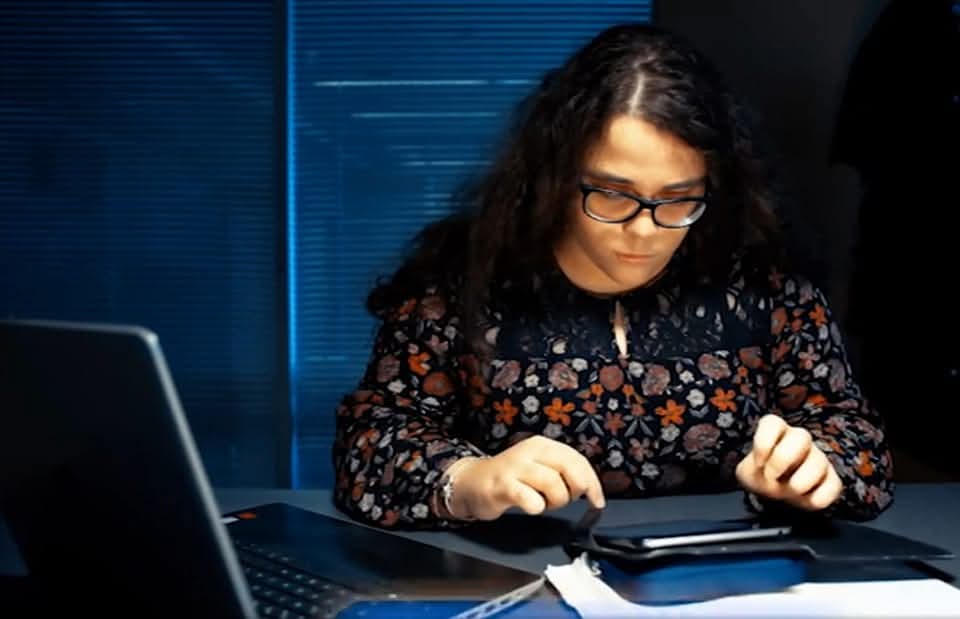 Maria Moreira Rato is a freelance journalist based in Lisbon, Portugal. She reports on health, human rights, gender equality, and social issues, with a focus on accountability and long-form investigations. Her work has appeared in Público, SOL, i, Comunidade Cultura e Arte, O Cidadão, among others, and has been recognized with several journalism awards, including the APAV Journalism Prize.

This work is licensed under a Creative Commons Attribution-NoDerivatives 4.0 International License
Republish our articles for free, online or in print, under a Creative Commons license.
Republish this article
This work is licensed under a Creative Commons Attribution-NoDerivatives 4.0 International License
Read Next

10 Questions
Investigating ‘Chapter Two’ Stories and Under-the-Radar Harms
Investigative reporter Annie Hylton on her journey from law to journalism, overlooked stories, and advice for interviewing sources living with trauma.
GIJC27
Submissions Now Open for GIJC27 Global Shining Light Awards
This award, sponsored by GIJN, honors investigative journalism in a developing or transitioning country, done under threat, duress, or in the direst of conditions. Deadline to apply is February 28, 2027.
My Favorite Tools
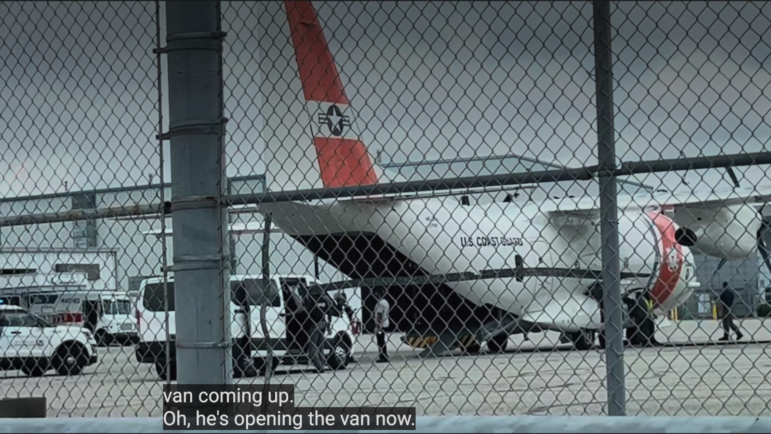
How Gillian Brockell Investigates ICE Removal Flights from US
Since August 2025, this former Washington Post reporter, now working freelance, has written dozens of stories mapping the Trump administration’s massive, third-country deportation apparatus.
10 Questions
Finding Joy in the Public Service of Journalism
Citra Dyah Prastuti reflects on her 24 years with KBR, Indonesia’s public radio broadcaster, and on centering public service, joy, and rigorous journalism in every story.