Accessibility Settings

color options

monochrome muted color dark

reading tools

isolation ruler

Posts

300 posts

Reporting Tools & Tips

Beyond Viral Clips and Lip Syncing: A Guide to Investigating on TikTok

TikTok, a video-sharing site where users can post videos of themselves dancing, lip syncing, and doing viral challenges, has seen a surge in popularity in recent years. While many posts are focused on jokes and music, TikTok has surpassed 2 billion downloads and is popular around the world, which presents opportunities for the open source research community to use the platform in investigations. This guide explains how.


Reporting Tools & Tips

Use World Bank Records to Track COVID-19 Spending in Your Country

There is widespread concern that corruption will affect the use of international funds being rushed out in response to the COVID-19 pandemic. GIJN has created a guide to using World Bank documents online to track the use of the Bank’s projects in more than 100 countries.   

Data Journalism

Here’s Why Investigative Reporters Need to Know Knowledge Graphs

Across the data science community, knowledge graphs have become a growing phenomenon in recent years, driving many applications including virtual assistants like Siri and Alexa. Friedrich Lindenberg, from the Organized Crime and Corruption Reporting Project, writes about how its data platform Aleph makes use of knowledge graphs to help investigative reporters analyze and cross-reference data.

News & Analysis

Collaborating to Identify COVID-19’s Victims in New York City

When a team of student journalists realized that thousands of New Yorkers had died due to COVID-19 but had been left out of the obituary pages, they teamed up to create Missing Them, an ambitious collaborative journalism project working to memorialize everyone that died due to COVID-19 in one of the hardest-hit cities in America.

Reporting Tools & Tips

Need Tech Support for Your Members Program? Start Here

There is no singular “right” way to set up technology for an audience-centric newsroom. What’s most important is not which tool you choose, or the method by which you implement them, but that your system is well-integrated. Each part must be able to speak to all the others, allowing your data to flow seamlessly, and empowering your team with easy-to-understand workflows that help you better connect with your audience.

Member Profiles

Powering Up Geo-Journalism for Investigative Environmental Reporting

The South African investigative site Oxpeckers uses a combination of data analysis, collaboration, and interactive data visualization tools to tell the most compelling stories about the land and those accused of damaging it. From mining to environmental crimes and wildlife trafficking, it has brought investigative techniques to beats like mining that were once the preserve of business reporters.

News & Analysis

Document of the Day: In Defense of Data Scraping

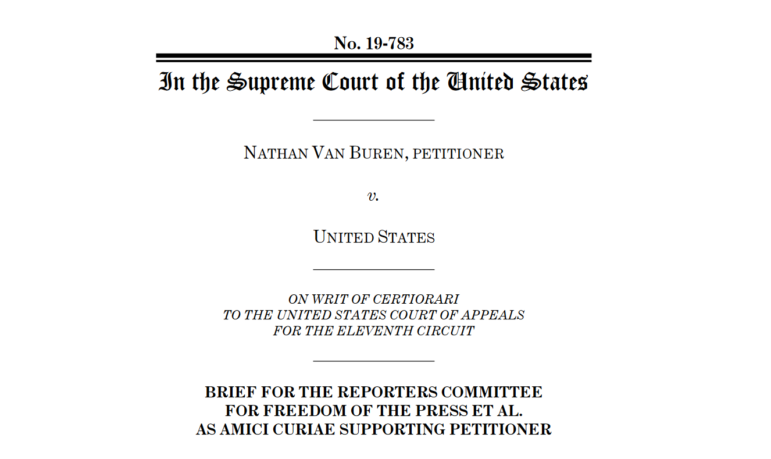
In a filing to the Supreme Court in the United States, a raft of media organizations including the Reporters Committee for Freedom of the Press, Associated Press, The Boston Globe, BuzzFeed, The Center for Investigative Reporting, The Daily Beast, Dow Jones, VICE ,and The Washington Post, have argued that the interpretation of the country’s Computer Fraud and Abuse Act needs to be narrowed to avoid “serious constitutional concerns.” In the document, which can be read in full here, the organizations argue that an interpretation of the law by the court of appeals “chills ordinary journalistic activity protected by the First Amendment.”

Data Journalism

Document of the Day: Monitoring Helicopter Movements During DC’s Protests

The investigative team behind a story in The Washington Post that focused on two military helicopters that roared over demonstrators in Washington, DC on June 1 shared the exploratory scripts used to analyze and visualize flight data for the aircraft which monitored protesters in the city that day.

News & Analysis

Aggressive Reporting, Fierce Writing, and FOI Requests: How a Small Town Editor Won a Pulitzer

When Jeff Gerritt first started asking questions about deaths in Texas jails, he was told “it’s not news for someone to die in county jail.” But his reporting and the Op Ed pieces that resulted from it led to a Pulitzer Prize, a rare win for a scrappy thrice-weekly paper in an era where the journalism industry is seeing increasing cutbacks and layoffs.