
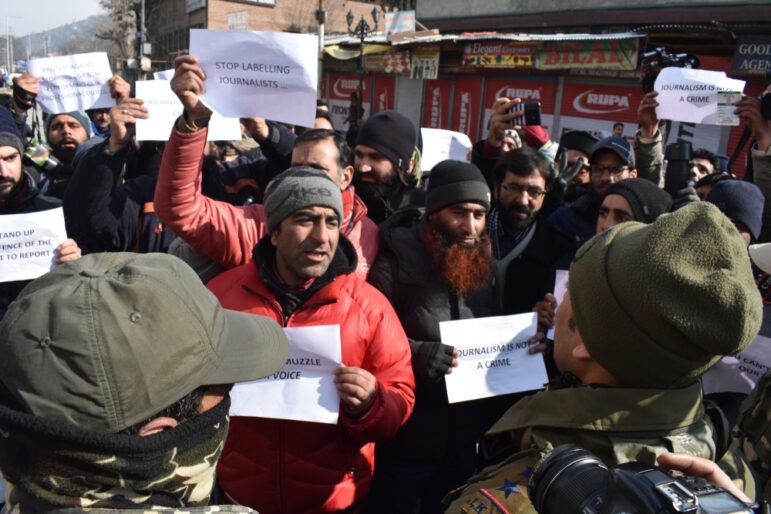
Indian policemen stop Kashmiri journalists from proceeding ahead during a 2019 protest in Srinagar. Image: Shutterstock
Journalism in Exile: How Newsrooms Can Balance Verification, Source Protection, and Credibility

GIJC23 – Exiled Media: An Investigative Toolkit
‘Reporting from the Outside’: Lessons from Investigative Journalists in Exile

Exposing the Regime from Afar: How Cuban Journalists Report on the Island from Exile

Q & A with Roman Anin on Holding Putin to Account, Even in Exile
Operating a newsroom hundreds or thousands of miles away from a country presents an immediate challenge: how do journalists deliver accurate, reliable news to audiences when reporters can’t safely set foot on the ground?
For journalists forced to operate outside their home countries, exile does not end the responsibility to report. Instead, it creates a new set of ethical challenges. Reporters and editors must find out how to verify information, keep sources safe, and maintain credibility with audiences while far away from the events they’re covering.
The National Press Club Journalism Institute spoke with Siyar Sirat, head of online editorial at Afghan exiled media outlet Amu TV, and Anuradha Bhasin, managing editor of Kashmir Times, for advice on how exiled and remotely operated news organizations can navigate these challenges.
Editors emphasized that ethical decision-making shapes every aspect of their reporting and is key to maintaining audiences’ trust.
Verification: Reporting Without Being Present
One of the most difficult realities of exile journalism is the inability to witness events firsthand. Reporters and editors must instead rely on networks of contributors, freelancers, community contacts, and digital evidence to understand what is happening on the ground.
For exiled media, verification of information is therefore not merely a technical process: it’s an ethical obligation to prevent misinformation from reaching their audiences, who often lack alternative sources to independently verify news. This can mean waiting until after news first breaks to ensure their information is correct.
“We don’t rush to publish information,” Sirat said. “There is a lot of information coming in, and much of it can be wrong, so we try to make sure what we publish is accurate and confirmed.”
Sirat recalled one recent security incident in Kabul, in which several Afghan media outlets reported casualty figures exceeding 50 people. Instead of immediately recirculating the information, Amu TV delayed publication until its reporting team could independently verify the numbers. Hours later, casualty figures confirmed by international observers matched their reporting, which were lower than what was initially reported.

Kashmir Times managing editor Anuradha Bhasin. Image: Courtesy of NPC
At Kashmir Times, operating from outside the regions means that editors cannot easily observe developments firsthand. Multiple-source verification is therefore a must, Bhasin said. “If you get news from one source, you need to verify [it] from others,” she said.
Kashmir Times also often delays publication until editors are satisfied that the information has been thoroughly authenticated. “We don’t do breaking news. We can wait for a while. We can stick with it sometimes and do our due diligence,” Bhasin said.
Source and Journalist Protection
If verification is a challenge, source protection is often a matter of survival. For exile media, protecting sources, reporters, and contributors on the ground takes priority and reflects a fundamental ethical commitment: journalists should not place individuals in unnecessary danger.
Journalists reporting from authoritarian or in highly restricted environments know that a published story can expose reporters, contributors, or interview subjects to surveillance, harassment, detention, or worse. As a result, editors face difficult decisions about what information to publish and how.
For example, after India revoked Kashmir’s special status in 2019, Bhasin said Kashmir Times faced increasing pressure and surveillance. In the years that followed, the newsroom adapted its editorial policies to more often grant anonymity for its reporters and sources. “We use a lot of anonymity, which before 2019 was not something that we would favorably do. But then the situation demands that,” Bhasin said.
Anonymity can introduce additional challenges. Anonymous sources require greater scrutiny and their information needs higher levels of verification, Bhasin said, because audiences cannot independently judge their credibility.
Bhasin emphasized that editors have a responsibility to assess risks that less experienced reporters may not fully understand. Before assigning sensitive stories, she said an editor should ask reporters: “’These are the risks. Are you aware of these? And how much do you want to do?’”
Editors must be especially careful to evaluate risks when reporters pursue stories involving human and civil rights violations, surveillance, sweeping detentions, and the demolition of houses — issues Bhasin said governments are often “extremely intolerant of.”
At Amu TV, where their reporters on the ground operate in one of the world’s most dangerous press freedom environments, some journalists work under multiple layers of anonymity so extensive that editors do not always know their true identities.
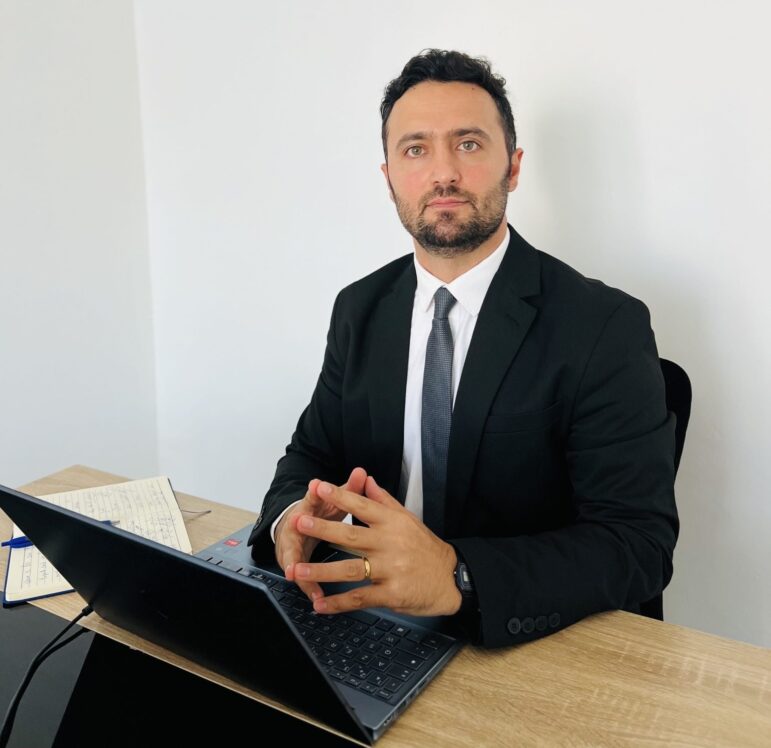
Siyar Sirat, head of online editorial at the Afghan exiled media site Amu TV. Image: Courtesy of NPC
“In many cases, we don’t know the real name of many of our freelancers and journalists and colleagues that work in Afghanistan,” Sirat said.
Amu TV relies on secure communication practices and reporting structures designed to reduce the exposure of their journalists working in-country. Reporters communicate with editors only under controlled conditions and minimize signs of their journalistic work in public. The goal is to ensure they can continue gathering information without drawing attention from authorities.
“When they are at home, they contact us,” Sirat said. “When they are outside, they are another personality.”
If reporting places a source or journalist at unacceptable risk, the story is abandoned, Sirat said.
“The first thing that is important for us is the safety of our colleagues, the safety of our sources. We have killed many stories for the sake of protection of our sources and our colleagues.”
Credibility: the Most Valuable Asset
Governments frequently accuse independent and exiled outlets operating from abroad of bias, misinformation, or foreign influence. At the same time, these outlets’ audiences expect trustworthy reporting despite the newsrooms’ physical distance from events.
Sirat described credibility as the foundation upon which Amu TV’s relationship with its audience depends — and a core reason for its intense verification processes.
“There are people behind this news agency that the Afghan people have believed in; they have trusted them for years. Now they don’t want their trust to be broken.”
Bhasin said credibility depends on both rigorous verification and transparency. Although the newsroom carefully checks information before publication, she acknowledged that mistakes can still occur. “If we make a mistake, we do make corrections. We are transparent with the readers,” she said.
To evaluate the credibility of sources and avoid publishing rumors, misinformation, or unverified claims, Bhasin said Kashmir Times’ reporters are trained to approach information with skepticism and critical thinking. “We ask them to have a questioning mind. Who is the source? Who is telling them this? What is the basis?” she said.
In environments marked by censorship, surveillance, and restricted access, editors stressed that exiled journalists must balance the public’s right to know with the outlet’s ethical obligations. Those principles remain essential to sustaining independent journalism under pressure.
“The most important thing that comes in our mind in our each and every day working is our credibility amongst our people,” Sirat said.
Key Takeaways from Editors
Verification
- Confirm information through multiple independent sources;
- Prioritize accuracy over breaking news first;
- Verify photos, videos, and digital evidence before publication;
- Practice skepticism and deep questioning in all reporting.
Source Protection
- Consider anonymity when disclosure could create risks;
- Adapt communications and security measures to meet local journalist safety conditions;
- Carefully evaluate if publishing a story can jeopardize source and reporter safety;
- When in doubt, a reporter’s safety takes priority over publishing a story.
Credibility
- Recognize that public trust is the foundation of independent journalism in exile;
- Publish only information that can be independently verified;
- Correct mistakes openly and promptly;
- Be transparent with audiences about reporting limitations.
Editor’s Note: This story was originally published by the National Press Club Journalism Institute and is reposted here with permission.
 Asmamaw Kassa is a 2026 Press Freedom Fellow at the National Press Club Journalism Institute. He has 15 years of experience in multimedia journalism, digital content production, editorial leadership, and international broadcasting, with experience with Voice of America (VOA) and the Ethiopian Broadcasting Corporation (EBC).
GIJC23 – Exiled Media: An Investigative Toolkit
‘Reporting from the Outside’: Lessons from Investigative Journalists in Exile
Exposing the Regime from Afar: How Cuban Journalists Report on the Island from Exile
Q & A with Roman Anin on Holding Putin to Account, Even in Exile
Exiled Journalists’ Tips for Source Protection and Avoiding ‘Propaganda Creep’
Abzas Media: From Exile, Fighting for Press Freedom and Civil Space in Azerbaijan
Journalism In Exile: Reporting, Sourcing, and Managing Everyday Life Away From Home
Reporting and Sharing Women’s Stories in the Face of Taliban Oppression

This work is licensed under a Creative Commons Attribution-NoDerivatives 4.0 International License
Republish our articles for free, online or in print, under a Creative Commons license.
Republish this article
This work is licensed under a Creative Commons Attribution-NoDerivatives 4.0 International License
Read Next
Reporting Tools & Tips
Exiled Journalists’ Tips for Source Protection and Avoiding ‘Propaganda Creep’
Veteran exiled journalists from Iran, Venezuela, and Tibet discuss source protection best practices and publishing survival strategies when reporting on your home country from afar.
Member Profiles News & Analysis
Abzas Media: From Exile, Fighting for Press Freedom and Civil Space in Azerbaijan
Founded in 2016, this news site was created to report on issues often ignored or suppressed in state-controlled media, including corruption, misuse of public resources, and human rights violations.
GIJC25
Journalism In Exile: Reporting, Sourcing, and Managing Everyday Life Away From Home
Forced to leave their homes and homelands, exiled journalists spoke about finding ways to continue their journalism in the countries where they have sought refuge.
10 Questions GIJC23
Reporting and Sharing Women’s Stories in the Face of Taliban Oppression
Working as a journalist in Afghanistan has never been harder, but it’s a chance to resist the Taliban’s oppression of women’s rights, says the founder of Zan Times.