
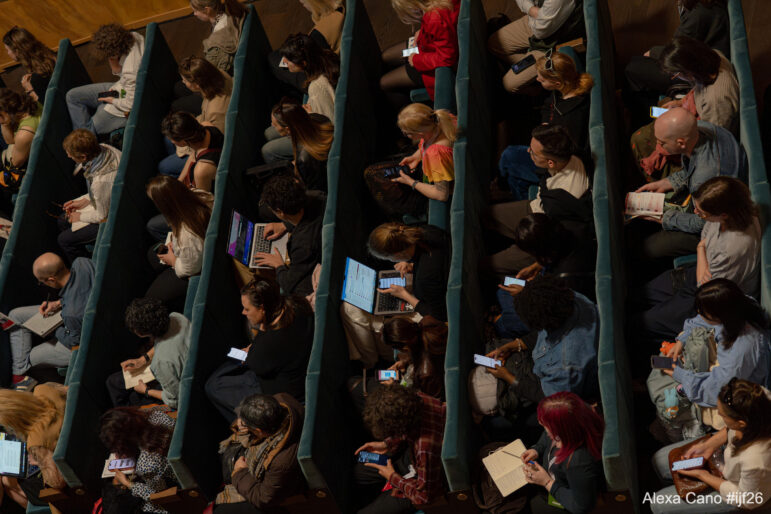
Many notebooks were open at the "From Story to Spine" session at the 2026 International Journalism Festival in Perugia. Image: Alexa Cano for IJF
From Memoir to Fiction, Investigative Chronicles to Thematic Deep Dives: Books from Perugia
Read this article in
Perhaps it’s the Etruscan architectural remnants, or all the gold-leaf, the art galleries majoring in Renaissance painting, or the mountain vistas, but the International Journalism Festival at Perugia certainly feels very cultural.
This year’s lineup featured live theater performances, documentary screenings, discussions on game design for journalists, and panels about turning your investigation into a book.
In conversations about where the industry is going next, or how we can reach new audiences, and in fireside chats about the big challenges we all face, many people reached for nonfiction books that have inspired them recently. Elsewhere, when asked what book was on their bedside table, editors and reporters shared the fiction that had helped them to take their minds away from work, the writers that had inspired them to better use of their words, and those whose literary talents made them think differently.
We noted 17 of the titles mentioned at the festival that were recommended by experts, friends, colleagues, and sometimes by the writers themselves. In a bookshop, they would span the nonfiction, memoir, and creative fiction aisles.
“Bad Blood” by John Carreyrou
Madhulika Sikka, a journalist and media executive turned publisher, said she often jokes with her friends who say they want to write a book: “Are you sure you want to do that?!” The panel on stage with her in the “From Story to Spine” session agreed that reporters need to be certain they are telling the right story, and that there is enough material to merit a book, rather than, say, a longform article. But when it comes to investigative reporting, Sikka says: “There are investigations that find stuff out but don’t tell you the best story about it. When you can combine great narrative with great investigative journalism, that’s the sweet spot.” She said “Bad Blood,” an exposé about the Silicon Valley startup Theranos and its once-heralded but now-imprisoned founder Elizabeth Holmes, is a perfect example. “He combined extraordinary investigation with extraordinary storytelling… I literally read that book in a weekend.”
“Careless People: A Cautionary Tale of Power, Greed, and Lost Idealism” by Sarah Wynn-Williams
Lynda Hammes, co-founder of Tertulia, recommended this book on the inside story of Facebook in the “From Story to Spine” session. “I think the thing to love about it is not the dishing [the dirt] on the inside — you can read the news reviews about what happened, the outrageous stories… but the storytelling. It begins with her sharing having been attacked by a shark as a child in Australia, and that throughline throughout the book is chilling, and fascinating. A story you could never guess from reading a straight-out profile. I will never forget it.”
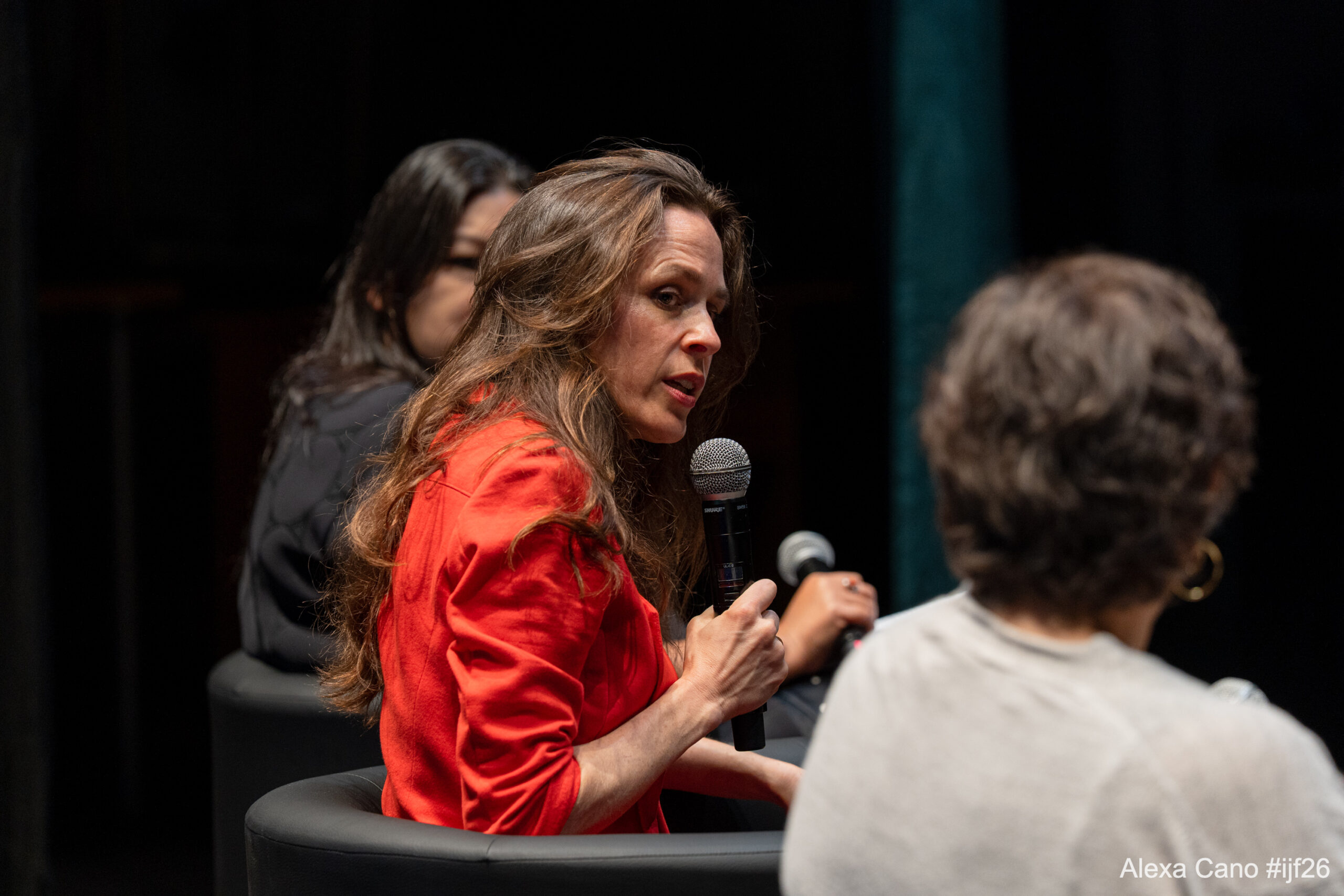
Tertulia’s co-founder, Lynda Hammes. Image: Alexa Cano for IJF
“The Future is Peace” by Aziz Abu Sarah and Maoz Inon
Sikka, from Crown Publishing, mentioned this book, which she was publishing during the festival in Perugia in response to a question about timeliness and the news agenda, especially when it comes to nonfiction work. While publishers often have an 18-month- to two-year lag between receiving a final manuscript and publishing, there are occasions when the process can be expedited. In this case, when the pitch came in from a Palestinian and an Israeli co-author, the publisher took a gamble that the story would still be topical and relevant once it finally came out. “We asked ourselves: ‘Is there going to be peace in the Middle East in two years’ time?’” The book is described as “a testament to the fact that hope is not found, but created… a call to action for transforming pain into partnership and light.”
“Nobody’s Girl: A Memoir of Surviving Abuse and Fighting for Justice” by Virginia Roberts Giuffre
The US journalist Amy Wallace spent four years working with Giuffre as the ghostwriter of a memoir that details the abuse Giuffre experienced at the hands of some of the world’s most powerful men. “My job was to make sure we made no mistakes,“ explained Wallace in the session “Writing Wrongs: Lessons from Co-authoring Virginia Roberts Giuffre’s Memoir.” She said she had a month-by-month calendar so she could log, day by day, where Virginia was, where Jeffrey Epstein — the man who had trafficked her — was, and the known locations of his partner Ghislaine Maxwell. Wallace used photographs and flight logs to verify details. In a story like this, she says, “chronology is your friend.” The final line of the book was changed by Giuffre — who took her own life in 2025 — just before publication to read: “If this book… helps just one person — I will have achieved my goal.”
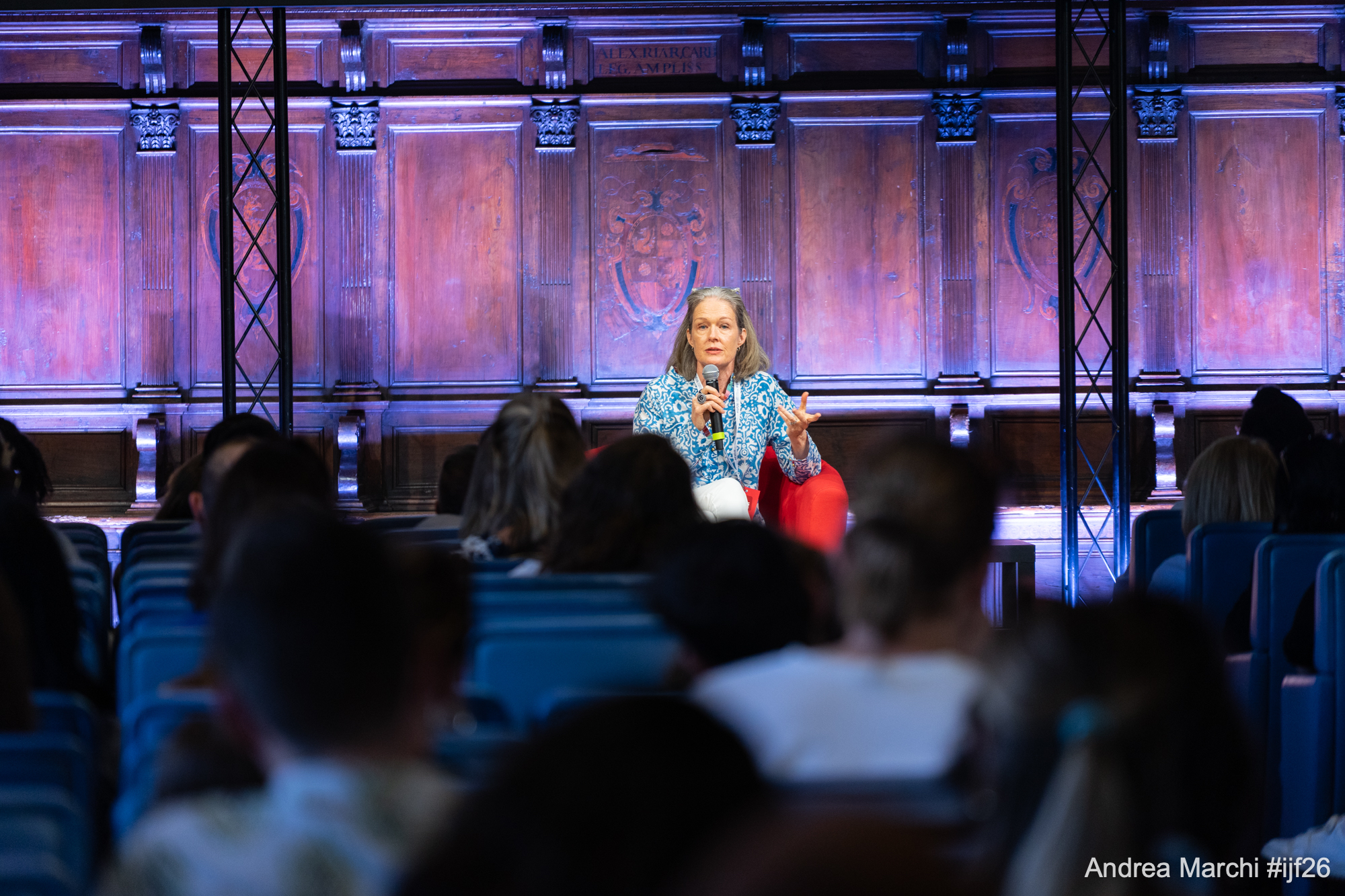
The journalist and ghost writer Amy Wallace. Image: Andrea Marchi for IJF
“The Tower / La Tour” by Doan Bui
Bui was one of the three “rock stars” who spoke to the festival audience as part of the live journalism strand. While AFP’s global news director Phil Chetwynd detailed the toll of Israel’s war on reporters in Gaza, and photojournalist Tomas van Houtryve regaled us with the time he went undercover as a chocolate entrepreneur in North Korea, Bui told the story of her investigation into the misinformation circulating around the Sandy Hook massacre in the US. Her talk was illustrated with beautiful and sensitive artwork. She has written a memoir, “Le silence de mon père” (2016), while her fiction novel “La Tour” (2022) was shortlisted for Goncourt du Premier Roman and Orange Prizes.
“Liliana’s Invincible Summer: A Sister’s Search for Justice” by Cristina Rivera Garza
This book won the 2024 Pulitzer Prize in the memoir/autobiography category with its blend of “memoir, feminist investigative journalism, and poetic biography.” In this story, Rivera Garza explores the murder of her sister Liliana 29 years after she was killed by an abusive ex-boyfriend. It was recommended by Cristian Alarcón, an investigative journalist and the founder of the Argentine digital magazine Anfibia, in the session “Performative Journalism to Save the Craft. He said that this was a remarkable example of investigating the personal. “You have to work with the emotional archives,” he said in his session on live theater. He has also written a number of books, including “The Third Paradise” and “Dance for Me when I Die.”
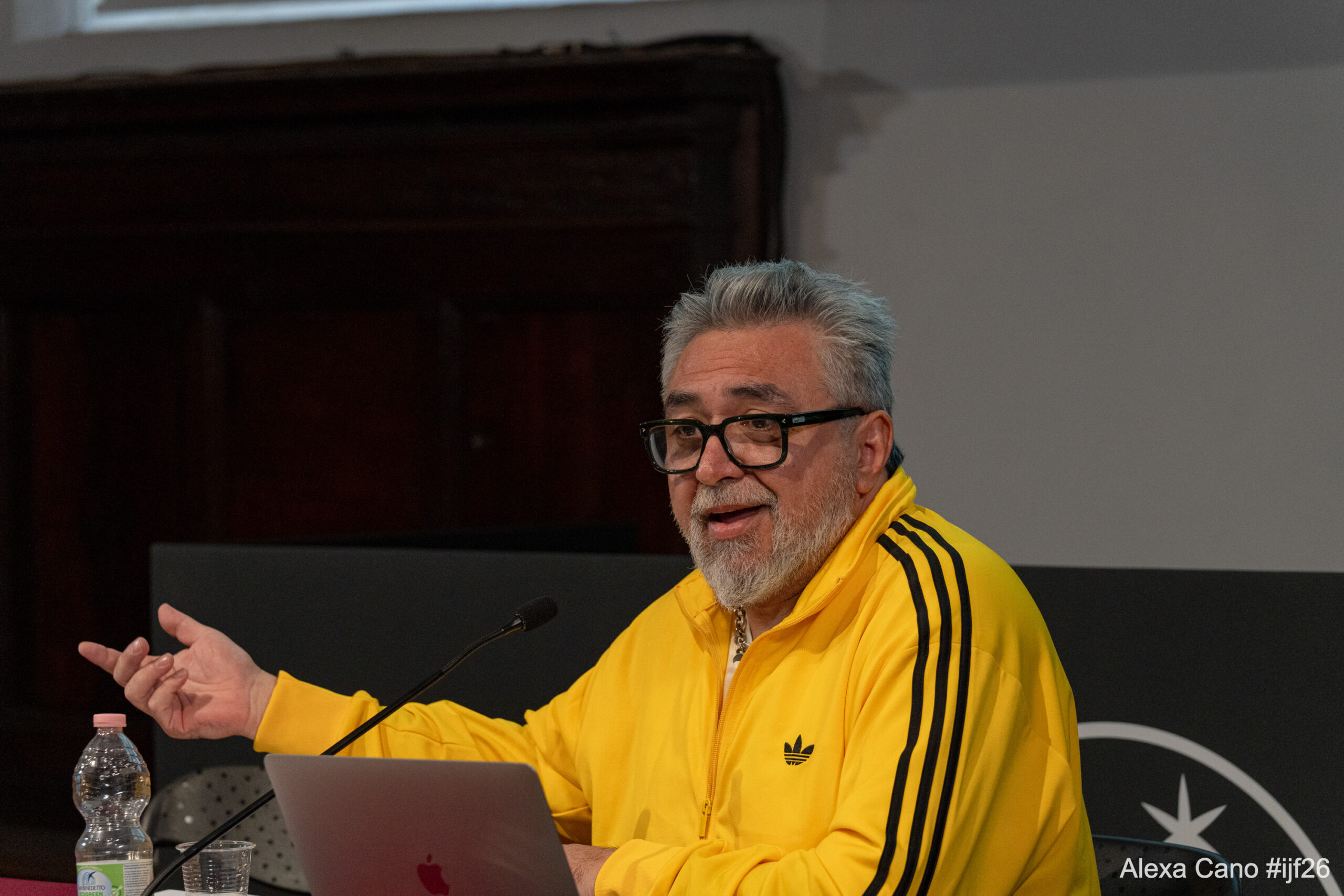
Investigative journalist and performative journalism practitioner Cristian Alarcón. Image: Alexa Cano for IJF
“The Vanishing Girl of Kabul” by Zahra Joya with Amie Ferris-Rotman
As a child in Afghanistan, Joya dressed as a boy in order to go to school. In her 20s, she used her personal savings to recruit five women journalists to start Rukhshana Media, an organization committed to bringing the stories of women in the country to the fore. Before the return of the Taliban in 2021, the reporting team would travel the country to report on domestic violence and child marriage. Since then, the situation has become even more complex: Joya was forced to relocate to London and find new ways to operate within Afghanistan, where she says her team has been forced into “doing underground journalism.” Her book — dubbed a “clarion call, a warning to a world too willing to look away” — was mentioned in the session “Reporting During Gender Apartheid in Afghanistan.” It will be published in July.
“On Courage: How to Be a Dissident in an Age of Fear” by Julia Angwin and Ami Fields-Meyer
Angwin is an award-winning investigative journalist and founder of The Markup, a nonprofit newsroom that investigates the impacts of technology on society. Now working from the Harvard Kennedy School’s Shorenstein Center on Media, Politics, and Public Policy, this book, which comes out later this year, is based on interviews with more than 100 dissidents, activists, and theorists across the world. “I’ve spent my career as an investigative reporter unearthing stories of how power has been abused and how people have been harmed… But this reporting exercise felt like it was yielding something different — something you might want to read in your free time,” Angwin has said. She mentioned the book at an off-the-record sideline session on investigating Big Tech, organized by Agência Pública.
“More Everything Forever” by Adam Becker
Becker has been described by one reviewer as “our greatest prophet of doom” — and Daniel Howden from Lighthouse Reports recommended this book for its thoroughness in diving into the psyches of some of the leaders of Silicon Valley’s biggest tech companies. The book, which was also one of The Conversation’s books of the year for 2025, delves into the “techbros” apparent obsession with eternal life, AI dominated-futures, and colonization of space. Becker is a science journalist with a PhD in astrophysics. Rolling Stone’s review said he “champions reality while also exposing the dangers of letting the tech billionaires push us toward a future that could never actually exist.”
“A Beginner’s Guide to Dying” by Simon Boas
Raju Narisetti is a former WSJ and Washington Post managing editor, now a partner and global leader of McKinsey Publishing & Marketing. He recommended this book, which details how to live as much as how to die, and written by Boas after he was diagnosed with incurable cancer in his 40s. Narisetti explained: “He wrote an article about getting a diagnosis that he’s not going to live very long. The article was so moving that people kept writing to him. It turned into a book.”
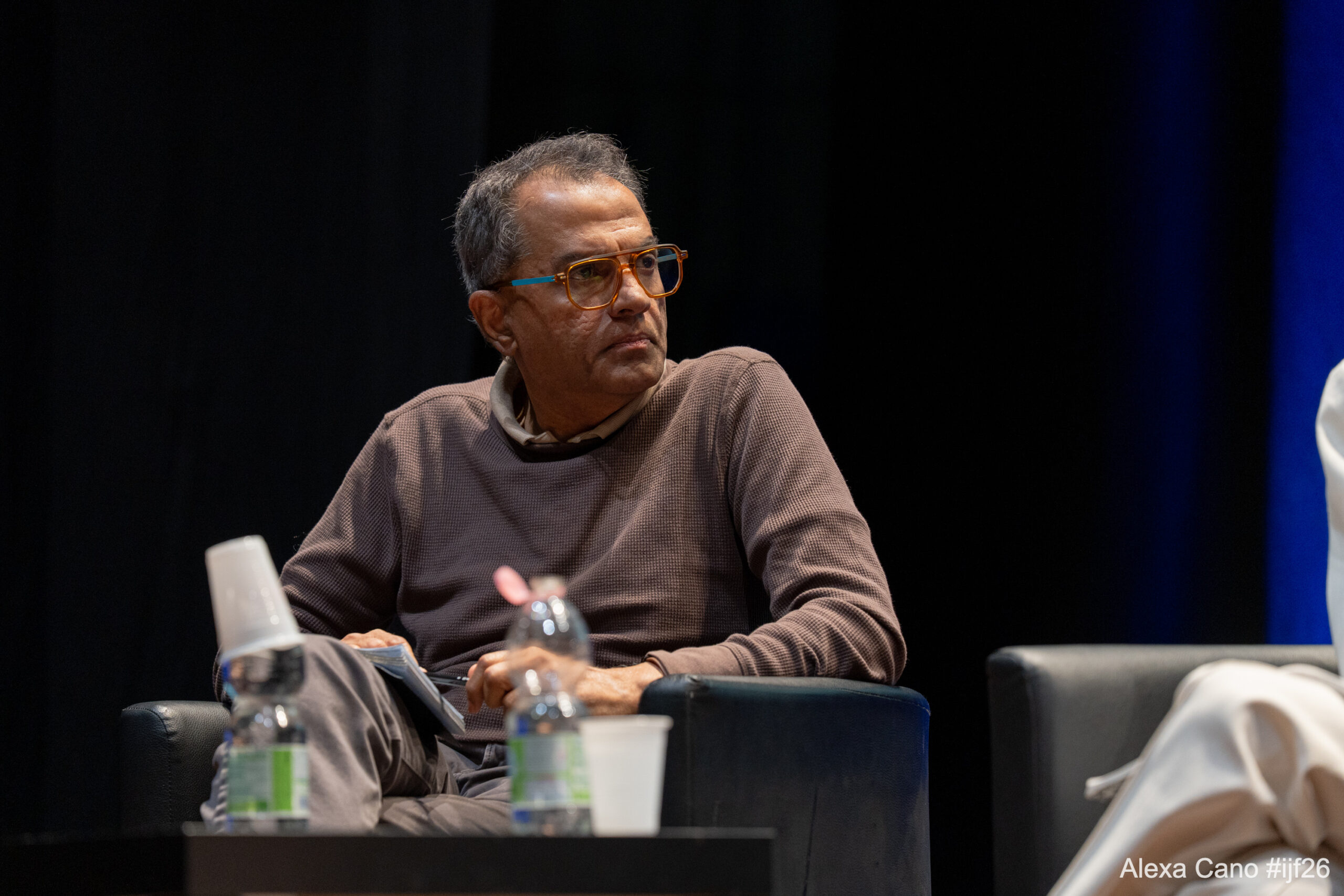
McKinsey Publishing’s Raju Narisetti. Image: Alexa Cano for IJF
“Empire of AI” by Karen Hao
Julia Angwin mentioned this book during her panel on investigating Big Tech, but this book by Hao has been widely recommended for reporters interested in learning about the risks of AI. As the subtitle of the book hints — “inside the reckless race for total domination” — there are risks in everything from the “proprietary resources” needed to power AI systems, to the sheer volume of data that needs to be amassed at scale. Hao is an award-winning journalist covering the impacts of artificial intelligence on society, writing for publications including The Atlantic. She was also a speaker at GIJC25 and recorded a recent masterclass video for GIJN.
“The Known World” by Edward P. Jones
Dawn Davis, founding publisher of 37 Ink, an imprint of Simon & Schuster, said she is currently reading a book of stories by Jones, but she also recommended this novel of his that won a Pulitzer for fiction. “His ability to observe humanity is singularly human. I get chills just talking about his work or thinking about his work,” she said in the in the “From Story to Spine” session in Perugia. “It is so moving. He writes about everyday people — as he likes to say — he writes not about government people in DC but the regular people who get two buses to go job to job, to make a dollar out of 15 cents.” For journalists she urged: “Reading fiction can inform and make you a better nonfiction writer.”
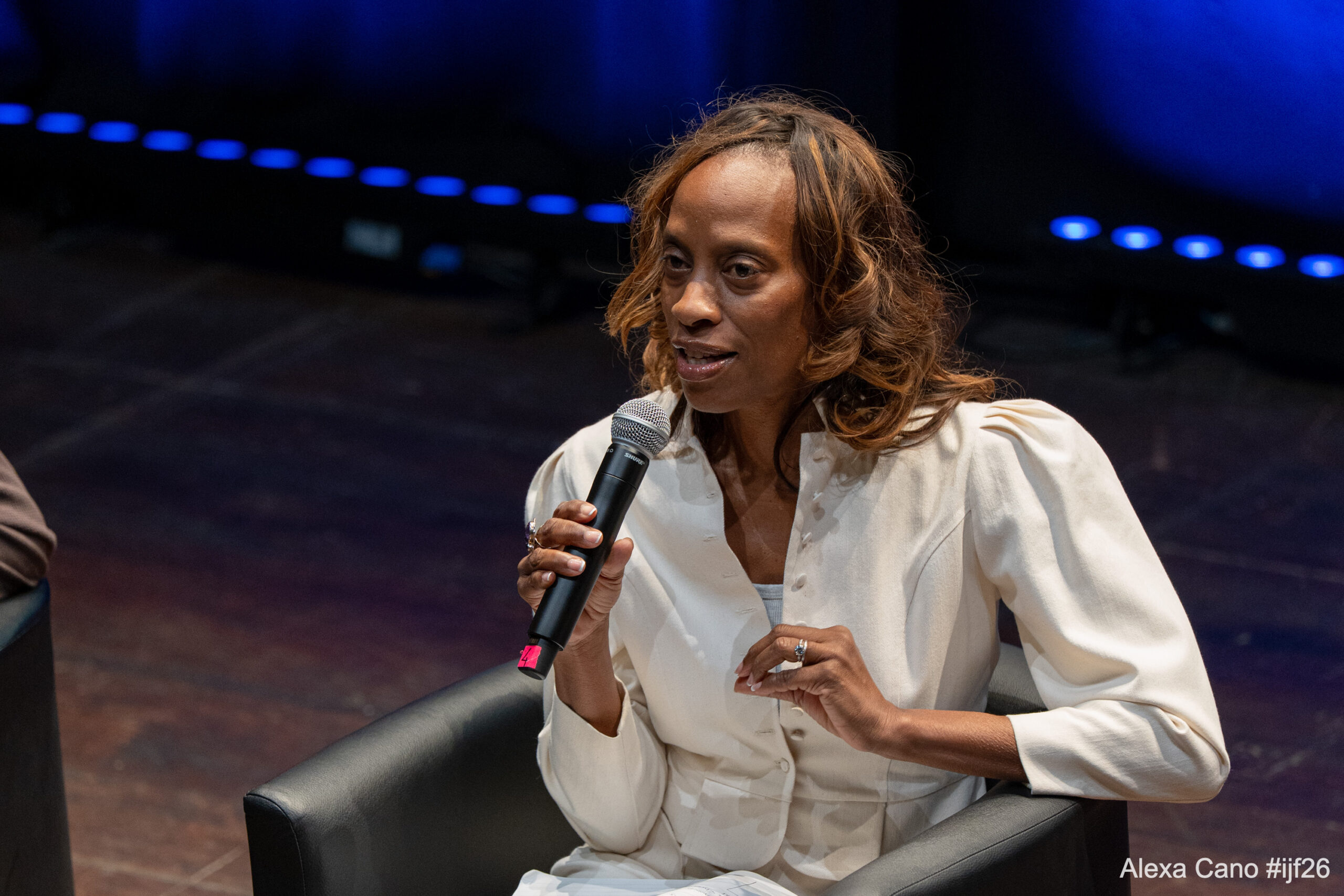
Editor Dawn Davis. Image: Alexa Cano for IJF
“The Correspondent” by Virginia Evans
An epistolary novel that was shortlisted for the Women’s Prize for Fiction this year, this book was the “what’s on your bedside table right now” choice of Mitra Kalita, an author and journalist and host of the session on turning stories into books. Speaking more generally about the panel she said “journalists everywhere are really eager to understand how to turn their reporting or experiences into books.” And while the panel agreed journalists are natural storytellers, Kalita pointed out a fundamental difference in the craft: “When you write articles, you are looking for a quote. When you are writing a book you are not looking for that, you are looking for what’s underneath those good quotes. Which tends to be much more emotional, there’s a universality to it. It’s like we’re trying to write about what’s different.”
“Perfection” by Vincenzo Latronico
Lynda Hammes said she was “a little late to the party” but just finished this Italian book. Having previously been asked about the threat of AI to the publishing industry, she responded by saying “no machine could ever write this book.” “It’s a portrait of a couple living a nomadic creative class life, everything is seemingly perfect in their life till you realize maybe it’s not… Highly recommended.”
“The Butterfly Season” by Lea Korsgaard
Korsgaard — the co-founder and editor-in-chief of Zetland — spent a year tracking every species of butterfly in Denmark. The book is described as “a love letter to the natural world, and an unforgettable reflection on the precious and fleeting nature of life itself.” In the session “A Manifesto for the Romantic School of Journalism,” her co-panelist Joshi Herrmann, founder and editor for The Mill in the UK, said her chosen literary topic made her perfectly placed to help chart a path for the “romantic school of journalism.”
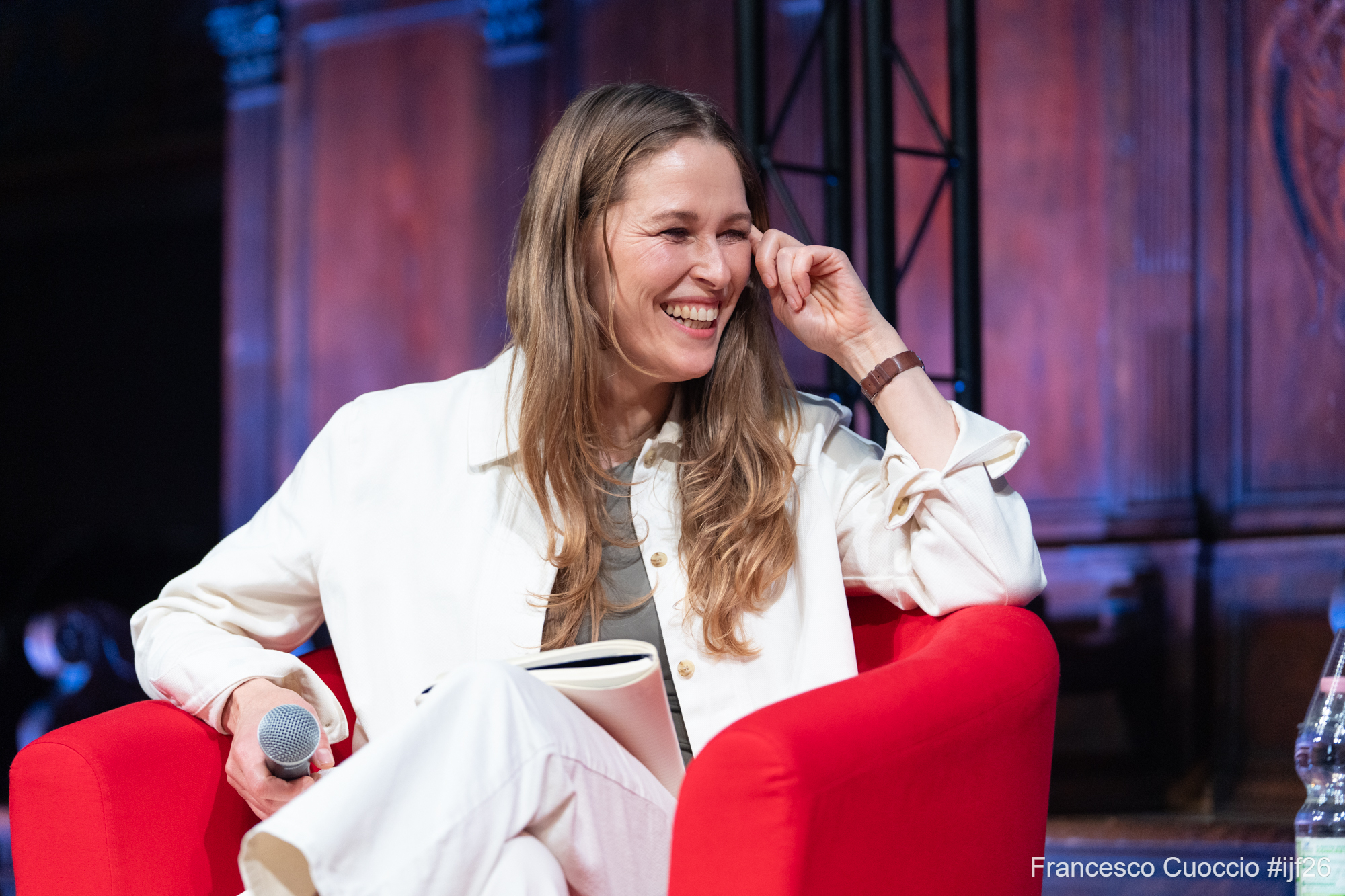
The author and journalist Lea Korsgaard. Image: Francesco Cuoccio for IJF
“Mother Mary Comes to Me” by Arundhati Roy
The latest book by India’s Arundhati Roy has been charming reviewers since it was first published last year, but sometimes it takes a personal recommendation to make you actually go into the bookshop and pick a title up. On this one, one of our colleagues said: “It was so good I didn’t want it to end.” The publishers call it “an ode to freedom, a tribute to thorny love and savage grace — a memoir like no other.” Roy has described her complex relationship with her mother like this: “One half of me was taking the hit and the other half of me was taking notes.”
“Fixers: Reporters Without Byline” by Mortaza Behboudi and Oksana Leuta
Fixers — also sometimes known as local producers — play a vital role in the international media landscape, but their role is often precarious. Despite being vital to international coverage, there are often concerns about visibility, safety (especially when foreign colleagues depart and go home), credit, and fair pay. This publication by a Franco-Afghan journalist and filmmaker (Behboudi) and a Ukrainian fixer (Leuta) explores how these “local guerilla journalists… tell their own tales of war and occupation, oppression, and exploitation, from France to Afghanistan, from Ukraine to Iran.”
Thanks to: Line Vaaben, Sandrine Rigaud, Eunice Au, Nikolia Apostolou for the suggestions.
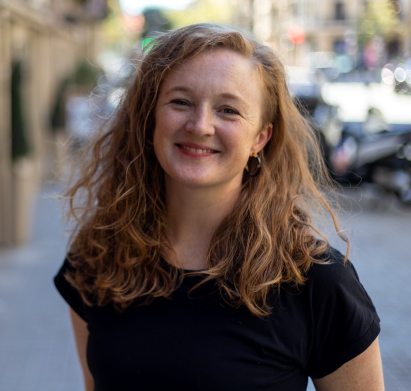 Laura Dixon is an associate editor at GIJN and a freelance journalist from the UK. She has reported from Colombia, the US, and Mexico, and her work has been published by The Times, The Washington Post, and The Atlantic. She has received fellowships from the IWMF and the Pulitzer Center.

This work is licensed under a Creative Commons Attribution-NoDerivatives 4.0 International License
Republish our articles for free, online or in print, under a Creative Commons license.
Republish this article
This work is licensed under a Creative Commons Attribution-NoDerivatives 4.0 International License
Read Next
News & Analysis
GIJN Bookshelf: 9 Investigative Titles to Better Understand Latin America
This latest installment of the GIJN Bookshelf offers a compilation of recommended investigative books from reporters across Latin America.

News & Analysis
From Mexico to South Africa, Brazil to the Philippines: GIJN’s Investigative Bookshelf
Featuring titles that address historic wrongdoing, unpack corporate secrets, and reveal misconduct that the powerful would rather remain hidden.
GIJC25 News & Analysis
GIJN Bookshelf: The Malaysia Edit
Headed to GIJC25 in Kuala Lumpur later this year? Here are a dozen books about Malaysia to read before your trip.

News & Analysis
Ester Blenda: Sweden’s Trailblazing Undercover Investigative Reporter
Swedish reporter Ester Blenda Nordström went undercover to expose working conditions on rural farms, the difficult journeys of migrants traveling to the United States, and to explore the life of the country’s Indigenous Sami community. In this book excerpt, read about the woman dubbed the country’s first investigative reporter.