

Reporting Tools & Tips Teaching & Training
Best Practices for Election Coverage Using YouTube
Tips from a workshop on how journalists and media outlets can better use YouTube in their election coverage.
Tips from a workshop on how journalists and media outlets can better use YouTube in their election coverage.

In this GIJN webinar, we bring together two of the authors of the investigation that revealed the names and ranks of officers in the Russian intelligence agency allegedly involved in the poisoning of opposition figure Alexey Navalny and an expert on media ethics. They will discuss the way the investigation was carried out, and how far journalists should go when there is evidence suggesting a crime may have been instigated or committed by government authorities.

As governments around the world continue vaccination efforts and extend lockdowns, some experts argue that more data is needed to evaluate the effectiveness of immunization campaigns and mobility restrictions. Our NodeXL #ddj mapping from January 11 to 18 found outlets in Germany and the United Kingdom analyzing government measures to reduce the impact of the COVID-19 pandemic. In this edition, we also feature an insightful interview with former Washington Post journalist Aaron Williams, an interactive timeline of the US Capitol riot by ProPublica, and a refreshing data visualization project by The Pudding.

The South Korean nonprofit investigative newsroom Newstapa was founded in 2012 by a group of journalists who had been either dismissed or marginalized in their newsrooms for demanding editorial independence. Since then, much has changed in the country’s political and media landscapes. Searching for sustainability in the midst of these upheavals has been a wild ride, writes Lee Taehoon for GIJN.
To investigate radicalization on YouTube, journalists from two Dutch media outlets teamed up and examined 600,000 videos, 120 million comments, and 20 million automatically-generated recommendations —using software they wrote for this occasion. Dimitri Tokmetzis, who runs the data desk at De Correspondent, wrote about how they did it for GIJN.

If you host your investigative documentary or journalism video on YouTube, check out this useful graphic on YouTube SEO statistics created by tech enthusiast Saksham Kumar. Knowing the ranking factors that YouTube takes into account could give you ideas on how to optimize your video to reach the largest audience it can.

Traditionally, documentary films can be a hard sell and haven’t always enraptured audiences. However, these films are now rising to the top of the heap given the possibilities of reaching an ever growing audience in a new battleground — the streaming arena, with the likes of established giants Netflix, Amazon Prime, Hulu and Apple.
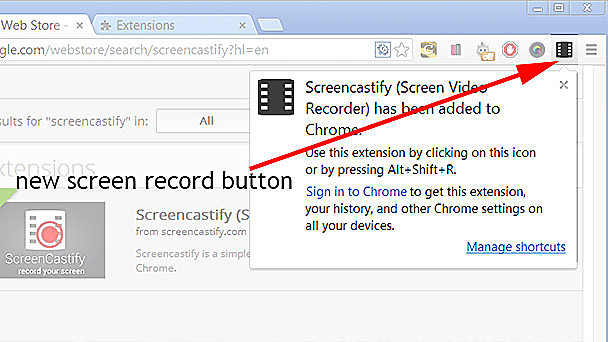
While many people use Internet Explorer to surf the net, users of Firefox and Chrome enjoy a wider range of options when it comes to add-ons. Add-ons are little apps that run inside the browser and allow you some extra functionality. They are usually free and are launched by either clicking on a button or choosing from a right-click menu.
In 2001 GIJN was born, as investigative journalists from around the globe met for the very first time to share ideas, tips, and best practices to strengthen their reporting in a world where journalism was increasingly under threat.
Today the threat has multiplied, and at GIJN we find ourselves under the same pressures as our member organizations. Most urgently: available funding for investigative journalism has been impacted as some longtime funders who supported journalism in the past are no longer doing so or have closed. Yet our work continues, more important than ever before.
GIJN serves as the global hub for the world’s investigative reporters. Our core mission is to support and strengthen investigative journalism—with special attention to those from repressive regimes and marginalized communities.
We are embarking on our first-ever campaign initiative to help us expand our revenue by the end of the year through individual donors. If you have ever joined one of our free webinars, used one of our free resources, learned a new skill thanks to a GIJN training, or simply believe that press freedom is essential to civil society, we ask you to show your support for GIJN’s work with a donation of your choosing. Called “Friends of GIJN,” this campaign includes a more personalized experience, starting in 2027, for individuals who answer the call to join with us during this unprecedented time.
Truth and democracy are under attack around the world. You can fight back by helping GIJN support investigative journalists with free access to the latest tools and techniques — so they can foster justice and hold accountable those who abuse the public trust.
With a staff based in 24 countries, GIJN works in a dozen languages each day, linking together the world’s most enterprising journalists, offering state-of-the-art training, webinars, tip sheets, and a Help Desk that responds to 2,000+ requests for assistance each year. More than 84% of GIJN’s operating budget goes directly to our program work.
Please make a gift today to support journalists on the front lines of the fight for accountability and human rights.