

Methodology Reporting Tools & Tips
Tips to Amplify Investigative Impact
Impact experts say there are several ways to help direct the attention of change-makers — as well as other media — to your key findings, and even nudge them to action.
Impact experts say there are several ways to help direct the attention of change-makers — as well as other media — to your key findings, and even nudge them to action.

The National Press Club recently hosted a panel of cybersecurity and digital experts to discuss the latest in government internet shutdowns and online censorship — and how journalists can work around these challenges.

In this GIJN webinar we bring together an expert in impact strategy and senior journalists with broad experience in building audiences and ensuring that investigative stories make impact both during and after publication.

In this GIJN webinar, we bring together four senior investigative journalists who have investigated the war in Ukraine. They will offer tips, tools and advice on how to cover this particular conflict — but also what they have learned about integrating different investigative methods.

A recent Reuters Institute webinar dug into a highly embarrassing, retracted investigation by India’s The Wire and also laid out best practices for investigative newsrooms to avoid both deliberate and unintentional source errors.

In this GIJN webinar, three senior reporters will share tips and resources to investigate financial crime, arms smuggling, and environmental crime.
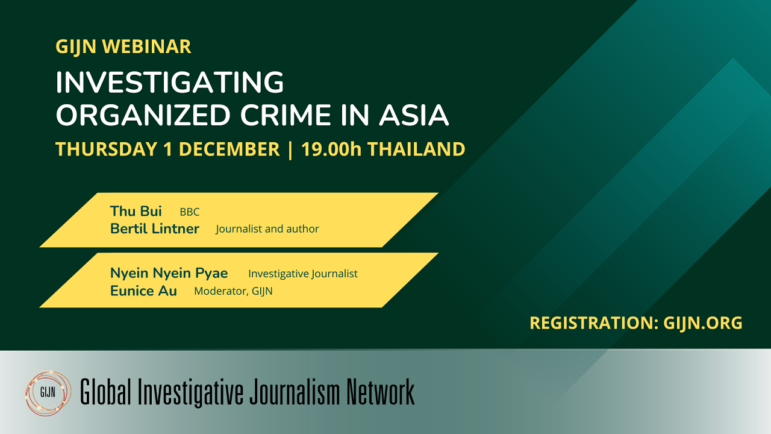
For decades, the Golden Triangle has been a source of fascination to journalists around the world. They’ve focused on the seemingly endless stories of criminal rackets, larger-than-life characters, and the area’s rich history and cultures. Covering organized crime, however, is challenging, and facts about the region’s black markets, its criminal players and their political backers can be hard to come by. In this GIJN webinar, three senior reporters will share their tips and resources to report from this region.
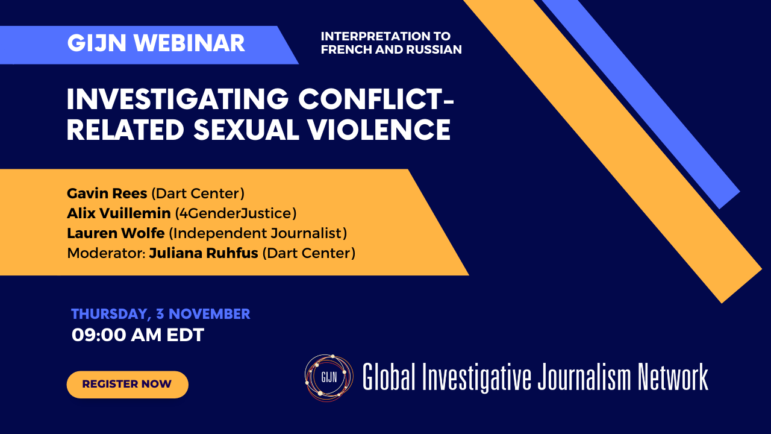
In this GIJN webinar, a senior reporter, a human rights advocate, and a safety and trauma specialist will discuss how sexual violence in conflict can be understood, the most common misconceptions about this type of violence, and where journalists fit in. The speakers will offer tips and resources on how to investigate effectively, safely engage with survivors, and navigate the call for justice.

Kenyan journalist John-Allan Namu discussed the emotional toll and significant impact on work-life balance that investigative reporting can have during a webinar hosted by the Reuters Institute.
In 2001 GIJN was born, as investigative journalists from around the globe met for the very first time to share ideas, tips, and best practices to strengthen their reporting in a world where journalism was increasingly under threat.
Today the threat has multiplied, and at GIJN we find ourselves under the same pressures as our member organizations. Most urgently: available funding for investigative journalism has been impacted as some longtime funders who supported journalism in the past are no longer doing so or have closed. Yet our work continues, more important than ever before.
GIJN serves as the global hub for the world’s investigative reporters. Our core mission is to support and strengthen investigative journalism—with special attention to those from repressive regimes and marginalized communities.
We are embarking on our first-ever campaign initiative to help us expand our revenue by the end of the year through individual donors. If you have ever joined one of our free webinars, used one of our free resources, learned a new skill thanks to a GIJN training, or simply believe that press freedom is essential to civil society, we ask you to show your support for GIJN’s work with a donation of your choosing. Called “Friends of GIJN,” this campaign includes a more personalized experience, starting in 2027, for individuals who answer the call to join with us during this unprecedented time.
Truth and democracy are under attack around the world. You can fight back by helping GIJN support investigative journalists with free access to the latest tools and techniques — so they can foster justice and hold accountable those who abuse the public trust.
With a staff based in 24 countries, GIJN works in a dozen languages each day, linking together the world’s most enterprising journalists, offering state-of-the-art training, webinars, tip sheets, and a Help Desk that responds to 2,000+ requests for assistance each year. More than 84% of GIJN’s operating budget goes directly to our program work.
Please make a gift today to support journalists on the front lines of the fight for accountability and human rights.