

News & Analysis Reporting Tools & Tips
The Art of the Interview: Tips from BBC Veteran Kirsty Young
The longtime host of the BBC’s beloved interview show, Desert Island Discs, reveals how she disarms poets and politicians alike.
The longtime host of the BBC’s beloved interview show, Desert Island Discs, reveals how she disarms poets and politicians alike.

Listing expert sources, databases, health maps and more from the World Health Organization, United Nations, Eurostat, and other international bodies monitoring global health.
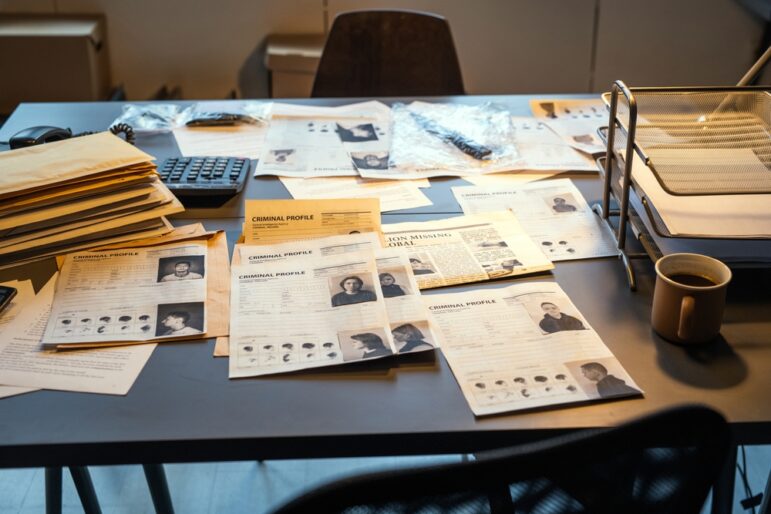
Investigative projects are often likened to marathons. But, every now and then, watchdog reporters need to sprint. In a recent IRE23 conference session, experts shared tips on how to unearth background facts about little-known people on short notice.
Andrew Lehren believes in the power of curiosity, and learning-by-doing. Here, he and some of his former students describe a method of journalism instruction that emphasizes collaboration, new tools, and innovative story pitching.

Within the borders of China and Russia, the use of invasive information controls and techniques is well-known and widespread. But the use of these technology systems to suppress citizens’ fundamental human rights goes beyond what is happening inside any one country’s borders. Increasingly, authoritarian actors are exporting these tools and know-how to other countries, a new report finds.

What’s the global data journalism community tweeting about this week? Our NodeXL #ddj mapping from September 2 to 8 finds Folha de São Paulo’s beautiful 3D animation of the Brazil National Museum’s restoration efforts, Guardian’s real-time visualization of Irish border crossings, NZZ’s look at China’s bad research impacting scientists worldwide, and The New York Times calculating the variability of New York City’s subway commute times.
Thriving as a digital publisher is a challenge anywhere, but those in lower-income countries and in repressive media environments face additional hurdles. A new report looks at the experiences of 54 digital publishers around the world and identifies factors that contribute to resilience in these markets.
The legal system constantly produces information on the behavior of powerful people and entities. Based on his latest research, law expert Roy Shapira has unpacked for GIJN how investigative reporters can use the full potential of legal sources for better reporting.

The 11th Global Investigative Journalism Conference, scheduled for this September 26-29 in Hamburg, Germany, will feature an academic research track. Journalism professors and researchers worldwide are invited to submit research paper abstracts highlighting trends, challenges, teaching methodologies, new developments and best practices in investigative and data journalism. Abstracts are due April 8, 2019.
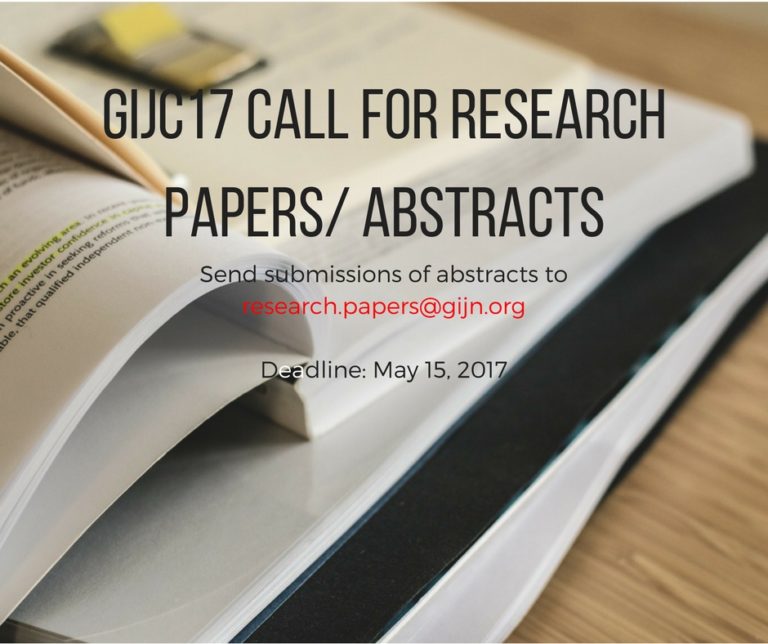
The 10th Global Investigative Journalism Conference, to be held this November 16-19 in Johannesburg, South Africa, will again feature an academic research track, highlighting trends, challenges, teaching methodologies, and best practices in investigative journalism. Here is the call for papers that is going out to journalism professors worldwide.
In 2001 GIJN was born, as investigative journalists from around the globe met for the very first time to share ideas, tips, and best practices to strengthen their reporting in a world where journalism was increasingly under threat.
Today the threat has multiplied, and at GIJN we find ourselves under the same pressures as our member organizations. Most urgently: available funding for investigative journalism has been impacted as some longtime funders who supported journalism in the past are no longer doing so or have closed. Yet our work continues, more important than ever before.
GIJN serves as the global hub for the world’s investigative reporters. Our core mission is to support and strengthen investigative journalism—with special attention to those from repressive regimes and marginalized communities.
We are embarking on our first-ever campaign initiative to help us expand our revenue by the end of the year through individual donors. If you have ever joined one of our free webinars, used one of our free resources, learned a new skill thanks to a GIJN training, or simply believe that press freedom is essential to civil society, we ask you to show your support for GIJN’s work with a donation of your choosing. Called “Friends of GIJN,” this campaign includes a more personalized experience, starting in 2027, for individuals who answer the call to join with us during this unprecedented time.
Truth and democracy are under attack around the world. You can fight back by helping GIJN support investigative journalists with free access to the latest tools and techniques — so they can foster justice and hold accountable those who abuse the public trust.
With a staff based in 24 countries, GIJN works in a dozen languages each day, linking together the world’s most enterprising journalists, offering state-of-the-art training, webinars, tip sheets, and a Help Desk that responds to 2,000+ requests for assistance each year. More than 84% of GIJN’s operating budget goes directly to our program work.
Please make a gift today to support journalists on the front lines of the fight for accountability and human rights.