

GIJC25
Pivoting to Podcasts? How Print Journalists Can Become Audio Storytellers
Narrative podcasts have become a transformative tool for investigative reporting. At GIJC, editors and producers unpacked how journalists can tap into its power.
Narrative podcasts have become a transformative tool for investigative reporting. At GIJC, editors and producers unpacked how journalists can tap into its power.

This year’s survey finds an accelerating shift towards social media and video platforms, further diminishing the influence of ‘institutional journalism.’

The global boom in audio streaming offers an opportunity for investigative journalists to reach wider audiences by developing multilingual translations of their podcasts.
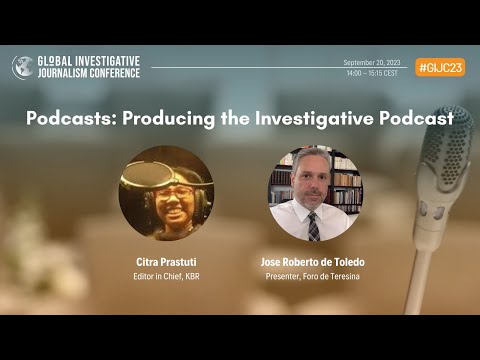
Podcast listening in Brazil and Indonesia, two of the world’s top markets, has followed a global surge in listeners turning to the intimacy of podcasting and streaming audio, when and where they want. Come meet three journalists and producers who have both led the way in their countries, and collaborated in true GIJN fashion. Join […]

Each year the jury for the DIG Festival scours hundreds of submissions to find the best investigative films and podcasts from around the world.

Podcasts are quintessentially an audio medium, but to reach newer and younger audiences, many shows are now beginning to add video elements to the traditional format.
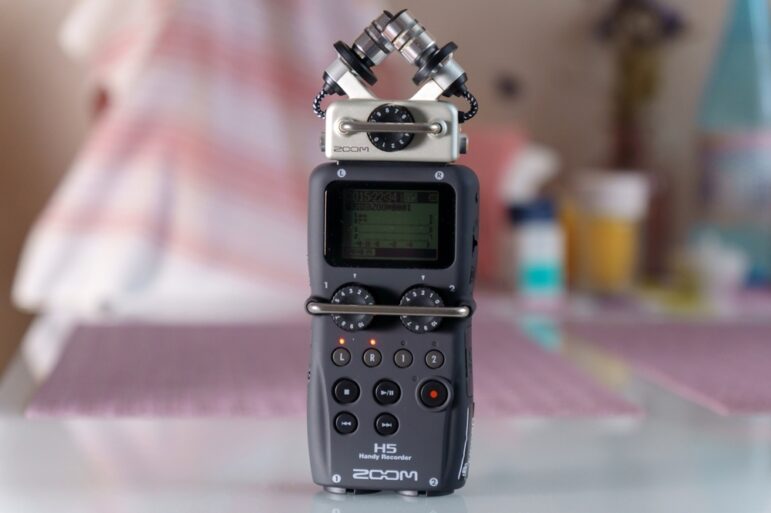
At the International Journalism Festival in Perugia, veteran journalists from Africa and the Middle East discussed the power and intimacy of audio and podcast reporting and how it can enable reporters to better access hard-to-cover stories.

GIJN’s global team has reviewed some of our favorite investigative podcasts from 2022. Some dig into scandals and allegations of sexual assault. Others take a deep dive into the backgrounds of leading political figures or explore national scandals. There are tragedies, public interest stories, politics, crime, and corruption, with stories drawn from around the world.
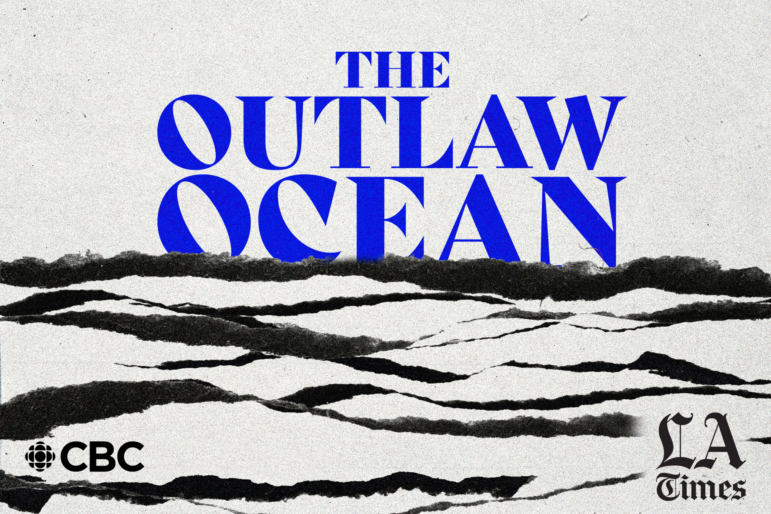
The Outlaw Ocean Project — a nonprofit journalism organization that reports on the “watery two-thirds” of our planet — used material from several years of investigations on the high seas to create a new, seven-part podcast.

Megha Rajagopalan has reported from over 23 countries in Asia and the Middle East, on stories ranging from the North Korean nuclear crisis to the peace process in Afghanistan. Her team’s investigation into prison camps in Xinjiang, China won a Pulitzer Prize. In this podcast, she discusses how she got into investigative journalism and gives her tips for speaking to vulnerable sources.