

GIJC25
11 Tips for Editors Leading Cross-Border Investigations
Editors who have led major cross-border collaborations share best practices — and common mistakes — for leading complex investigative reporting projects.
Editors who have led major cross-border collaborations share best practices — and common mistakes — for leading complex investigative reporting projects.

“Good project management is hard to find in newsrooms,” says the WSJ’s Robin Kwong, the author of a recent guide full of tips for editorial leadership.

As part of our ongoing “10 Questions” interview series, GIJN’s Spanish editor Andrea Arzaba speaks with Omaya Sosa, founding co-director of Puerto Rico’s Center for Investigative Journalism.
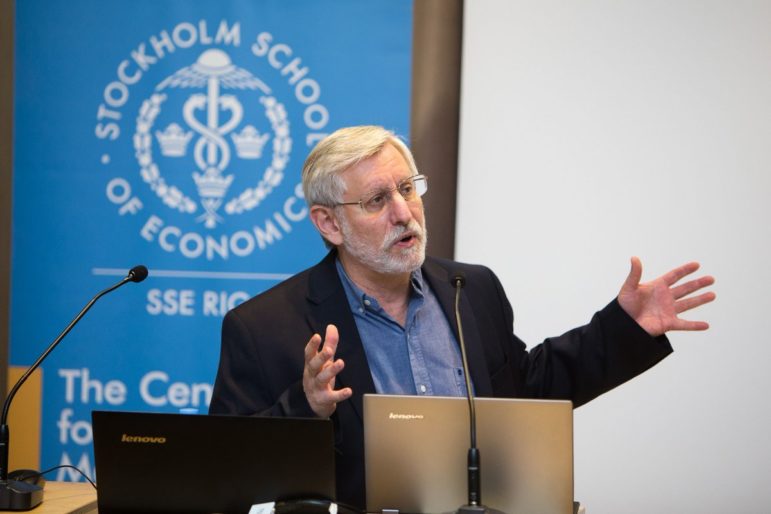
After more than a decade of leadership of the Global Investigative Journalism Network, Executive Director David Kaplan has announced he will retire from his position in September 2023 at the Global Investigative Journalism Conference in Gothenburg, Sweden. Kaplan was among those representing 30 member organizations that founded the Network in 2003 and became its first full-time executive director in February 2012.
To share best practices and other lessons learned from our most recent global conference, GIJC21, we are releasing a series of videos from the event’s many seminars, panels, and workshops. This latest installment focuses on key issues like health and medicine, women’s leadership, investigative podcasts, and Indigenous reporting.

In People Problems Part 1, we talked about two common kinds of complaints that you as a manager might hear. “I don’t think Karl is showing enough commitment to his work.” “The technical staff is being rude to our salespeople.” Here is a method for developing your colleague’s problem-solving skills, followed by how to apply it in these two cases. If you focus on developing your people, your organization will develop far more rapidly than if you focus on just the num.

If you are leading a team in a small media organization, you need to get the best out of your people. Everyone has to be a contributor. This is not just a selfish thing. You get the best out of people by helping them develop their own talents, overcome obstacles and reach their own professional goals.
In 2001 GIJN was born, as investigative journalists from around the globe met for the very first time to share ideas, tips, and best practices to strengthen their reporting in a world where journalism was increasingly under threat.
Today the threat has multiplied, and at GIJN we find ourselves under the same pressures as our member organizations. Most urgently: available funding for investigative journalism has been impacted as some longtime funders who supported journalism in the past are no longer doing so or have closed. Yet our work continues, more important than ever before.
GIJN serves as the global hub for the world’s investigative reporters. Our core mission is to support and strengthen investigative journalism—with special attention to those from repressive regimes and marginalized communities.
We are embarking on our first-ever campaign initiative to help us expand our revenue by the end of the year through individual donors. If you have ever joined one of our free webinars, used one of our free resources, learned a new skill thanks to a GIJN training, or simply believe that press freedom is essential to civil society, we ask you to show your support for GIJN’s work with a donation of your choosing. Called “Friends of GIJN,” this campaign includes a more personalized experience, starting in 2027, for individuals who answer the call to join with us during this unprecedented time.
Truth and democracy are under attack around the world. You can fight back by helping GIJN support investigative journalists with free access to the latest tools and techniques — so they can foster justice and hold accountable those who abuse the public trust.
With a staff based in 24 countries, GIJN works in a dozen languages each day, linking together the world’s most enterprising journalists, offering state-of-the-art training, webinars, tip sheets, and a Help Desk that responds to 2,000+ requests for assistance each year. More than 84% of GIJN’s operating budget goes directly to our program work.
Please make a gift today to support journalists on the front lines of the fight for accountability and human rights.