

Resource
Remote Sensing and Data Tools for Environmental Investigations
This edition of the GIJN Toolbox explores global databases and remote sensing resources that reporters can use to investigate local environmental threats.
This edition of the GIJN Toolbox explores global databases and remote sensing resources that reporters can use to investigate local environmental threats.
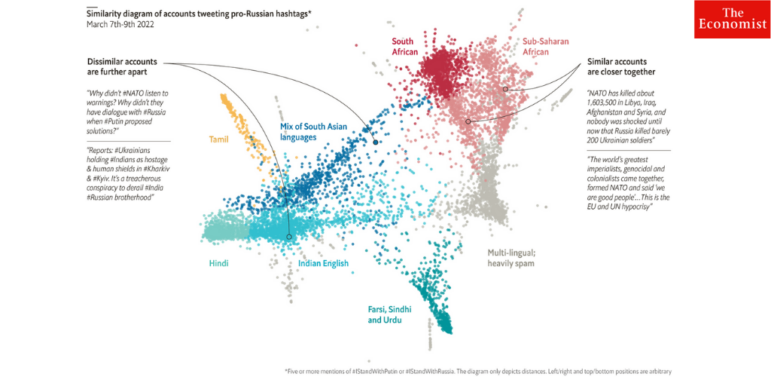
In this week’s Top 10 in Data Journalism, we look at pro-Russian propaganda’s popularity in Africa and South Asia, the rising costs of goods in the US and India, inequitable disaster funding, and the power of animating data visualization.

Telegram is an invaluable research tool, helping journalists mine for information, investigate groups of people whose content is otherwise banned or limited on social media, and track protests and political movements in authoritarian countries. Here’s how to get started using it.

Reporters for Investigate Europe (IE) spent months examining the consequences of a seismic shift in Europe’s elder care homes, where for-profit companies have increasingly taken over the industry. Their investigation explored how this shift has affected residents and staff, and dug into the impact of the COVID-19 pandemic on some of society’s most vulnerable people.

Independent media now have to deal with an increasing number of digital attacks on press freedom, from brute-force attacks on their servers to more sophisticated assaults on their social media presence and digitally-based legal challenges.

To share best practices and other lessons learned from our most recent global conference, we are releasing a series of videos from the event’s many seminars, panels, and workshops. This latest installment focuses on reporting tips and collaborations in the Asia-Pacific region and insights for reporting in China.
Shutting down the internet has become an increasingly common tactic of governments and regimes looking to prevent civil society and free media from operating. Here, experts in privacy and security give their advice on the tools and tactics for skirting internet blackouts.

To share best practices from our most recent global conference, GIJC21, we are releasing a series of videos from the event’s many seminars, panels, and workshops. This latest installment focuses on investigative tips and tools for using satellite imagery, flight tracking, and exposing disinformation.

Many autocracy-displaced media have managed to navigate surviving outside their home country with varying degrees of success. In a series of interviews with GIJN, exiled news leaders from around the world offer some best practices and lessons learned from their own experiences.
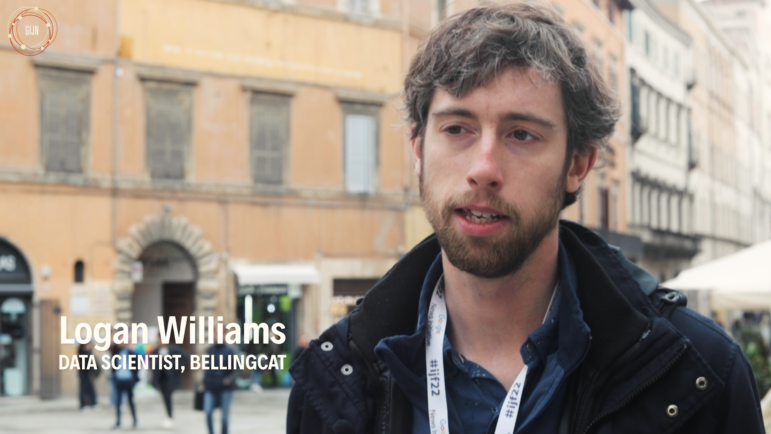
Bellingcat’s Logan Williams, who presented a panel on digital forensic reporting labs at the 2022 International Journalism Festival 2022 in Perugia, Italy, gives his top tips for journalists interested in open source digital investigations.
In 2001 GIJN was born, as investigative journalists from around the globe met for the very first time to share ideas, tips, and best practices to strengthen their reporting in a world where journalism was increasingly under threat.
Today the threat has multiplied, and at GIJN we find ourselves under the same pressures as our member organizations. Most urgently: available funding for investigative journalism has been impacted as some longtime funders who supported journalism in the past are no longer doing so or have closed. Yet our work continues, more important than ever before.
GIJN serves as the global hub for the world’s investigative reporters. Our core mission is to support and strengthen investigative journalism—with special attention to those from repressive regimes and marginalized communities.
We are embarking on our first-ever campaign initiative to help us expand our revenue by the end of the year through individual donors. If you have ever joined one of our free webinars, used one of our free resources, learned a new skill thanks to a GIJN training, or simply believe that press freedom is essential to civil society, we ask you to show your support for GIJN’s work with a donation of your choosing. Called “Friends of GIJN,” this campaign includes a more personalized experience, starting in 2027, for individuals who answer the call to join with us during this unprecedented time.
Truth and democracy are under attack around the world. You can fight back by helping GIJN support investigative journalists with free access to the latest tools and techniques — so they can foster justice and hold accountable those who abuse the public trust.
With a staff based in 24 countries, GIJN works in a dozen languages each day, linking together the world’s most enterprising journalists, offering state-of-the-art training, webinars, tip sheets, and a Help Desk that responds to 2,000+ requests for assistance each year. More than 84% of GIJN’s operating budget goes directly to our program work.
Please make a gift today to support journalists on the front lines of the fight for accountability and human rights.