

Case Studies
Google News Initiative Grants in Africa and the Middle East Yield Mixed Results
A study found many Google News Initiative projects in Middle East and Africa struggle to become more than makeshift versions of the original idea.
A study found many Google News Initiative projects in Middle East and Africa struggle to become more than makeshift versions of the original idea.

Gaming and the news have a history, for decades they have been used to increase engagement and reach younger audiences. Here are some tips for getting started with gamification in your next investigation.

The Sigma Awards celebrate the best in data journalism from around the world. Speaking at the Perugia International Journalism Festival, three of the founders of the award highlighted the best projects of recent years and pointed to what journalists can learn from these data stories.

CORRECTIV boasts a €4 million annual budget, a staff of 60, and has become one of the world’s largest nonprofit centers for investigative journalism. As founder David Schraven had hoped, the outlet has delivered blockbuster investigations and trained aspiring journalists, as well as staged plays and exhibitions inspired by current affairs that serve to bridge the gap between art and news.

Newsletters are popular because their offering is different from the information that is dangerously filtered and molded by social media giant’s random, opaque algorithms. GIJN has selected five original newsletters that can inspire journalists around the world.

There are no chemical formulas, no “Breaking Bad” hazmat suits, no gadgets to measure humidity and atmospheric pressure. Juan Ignacio Sixto takes us on a world tour of News Labs, spaces that are meant to foster innovation within newsrooms.
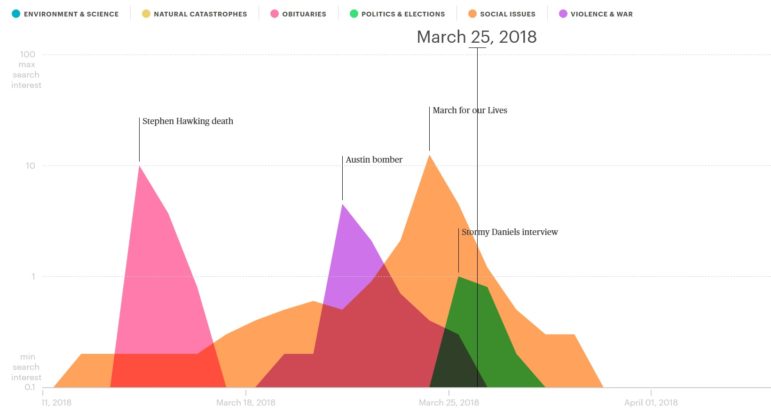
What’s the global data journalism community tweeting about this week? Our NodeXL #ddj mapping from January 21 to 27 finds @schemadesign and @GoogleTrends teaming up to visualize news cycles in 2018, the @washingtonpost’s flyover tour of the entire US-Mexico border and two interesting football-related visualizations: @ftblsm’s history of football and @NZZ’s analysis of whether football coaches Jose Mourinho and Julen Lopetegui should have been sacked.

With the global spread of data journalism, the advent of artificial intelligence and the increasing use of big data moving alongside a rapid rise of disinformation, GIJN asked data journalism experts around the world what they anticipate for 2019. Here are their thoughts on the major trends, ideas and technologies that will affect how we do our jobs.
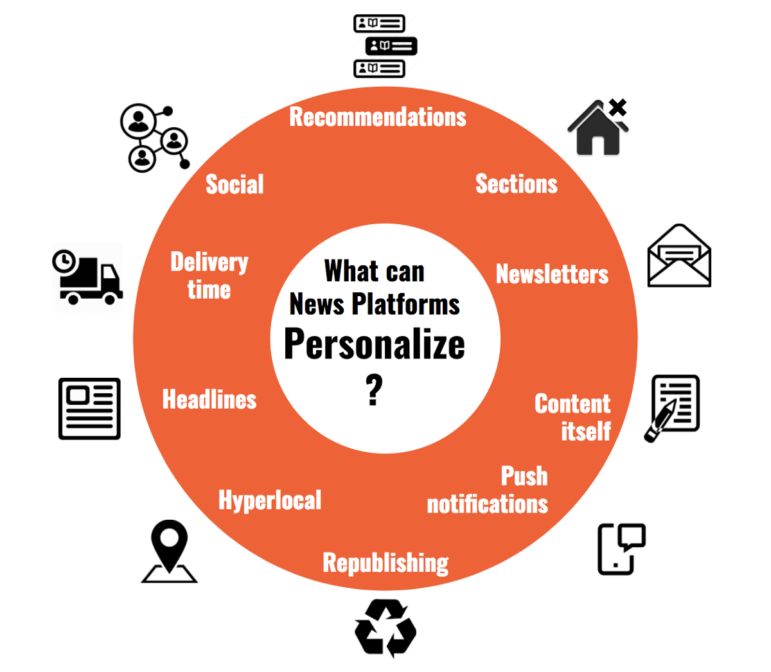
Is personalization the next revolution in the news industry? John S Knight Journalism Fellow Titus Plattner argues that at a time when more and more news outlets are shifting from an advertising-based revenue model to a subscription based model, personalization is the best way to reinforce the relation to the real client.
What’s the global data journalism community tweeting about this week? Our NodeXL #ddj mapping from July 2 to 8 finds @MarieSegger’s tips on highlighting data journalism using GIFs, @jplusplus_’s news finding bot service and Kepler.gl’s data-driven mapping tool.
In 2001 GIJN was born, as investigative journalists from around the globe met for the very first time to share ideas, tips, and best practices to strengthen their reporting in a world where journalism was increasingly under threat.
Today the threat has multiplied, and at GIJN we find ourselves under the same pressures as our member organizations. Most urgently: available funding for investigative journalism has been impacted as some longtime funders who supported journalism in the past are no longer doing so or have closed. Yet our work continues, more important than ever before.
GIJN serves as the global hub for the world’s investigative reporters. Our core mission is to support and strengthen investigative journalism—with special attention to those from repressive regimes and marginalized communities.
We are embarking on our first-ever campaign initiative to help us expand our revenue by the end of the year through individual donors. If you have ever joined one of our free webinars, used one of our free resources, learned a new skill thanks to a GIJN training, or simply believe that press freedom is essential to civil society, we ask you to show your support for GIJN’s work with a donation of your choosing. Called “Friends of GIJN,” this campaign includes a more personalized experience, starting in 2027, for individuals who answer the call to join with us during this unprecedented time.
Truth and democracy are under attack around the world. You can fight back by helping GIJN support investigative journalists with free access to the latest tools and techniques — so they can foster justice and hold accountable those who abuse the public trust.
With a staff based in 24 countries, GIJN works in a dozen languages each day, linking together the world’s most enterprising journalists, offering state-of-the-art training, webinars, tip sheets, and a Help Desk that responds to 2,000+ requests for assistance each year. More than 84% of GIJN’s operating budget goes directly to our program work.
Please make a gift today to support journalists on the front lines of the fight for accountability and human rights.