

Resource Video
GIJC23 – Indigenous Investigations
Here, Indigenous journalists from around the world share how they’re using investigative skills to expose issues ranging from land theft to cultural repression.
Here, Indigenous journalists from around the world share how they’re using investigative skills to expose issues ranging from land theft to cultural repression.
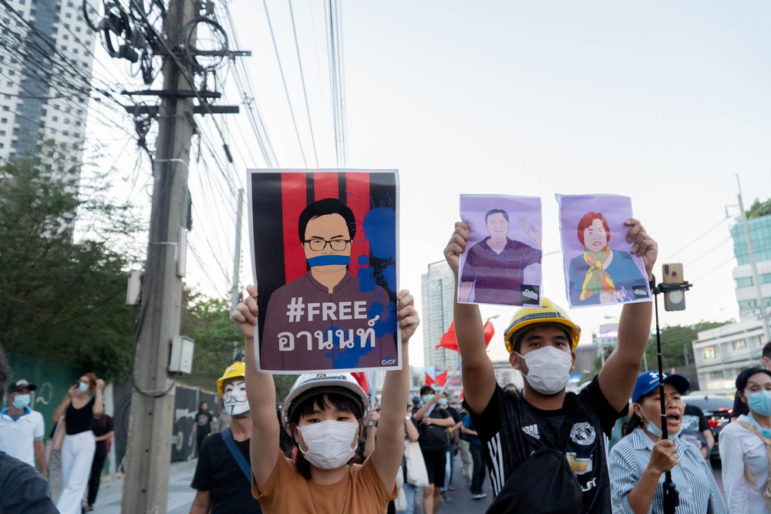
In August 2020, the leaders of Thailand’s pro-democracy movement published a list of demands after tens of thousands of reformists joined their call to take to the streets. Only one local media outlet dared to publish them: Prachatai, a bold start-up committed to promoting freedom of expression and democracy.

Scenes of supporters of outgoing President Donald Trump storming the US Capitol building dominated news headlines and filled social media feeds last week. Our NodeXL #ddj mapping from January 4 to 10 found Reuters producing a play-by-play summary of what happened, and FiveThirtyEight examining the stark difference in reaction by the authorities to the Capitol mob compared to Black Lives Matter protesters. Also in this edition, we feature National Geographic’s cartography archive, Data Crítica’s investigation into under-counting of Indigenous COVID-19 infections, and The Markup’s analysis of the impact of Facebook’s political ads.

What’s the global data journalism community tweeting about this week? Our NodeXL #ddj mapping from December 2 to 8 finds The New York Times visualizing particle pollution in augmented reality; various media outlets investigating #29Leaks, a global reporting project based on a massive data leak from an offshore services provider; Columbia Journalism Investigations and ProPublica digging into the problem of sexual predators lurking in dating apps; and The International Consortium of Investigative Journalists breaking down the significance of the China Cables.

Over the past four days, 1,700 journalists from 130 countries gathered in Hamburg, Germany, to share experiences, learn from expert speakers, network with kindred spirits, and find new partners for their next investigations. It was the most diverse and largest-ever international gathering of investigative journalists, and a perfect place to be inspired.
In 2001 GIJN was born, as investigative journalists from around the globe met for the very first time to share ideas, tips, and best practices to strengthen their reporting in a world where journalism was increasingly under threat.
Today the threat has multiplied, and at GIJN we find ourselves under the same pressures as our member organizations. Most urgently: available funding for investigative journalism has been impacted as some longtime funders who supported journalism in the past are no longer doing so or have closed. Yet our work continues, more important than ever before.
GIJN serves as the global hub for the world’s investigative reporters. Our core mission is to support and strengthen investigative journalism—with special attention to those from repressive regimes and marginalized communities.
We are embarking on our first-ever campaign initiative to help us expand our revenue by the end of the year through individual donors. If you have ever joined one of our free webinars, used one of our free resources, learned a new skill thanks to a GIJN training, or simply believe that press freedom is essential to civil society, we ask you to show your support for GIJN’s work with a donation of your choosing. Called “Friends of GIJN,” this campaign includes a more personalized experience, starting in 2027, for individuals who answer the call to join with us during this unprecedented time.
Truth and democracy are under attack around the world. You can fight back by helping GIJN support investigative journalists with free access to the latest tools and techniques — so they can foster justice and hold accountable those who abuse the public trust.
With a staff based in 24 countries, GIJN works in a dozen languages each day, linking together the world’s most enterprising journalists, offering state-of-the-art training, webinars, tip sheets, and a Help Desk that responds to 2,000+ requests for assistance each year. More than 84% of GIJN’s operating budget goes directly to our program work.
Please make a gift today to support journalists on the front lines of the fight for accountability and human rights.