
Resource Video
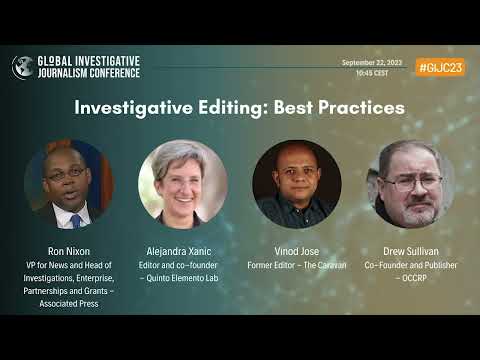
GIJC23 – Investigative Editing: Best Practices
It’s no secret that great investigative editors are hard to find. What makes a terrific editor for watchdog journalism? How do they keep their reporters sane, focused, and motivated?
It’s no secret that great investigative editors are hard to find. What makes a terrific editor for watchdog journalism? How do they keep their reporters sane, focused, and motivated?

There are numerous investigative topics to explore between the farmer’s field and the grocery store – and, indeed, the plate – and several recent projects have exposed abuses in the production, distribution, and access to food. This expert panel offers deep experience in issues from fisheries and pesticides to food security and biodiversity — with […]

Here, Indigenous journalists from around the world share how they’re using investigative skills to expose issues ranging from land theft to cultural repression.
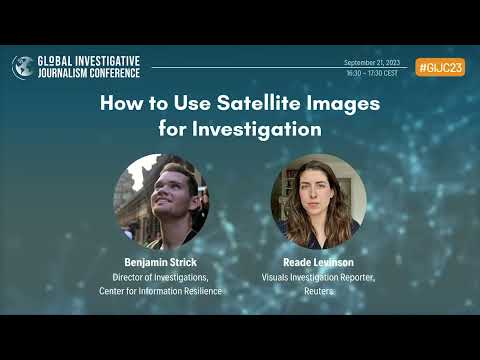
Our expert panelists discuss possible opportunities for using satellite images, where to find them, and how they can enrich investigations.

Freelancing is a tough job; investigative freelancing is even harder. But it also brings independence and the ability to pick your projects. Here are tips from journalists from four countries with decades of experience in working on their own.

Listen to the hard-won advice from leading watchdog newsrooms in exile from Bangladesh, Russia, and Venezuela.

In this presentation, we will methodically guide you through the investigative process and show how to succeed with your project without getting lost along the way.

Developing a viable and effective business plan is essential for media organizations, a necessary foundation for sustainability and growth — indeed, for an organization’s very survival.

What revenue options are currently the most viable for investigative journalism and why, and how do we develop methods that will lead to increased revenue?

Online harassment of investigative journalists who identify as women has reached crisis proportions.
In 2001 GIJN was born, as investigative journalists from around the globe met for the very first time to share ideas, tips, and best practices to strengthen their reporting in a world where journalism was increasingly under threat.
Today the threat has multiplied, and at GIJN we find ourselves under the same pressures as our member organizations. Most urgently: available funding for investigative journalism has been impacted as some longtime funders who supported journalism in the past are no longer doing so or have closed. Yet our work continues, more important than ever before.
GIJN serves as the global hub for the world’s investigative reporters. Our core mission is to support and strengthen investigative journalism—with special attention to those from repressive regimes and marginalized communities.
We are embarking on our first-ever campaign initiative to help us expand our revenue by the end of the year through individual donors. If you have ever joined one of our free webinars, used one of our free resources, learned a new skill thanks to a GIJN training, or simply believe that press freedom is essential to civil society, we ask you to show your support for GIJN’s work with a donation of your choosing. Called “Friends of GIJN,” this campaign includes a more personalized experience, starting in 2027, for individuals who answer the call to join with us during this unprecedented time.
Truth and democracy are under attack around the world. You can fight back by helping GIJN support investigative journalists with free access to the latest tools and techniques — so they can foster justice and hold accountable those who abuse the public trust.
With a staff based in 24 countries, GIJN works in a dozen languages each day, linking together the world’s most enterprising journalists, offering state-of-the-art training, webinars, tip sheets, and a Help Desk that responds to 2,000+ requests for assistance each year. More than 84% of GIJN’s operating budget goes directly to our program work.
Please make a gift today to support journalists on the front lines of the fight for accountability and human rights.