

Resource
Remote Sensing and Data Tools for Environmental Investigations
This edition of the GIJN Toolbox explores global databases and remote sensing resources that reporters can use to investigate local environmental threats.
This edition of the GIJN Toolbox explores global databases and remote sensing resources that reporters can use to investigate local environmental threats.

Our weekly curation of the most popular data journalism stories on Twitter highlights a climate change policy game, an analysis of banknote representation, an examination of how America’s tax system favors the ultra-wealthy, and the sonification of French polling data.

Two Washington Post reporters discuss how they overcame obstacles, talked to hesitant sources, and built their own datasets to investigate failures at the agency that manages disasters in the United States, offering their tips for other reporters in the process.
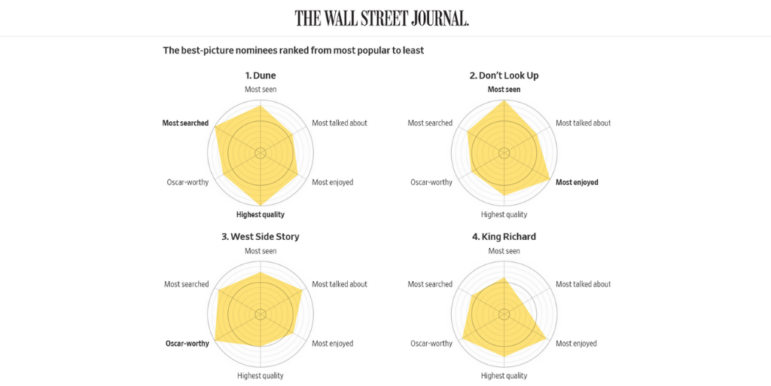
This week’s Top 10 in Data Journalism features in-depth analysis of the massive destruction being wrought on Ukraine, the harassment of scientists working on COVID-19, the various ways global corporations are changing their footprint in Russia, and the ranking of Oscar-nominated films.
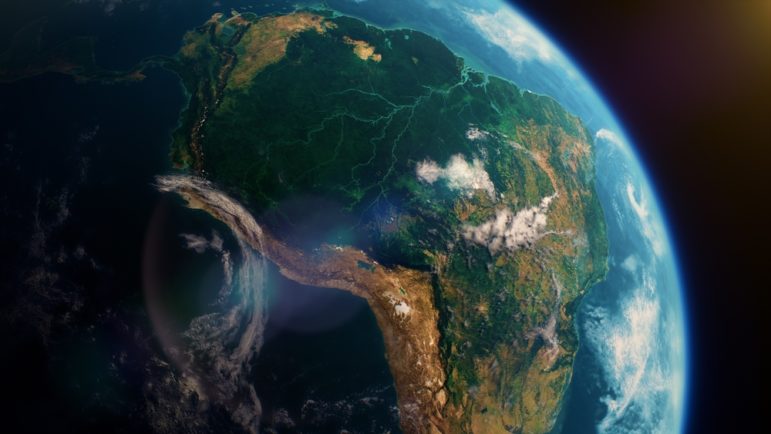
Satellite imagery provides information that can enhance the ability to write compelling narratives about the state of our planet, cutting across multiple beats. But such a tool tends to be complex and out of the reach for many journalists, so this guide offers a process that reporters interested in covering the climate crisis can use for story projects.

In this GIJN webinar, we bring together two senior reporters and two experts who will offer tools and techniques to identify specific methane emitters, find the data, and look closely at measurement systems. They will also present tips and resources to research what companies and governments are doing to reduce methane emissions.
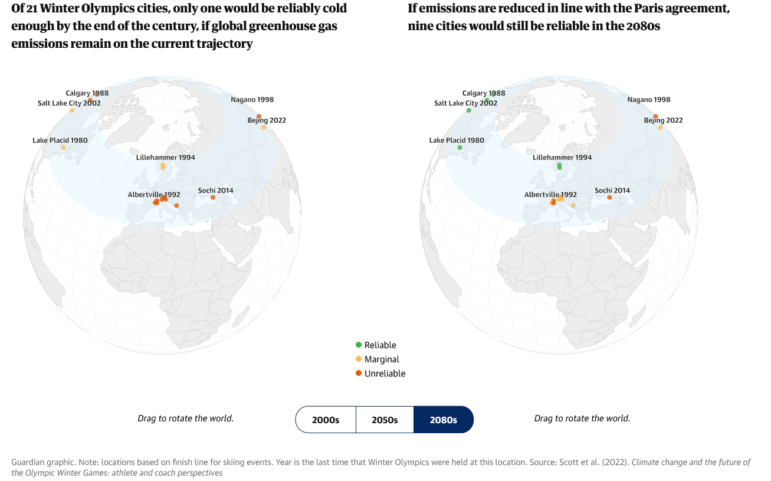
Our weekly NodeXL curation of the most popular data journalism stories on Twitter features several climate change-related stories: snowless Winter Olympics, a look at the carbon footprint of popular food, how the world’s largest beef producer is fueling deforestation in the Amazon, and a Climate Promise Detector project reviewing the stance of presidential candidates on climate change in Costa Rica.
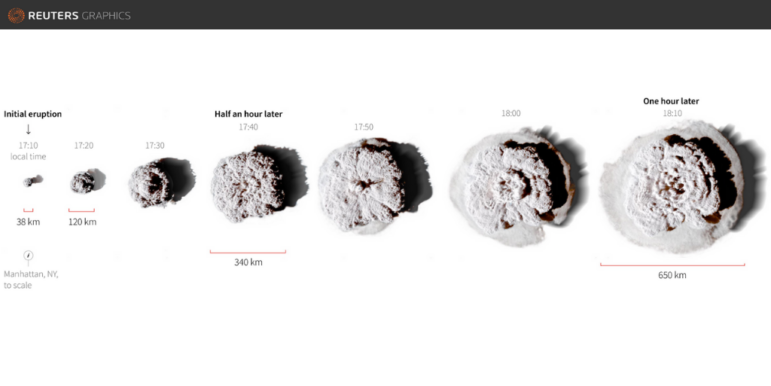
Many of the lawmakers who made up the historical ranks of the United States Congress had a personal relationship with slavery with more than 1,700 being slaveowners, according to an analysis by The Washington Post. Our weekly NodeXL curation of the most popular data journalism stories on Twitter also features a visualization of the size of the Tonga eruption, an analysis of how Twitter is being used ahead of a high-stakes election in the Philippines, and a critique of some of the maps used to illustrate the situation on the Russia-Ukraine border amid fears of a military incursion.
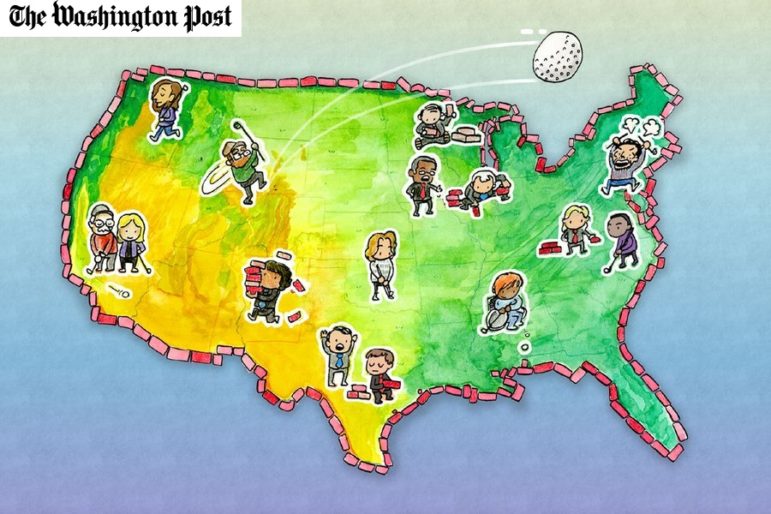
If you’re a word puzzle addict and active on Twitter, you’ll have come across the latest craze — Wordle. Al Jazeera Labs analyzed the puzzle’s word bank to give tips on how to tackle the game strategically. Our weekly NodeXL curation of the most popular data journalism stories on Twitter also features an analysis of shopping habits during the pandemic, an examination of vaccination rates among elite athletes, details on the scandal shaking UK politics, and an interactive mini-golf game illustrating how gerrymandering — the manipulation of electoral boundaries — plays out in various US states.

The Turkish press is enduring a period when the most basic journalism practices are hindered due to the state of emergency, the pandemic, and other issues. Despite this, GIJN Turkish found several praiseworthy stories produced by independent journalists this past year. Here we highlight eight stories chosen for their significance, public interest, their use of investigative tools, data sources and techniques, and their commitment to social accountability.