
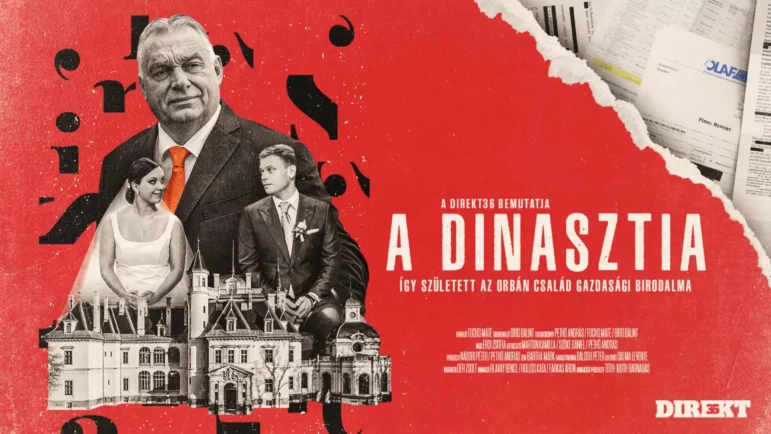
Image: Screenshot "The Dynasty"
‘Some Stories Just Work Better Through Film’: On the Strategy Behind Making an Investigative Documentary
When “The Dynasty” was released earlier this year, few expected a 55-minute investigative film about Hungarian Prime Minister Viktor Orban’s family’s business dealings to capture millions of views. Produced by the Budapest-based newsroom Direkt36, the documentary traces how the prime minister’s son-in-law, Istvan Tiborcz, and other close allies amassed wealth through public contracts and state-linked projects.
Within a week, the film had more than 2.7 million views, and is closing in on 4 million — a particularly impressive tally for a country of 9.5 million.
But the story behind the success may be just as significant as its revelations. “The Dynasty” shows how small, mission-driven outlets can use cinematic storytelling to expand reach, attract new supporters, and challenge official narratives.
Jeremy Druker, the editor-in-chief of Transitions, talks with András Pethő, co-founder and director of the Hungarian investigative outlet Direkt36, about the making of the film and the lessons it offers for other independent media.
Jeremy Druker: This was obviously a result that you did not expect. Looking back now, with all the work that went into the documentary, I’m sure you’d say it was worth it. But before starting, did you have doubts? As a small independent outlet, did you question whether this was something you could really afford to do — or did you see it more as an experiment, a way to test whether this format could work for you in the future?
András Pethő: We didn’t see this kind of big success coming. We didn’t know that we were going to have almost 4 million views in less than a year, but we felt that it was a powerful story. I was pretty confident as the film was coming together.
We were working with professional filmmakers, and I was really happy with the film even before it came out, and I could see the amazing response. Also, this was our second long-form documentary. The first one we made was about hospital infections. It was a healthcare investigation. I think it has about 100,000 views on YouTube, which is not bad for a Hungarian documentary.
We made this decision years ago, that we wanted to expand into long-form documentaries. It seemed like a good fit for us, because that’s what we do in other formats as well. We work on projects for months, and sometimes it works to publish a long article, but some stories just work better through film.
JD: When you were planning the project, were you thinking mainly in journalistic terms, or were you also considering the potential for monetization — through ads or growing your membership? In other words, was the goal primarily editorial, with audience growth as a byproduct, or did you see it from the start as a way to reach new supporters?
AP: It was a journalistic idea. We had no idea that this was going to be so successful, and it was going to add 50% more [members]. When the film came out, we had roughly 3,000 active members in our membership program. A couple of months after the film came out, we reached 4,500 members, which is amazing.
I remember I had a conversation a year ago with my colleagues about how we had around 3,000 members, which we reached in about 10 years. It was a lot of work and a gradual process. So we discussed having a goal of about 5,000 in two or three years. And now, we have basically already reached it, mostly because of the film, and also because of some of the things that the government did. But I think the primary driving force was the film.
If you have such a successful product, you realize the potential for monetization, for using it as a tool, for deepening your audience relationships. We previously were struggling with how to reach the public outside Budapest in the countryside. We tried to organize events. It was quite hard. And now we have this really good product that we can show. We organized this national tour of the film, and wherever we went, we had a really good turnout and responses.
JD: You worked with outside filmmakers on this documentary. For smaller outlets, that might sound intimidating. The film looks very professional — it includes animation and strong visuals. Why do you think other small organizations shouldn’t be discouraged by production challenges?
AP: I’m not a film guy. The way I think you have to look at it is that, if you have a powerful story and you are confident that you can gather and check the facts, you can get the right interviews, and you can do the reporting, then that’s your job. Someone else should make it sing on the screen.
Of course, you need to find the right partners, and you have to create this partnership where you know you have to accept that there are a lot of things that you can’t control and have no idea how to do — like you have no idea how to put together a film. You don’t speak the language of the film. It is very different from an article. But also, the filmmakers will need to understand that you know better how to conduct an investigation. It’s a collaboration, but the editorial control is yours. The whole thing is a constant conversation. So you have to find the right partners.
JD: The documentary runs nearly an hour — longer than what most people think audiences will sit through online. How did you decide on the length? Was that planned from the beginning, or did the story simply demand that much time to tell?
AP: Whether it’s an article or a film, as long as it keeps the attention of the audience. Of course, I understand not everyone is going to watch the whole film, just like not everyone who clicks on a story [reads] the whole piece. But if it works as a film then, yes, I think length doesn’t really matter.
JD: Did you partner with YouTube or monetize the film there in some way?
AP: We don’t currently earn money directly from YouTube. I think if you want to get money directly from YouTube, then you have to have a partnership with YouTube, and then that comes with strings attached. I know we didn’t expect it to be such a big success. But yes, that’s something that you can do, and maybe we will do it in the future. If you watch the film, there are a lot of ads. We don’t benefit from the ads for now, but we benefited a lot from simply the attention that the film got.
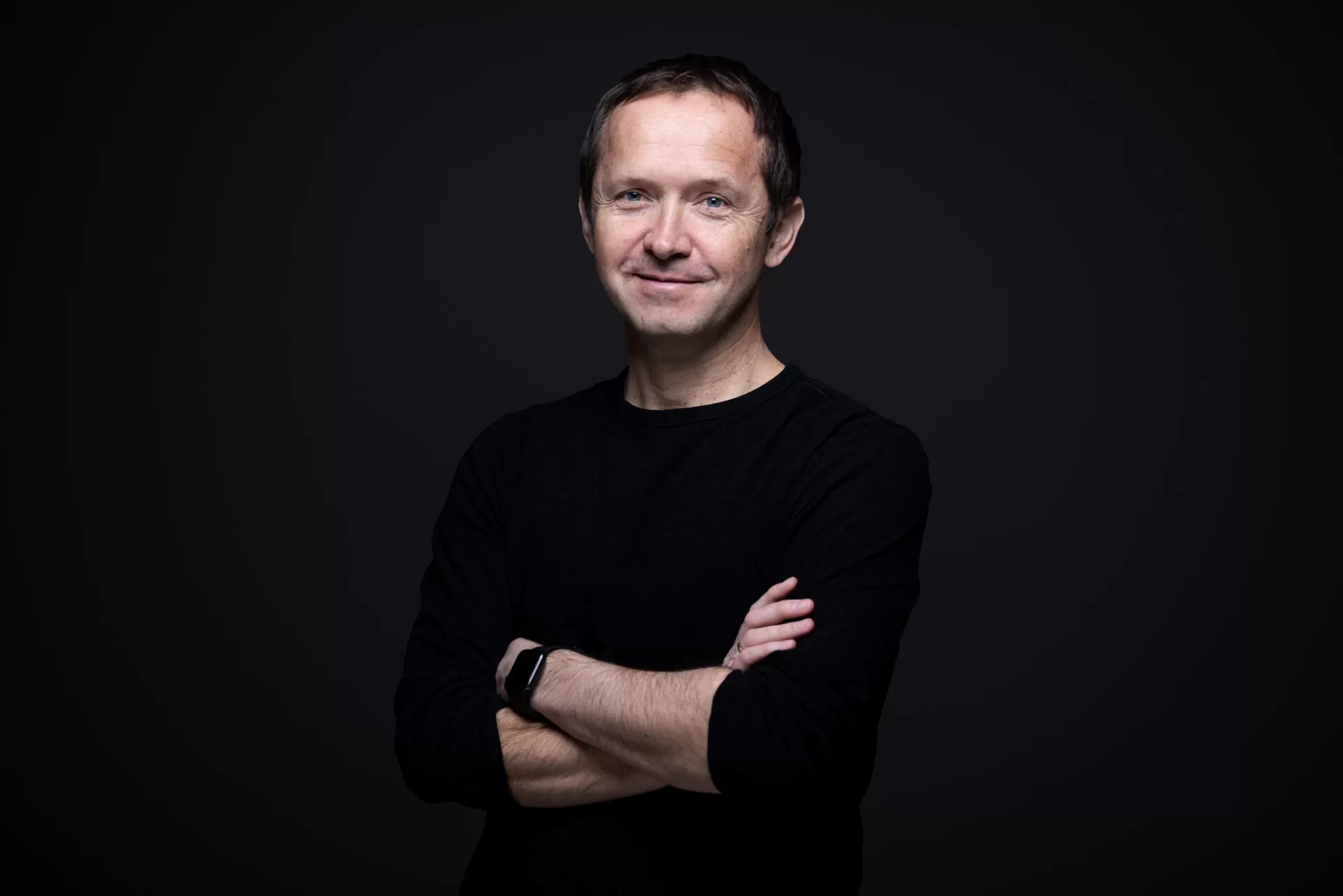
Andras Petho, co-founder and director of Direkt36. Image: Screenshot/ Direckt36
JD: What advice would you give other small or independent newsrooms thinking about doing something similar?
AP: I don’t think it should be viewed as a magic weapon. It’s not that. Of course, this was a good fit, and we were lucky with the circumstances in Hungary that this film arrived in an environment where public discourse was very active. The apathy was over, and people were really engaged in public life, and they were hungry for these kinds of stories. We were lucky with that.
We probably wouldn’t have done this film if we hadn’t done the previous one, which was not as much of a success. But we learned, we started to feel comfortable with the format. This film wasn’t an experiment, but the whole process was an experiment. In the end, we realized that it’s a good fit for us.
JD: It really seems like you had the willingness to tell the story in a different way. It’s obviously not sensationalist, but it’s also not boring. You did it in a lively way — shifting between animation, speakers, and undercover work. Some traditional outlets might avoid that kind of approach, thinking it’s not “serious” enough. Do you think that willingness to experiment with form helped make the film so successful?
AP: For me, it’s pretty old school. Maybe it’s not as serious as a Frontline documentary, but it’s not bombastic Eastern European TV. It’s not like that. It’s more subtle.
If this story had been written in an article, then it would be hard to show Orban’s role in this whole story because, in fact, you do not find his fingerprints on any of these deals. You have no evidence that he’s actually involved in the business deals of his son-in-law. But we know that it’s a fact that he designed the political system where this could have happened. And you could write this in an article, but I don’t think it would get a lot of attention.
But in the film, the filmmakers had a really good solution where they brought in his voice. We have footage where we have Orban’s voice. It’s a fair, journalistic solution. Or at the end of the film where we have a group of Orban’s statements and speeches that he has given when he was asked several times over the years about the businesses of his family members. He keeps repeating, “I’m not involved. I have no idea.”
It’s so much more powerful than if you just see this written down. You have more ways to say things in a film. There are different tools available.
This interview was first published by Transitions, a Central and Eastern European media development organization. It is republished by GIJN with permission. You can see the original article here.

Growing a Small Nonprofit Can Be a Bit Like Adolescence — Painful, Difficult, Awkward

Pivoting to Podcasts? How Print Journalists Can Become Audio Storytellers
GIJC23 – Podcasts: Producing the Investigative Podcast

2025 Conference Resources
5 Tips on How to (More) Safely Investigate in Authoritarian States

2025 Double Exposure Festival: Interrogating New Fault Lines on Lethal Inequity, Human Resilience, and the Limits of Journalism
Greatest Hits from a ‘Journalism in the Movies’ Course
Oscars 2024: Celebrating Documentary Film

This work is licensed under a Creative Commons Attribution-NoDerivatives 4.0 International License
Republish our articles for free, online or in print, under a Creative Commons license.
Republish this article
This work is licensed under a Creative Commons Attribution-NoDerivatives 4.0 International License
Read Next
GIJC25
5 Tips on How to (More) Safely Investigate in Authoritarian States
Four journalists working in authoritarian countries or regions where democracy is backsliding offer their advice on how to deal with the reporting challenges.
News & Analysis
2025 Double Exposure Festival: Interrogating New Fault Lines on Lethal Inequity, Human Resilience, and the Limits of Journalism
The four-day event will showcase 25 feature-length and short-form documentaries that shine new narrative light on urgent topics in North America and far beyond.
Reporting Tools & Tips Teaching & Training
Greatest Hits from a ‘Journalism in the Movies’ Course
The portrayal of journalists on film over the years has helped instil an understanding of what journalism is and what reporters do. Here are some of our favourites from around the world.
News & Analysis
Oscars 2024: Celebrating Documentary Film
While the Oscars are known for glitz and glamor, recognition here bestows a higher level of prestige and, in many cases, can bring urgent or in-depth reporting to a global audience.