Climate GIJC25
Overcoming Four Big Challenges to Investigating the Water Crisis
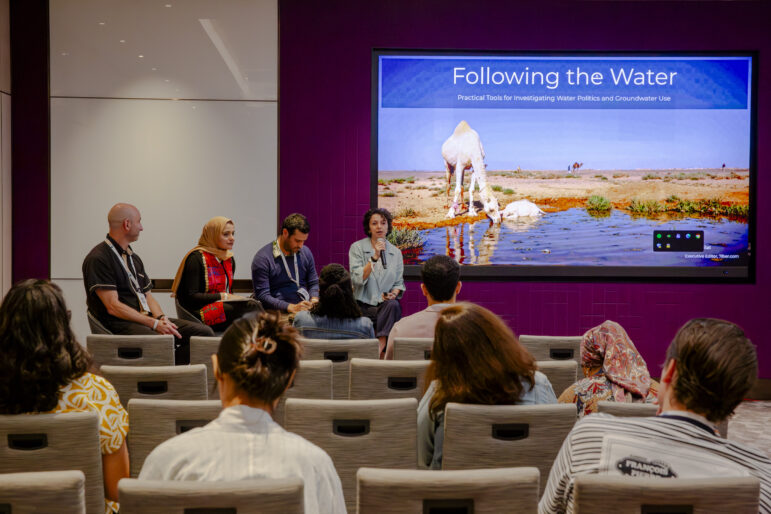
Journalists reporting on water scarcity often face a lack of transparency, limited access to sites and sources, unwieldy data, and a resistant media environment.
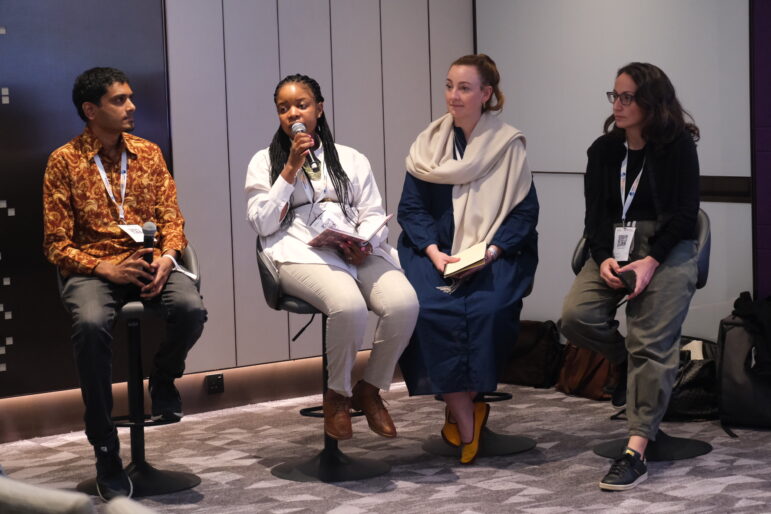
At GIJC25, veteran freelancers from Africa, Asia, and Europe shared tips for finding funding, managing security, and negotiating with editors over rates, commissions, and deadlines.
In a keynote conversation, the economist said reporters have a key role to play in probing Western financial institutions and the rules that lead to wealth being laundered from the Global South.
The 15th Global Investigative Journalism Conference will be held in 2027 in the Netherlands, co-hosted by GIJN and VVOJ (The Dutch-Flemish Association of Investigative Journalists).
A panel of three investigative reporters shared practical tips to dig into the rapid deployment of biometric systems in Africa and beyond.
These three winners and recipient of a special citation represent outstanding journalism from developing or transitioning countries, carried out under threat or in perilous conditions.
Ethnographic journalism blends anthropological theory and immersive fieldwork to report on marginalized communities, but its relationship with traditional journalism remains contested.
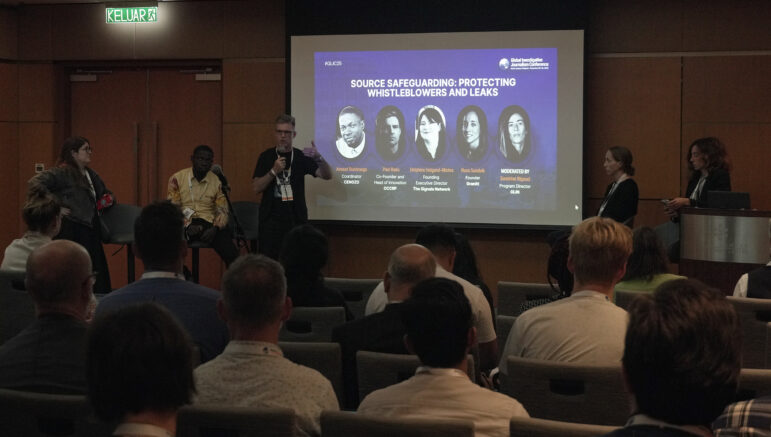
Keeping your sources, your data, and yourself safe during investigations is a complex undertaking. Four veteran journalists offer their tips on how to do so.
Undercover specialists warn that investigative tactics must be a last resort—especially in the AI age, where metadata, surveillance, and deepfakes raise new ethical and safety risks.
The former lead Rwanda genocide prosecutor explains old flaws and new solutions for the international criminal justice system.
Effective investigative reporting under repression requires methodical safety planning, disciplined self-care, and an active defense of one’s work and reputation, according to this renowned investigative journalist.
Forced to leave their homes and homelands, exiled journalists spoke about finding ways to continue their journalism in the countries where they have sought refuge.
At GIJC25 in Malaysia, GIJN posthumously honored pioneering data journalist John Bones with the GIJN Award for Extraordinary Service to International Investigative Journalism.
Four journalists working in authoritarian countries or regions where democracy is backsliding offer their advice on how to deal with the reporting challenges.
Multimedia investigations across Africa and the Middle East highlight the links between environmental damage and public health, while seeking to expose who is responsible.
An All-Asian GIJC25 keynote panel discussed how the continent’s reporters have bravely exposed corruption scandals while facing exile, harassment, attacks, and threats of imprisonment.
Nonprofit news outlets must put extra emphasis on audience engagement, out-of-the-box solutions, and communicating to potential donors their unique value to democracy.
Narrative podcasts have become a transformative tool for investigative reporting. At GIJC, editors and producers unpacked how journalists can tap into its power.
Experts on reporting on illegal mining in Zimbabwe, Brazil, and Turkey shared tips on building sources on the ground, establishing trust, and telling a well-rounded story.
Ukrainian newsrooms combine OSINT, satellite imagery, and intercepted conversations to report on frontline regions that are off limits due to the war.
In her keynote address, the Rappler CEO issued an urgent call for the investigative reporting community to embrace creative solutions in pursuit of the facts and a sustainable future.
New tools and innovative approaches are needed to investigate the recurring problems and real-world impact of AI and emerging technologies.
A pre-conference panel hosted by The Examination connected the deadly impact of corporate practices to the chronic diseases killing millions of people each year.
The Sigma Awards celebrate the best data journalism from around the world. Submissions are now open for data projects published in 2025.
Our round-up also highlights which countries are following through on their climate change commitments, a deep-dive into the challenges facing Saudi Arabia’s vertical city, and modelling whether today’s AI boom is headed for a dot-com style crash.
Understanding, organizing, and validating data directly affects the accuracy of stories. New tools make cleaning accessible to journalists without coding.
As GIJN’s biennial global conference prepares to kick off, here are some travel and logistics tips to help attendees get the most out of their experience in Malaysia.
More than 455 attendees representing 45 countries, 37 of them in Africa, attended Africa’s premier investigative journalism conference at Wits University.