

How They Did It
How The New York Times Uncovered and Visualized Dangers Faced by Child Influencers
An interview with two journalists who investigated the world of child influencers and the highly sexualized nature of some of their most ardent fans.
An interview with two journalists who investigated the world of child influencers and the highly sexualized nature of some of their most ardent fans.

As a member of The New York Times Visual Investigations team, Muyi Xiao reports on her native China using a combination of remote tools and interviews.

The burden of telling the story from Gaza has fallen only on the shoulders of local reporters and the regional news outlets working closely with those on the ground.

In this edition, we also highlight the export destinations of smuggled Peruvian gold, the worker shortage hampering the Russian defense industry, and the political divide in the US.

How ProPublica reporters revealed behind-the-scenes connections between billionaires and US Supreme Court justices.

GIJN asked speakers and attendees in the NICAR conference hallways for the data journalism gaps they see and for under-covered topic areas newsrooms can address.

Tips from a workshop on how journalists and media outlets can better use YouTube in their election coverage.

Anti-corruption campaigner Alexey Navalny proved that anyone, after investigative training and practice, can expose rights abuse at the highest levels of government.

Over the past 10 years satellite imagery has become an important component of data journalism. In the next decade, it will likely evolve further.

In March 2022, Human Rights Watch embarked on what would become an almost two year-long investigation into the Russian siege of Mariupol. Here, we explain our methodology.

Offering insights on how to evaluate and understand the outcomes provided by publicly accessible AI detectors that are available for free or at low cost.

Telegram’s rapid growth means reporters and investigators need to become trained in new tools that can be used to search and analyze data from the platform.

Taiwan’s recent experience during its 2024 election cycle offers useful lessons for journalists and democracy defenders elsewhere — as well as some much-needed hope.

Highlighting an analysis of climate change’s effect on European pollen rates, a global look at transportation methods, and results for the state of data journalism in 2023.

In a world where the pillars of democracy face unprecedented challenges, the relationship between philanthropy and independent journalism is mutually beneficial.

Four reporters share how they investigated extreme abuses of power at Mississippi sheriff’s offices and offer tips to help other journalists do similar work.

After a February 2023 earthquake ravaged southern Turkey, these reporters traveled to the region to investigate the health risks from the clouds of deadly asbestos dust that covered the landscape.

Environmental journalists should check out the new database tool Spill Tracker, but should also bookmark these other resources for reporting on hazmat events.

Smaller investigative news outlets have been behind challenging and impactful accountability reporting leading up to the country’s elections.

This small investigative outlet spearheaded reporting on the Odebrecht corruption scandal and other examples of official misconduct in Peru. Now it is coming under attack from those same forces.

At a recent panel at the 2024 NICAR conference, Karrie Kehoe, deputy head of data and research at ICIJ, offered a series of tips for investigating the true owners of shell companies.
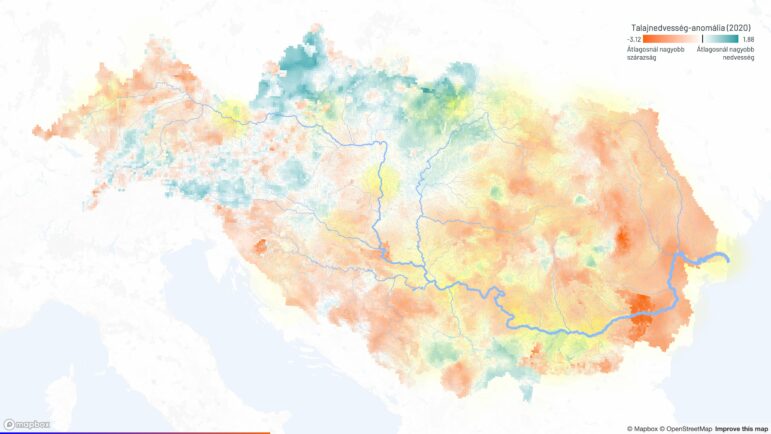
Our column on the best in recent data journalism also looks into the warming Danube river, Spain’s ominous water shortages, and the gender pay gap in Latin America.

Bolot Temirov has led fact-checking and investigative journalism efforts to uncover high-level corruption inside Kyrgyzstan.

There were 52 data journalism entries from 22 countries in shortlist for the 2024 Sigma Awards. Here are the top 10 winning projects.
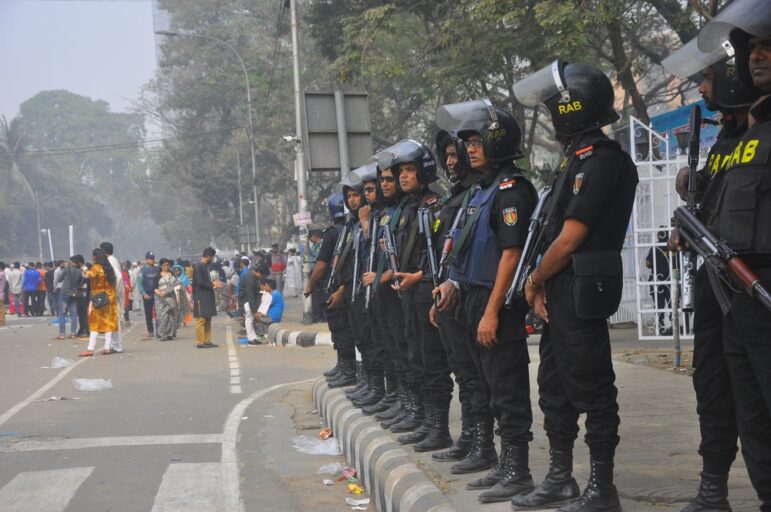
Netra News Editor-in-Chief Tasneem Khalil speaks about his experience as a journalist working from exile.

Investigations into what happens on, under, and around the ocean can often be answered thanks to the vast amount of data available online.

Reporters and editors from BBC’s flagship investigations program, Newsnight, share some lessons learned from three standout investigations into healthcare.

There can be confusion among journalists about “mass shootings” data, which leads to wildly different numbers and deeper confusion among audiences.
In 2001 GIJN was born, as investigative journalists from around the globe met for the very first time to share ideas, tips, and best practices to strengthen their reporting in a world where journalism was increasingly under threat.
Today the threat has multiplied, and at GIJN we find ourselves under the same pressures as our member organizations. Most urgently: available funding for investigative journalism has been impacted as some longtime funders who supported journalism in the past are no longer doing so or have closed. Yet our work continues, more important than ever before.
GIJN serves as the global hub for the world’s investigative reporters. Our core mission is to support and strengthen investigative journalism—with special attention to those from repressive regimes and marginalized communities.
We are embarking on our first-ever campaign initiative to help us expand our revenue by the end of the year through individual donors. If you have ever joined one of our free webinars, used one of our free resources, learned a new skill thanks to a GIJN training, or simply believe that press freedom is essential to civil society, we ask you to show your support for GIJN’s work with a donation of your choosing. Called “Friends of GIJN,” this campaign includes a more personalized experience, starting in 2027, for individuals who answer the call to join with us during this unprecedented time.
Truth and democracy are under attack around the world. You can fight back by helping GIJN support investigative journalists with free access to the latest tools and techniques — so they can foster justice and hold accountable those who abuse the public trust.
With a staff based in 24 countries, GIJN works in a dozen languages each day, linking together the world’s most enterprising journalists, offering state-of-the-art training, webinars, tip sheets, and a Help Desk that responds to 2,000+ requests for assistance each year. More than 84% of GIJN’s operating budget goes directly to our program work.
Please make a gift today to support journalists on the front lines of the fight for accountability and human rights.