
How They Did It
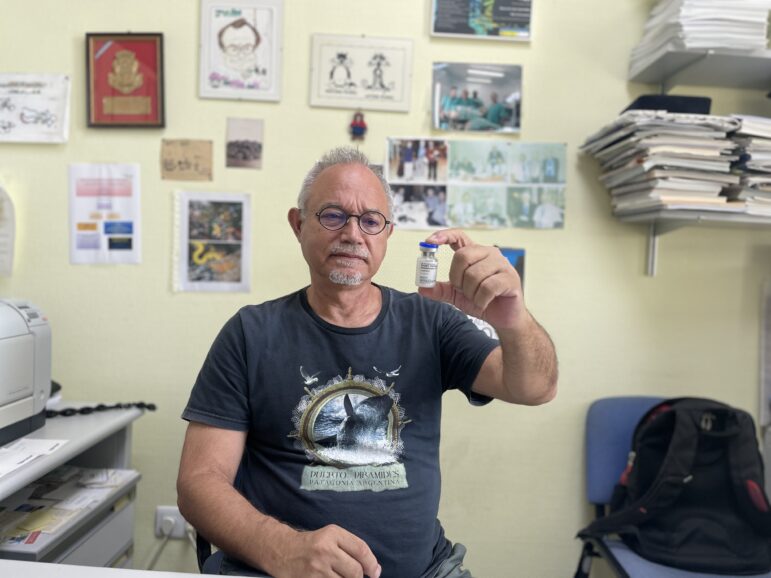
From the Hospital to the Lab: How We Reported the Snakebite Scandal
Two reporters from The Bureau of Investigative Journalism’s global health team explain how they uncovered the shady world of phony snakebite antivenom.
Two reporters from The Bureau of Investigative Journalism’s global health team explain how they uncovered the shady world of phony snakebite antivenom.
Newsrooms across Africa have established formal, right-to-information help desks that leverage government document requests for public accountability and watchdog reporting.

The new Violation Tracker Global (VT Global) portal offers unique and valuable datasets on corporate misconduct across 57 countries and territories outside of the US and UK.

Data journalism in the Middle East has been driven by organizations that have produced collaborations and projects that combine innovative techniques with nuanced local knowledge.

Feras Dalatey describes the surreal experience of reporting in his home country days after the fall of the Assad regime — and the challenges ahead for Syria’s investigative journalists.

The investigative journalist — who has covered Iraq’s secret sex trade, the Yemen war, and the Sanaa funeral bombing — shares insights from working on a difficult beat.

Press freedom in the Maghreb is under attack and in decline, but investigative outlets have still found ways to uncover corruption and reduce the risks of publishing.

Investigative journalists across the region talk about their biggest challenges — from repressive laws and surveillance to funding cuts.

To dismantle VOA and other US-funded affiliates would be to silence decades of coverage in overlooked parts of the world on topics like human rights, corruption, and war crimes.

A bill currently being proposed in the South American country’s legislature would have a chilling effect, and make in-depth exposés of the powerful virtually impossible.
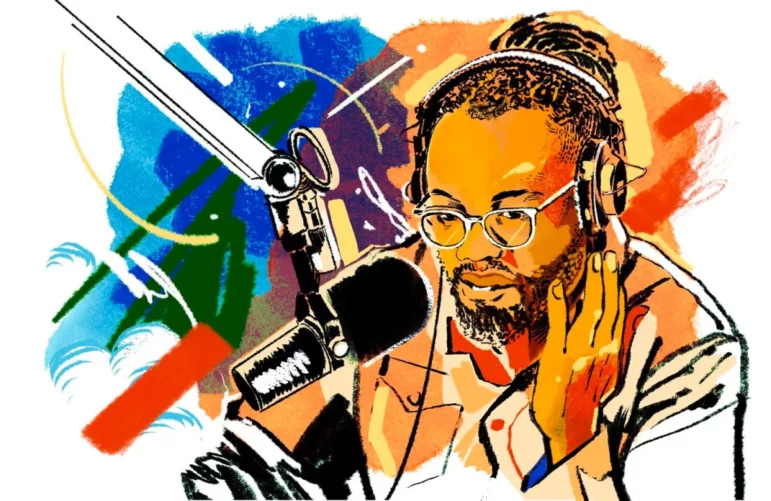
Ten years on, those behind Reveal, the award-winning public radio show and podcast, talk about the investigations that have defined their program.

What does climate change feel like? How will your city’s climate shift, 50 years from now? Data scientist Derek Taylor explains his latest piece.

During a panel at ISOJ, fact-checkers discussed platform-enabled mis/disinformation in an era struggling with news avoidance, distrust, and limited access to information.

Exiled Russian media site IStories has shared with GIJN how it built an AI-powered database of Russian military war dead and missing, and why it was worth creating.

Also this week, a visual narrative on the 30th anniversary of the Tokyo subway sarin gas attack, a special feature on Ramadan, and the grim statistics of death prediction.

Two reporters, nominated for the 2025 Goldsmith Prize, spent years investigating legal agreements in California that hide police officers’ past misconduct from the public.

The lack of regulatory oversight of radioactive waste in the oil and gas industry has created an environment ripe for some extraordinary science and environmental journalism.

With legacy media stepping back from the space, three veteran reporters decided to create a new outlet dedicated to wildlife investigations.

Brazilian freelance reporter Hyury Potter recently won the Pulitzer Center’s Breakthrough Journalism Award.

Two scientists and an editor spent six months investigating so-called paper mills, which churn out bogus scientific papers that impede actual research on lifesaving breakthroughs.

The team at the award-winning data journalism outlet suspected that Russia would invade — they could see clues in the data. We profile the team and their work combating false conflict narratives.

At NICAR25, data reporters detailed how amateur transportation enthusiasts are a valuable, media-friendly, and underused source of critical tips and information for investigations.

As extremism spreads across sub-Saharan Africa, journalists are turning to open source tools to track the networks and physical movement of these often violent groups.

Our column also features stories on the history of African borders, Spain’s prisoner release algorithm, and the global impact of USAID funding cuts.

GIJN shares some of the no-cost, easy-to-use data tools that NICAR25 conference panelists described as surprisingly useful but unknown by investigative reporters.

Covering Trump 2.0 poses stark challenges for news outlets, but many environmental journalists who reported on Trump between 2016 and 2020 can offer perspective.

TBIJ journalists explain how they got around SLAPP suits by having UK Members of Parliament — shielded by legal privilege — read in the House of Commons previously silenced stories.

The current funding challenges facing nonprofit media make it more important than ever for newsrooms to “walk the talk” on transparency and to maximize their independence.
In 2001 GIJN was born, as investigative journalists from around the globe met for the very first time to share ideas, tips, and best practices to strengthen their reporting in a world where journalism was increasingly under threat.
Today the threat has multiplied, and at GIJN we find ourselves under the same pressures as our member organizations. Most urgently: available funding for investigative journalism has been impacted as some longtime funders who supported journalism in the past are no longer doing so or have closed. Yet our work continues, more important than ever before.
GIJN serves as the global hub for the world’s investigative reporters. Our core mission is to support and strengthen investigative journalism—with special attention to those from repressive regimes and marginalized communities.
We are embarking on our first-ever campaign initiative to help us expand our revenue by the end of the year through individual donors. If you have ever joined one of our free webinars, used one of our free resources, learned a new skill thanks to a GIJN training, or simply believe that press freedom is essential to civil society, we ask you to show your support for GIJN’s work with a donation of your choosing. Called “Friends of GIJN,” this campaign includes a more personalized experience, starting in 2027, for individuals who answer the call to join with us during this unprecedented time.
Truth and democracy are under attack around the world. You can fight back by helping GIJN support investigative journalists with free access to the latest tools and techniques — so they can foster justice and hold accountable those who abuse the public trust.
With a staff based in 24 countries, GIJN works in a dozen languages each day, linking together the world’s most enterprising journalists, offering state-of-the-art training, webinars, tip sheets, and a Help Desk that responds to 2,000+ requests for assistance each year. More than 84% of GIJN’s operating budget goes directly to our program work.
Please make a gift today to support journalists on the front lines of the fight for accountability and human rights.