
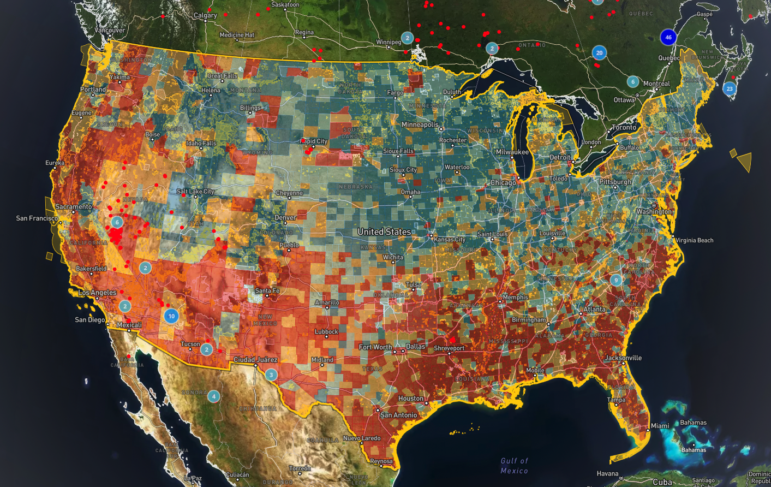
Inside Climate News and Columbia Journalism Investigations identified more than 500 new lithium extraction projects in the works worldwide during a two-year investigation. Image: Screenshot, Lithium Atlas
A Lithium ‘Treasure Map’ for Investigative Journalists
Lithium-ion batteries have come a long way from the removable brick in Toolbox’s PowerBook G3. Now they’re central to the global energy transition, especially for electrifying our transportation systems.
With lithium demand skyrocketing (the International Energy Agency predicts a 14-fold increase over 2020 levels by 2040), where will it come from?
A recent investigative report not only provides some answers, but also serves as a resource for others who want to help tell this story.
Lithium Extraction May Be Shifting to US
This spring, a collaboration between Inside Climate News and Columbia Journalism Investigations identified more than 500 new lithium extraction projects in the works worldwide.
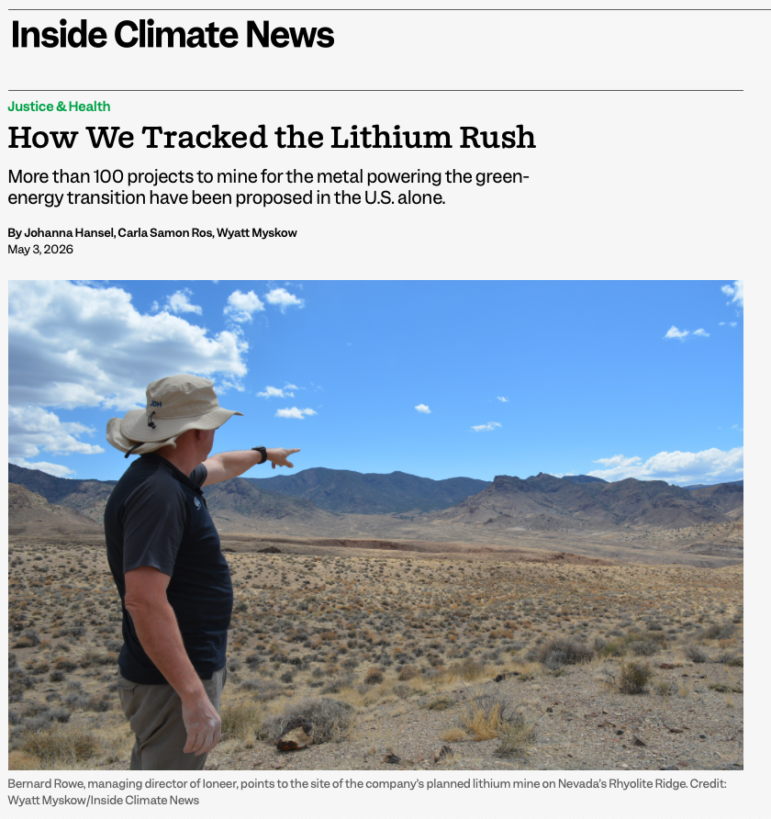
Image: Screenshot, Inside Climate News
Whether open-pit mines, brine evaporation ponds or other types of operations, they have the potential to redraw the resource map.
Up to now, countries like Australia, China and Argentina have been global powerhouses of lithium production — for better or worse.
Global North countries like the United States have long been happy to let dirty and polluting industries proceed offshore, but critical materials like lithium, cobalt and rare earths are now seen as strategically important.
Both the Trump and Biden administrations have pushed pro-mining policies. Thanks to subsidies, streamlined approval processes and (forgive the expression) ironclad mining rights laws, the United States is vaulting into the competition.
Domestically, the ICN team found more than a hundred projects in development, which could boost the tiny market share in the United States to 8% over the next five years. And potentially create many new “sacrifice zones.”
Their moving report also showed the impact of lithium exploration and production on tribal communities and heritage sites in the desert Southwest and North Dakota’s Black Hills.
App Explores Lithium Projects
Together with the story, sidebars and follow-ups, the project includes a news application called the “Lithium Atlas” containing maps and data from the two-year investigation.
The core of the app is a database of projects stitched together from a mix of commercial data sources and shoe-leather reporting; these include plunges into ownership and investment stakes, countries of origin, stages of development, technologies in use, and anticipated output.
The app adds additional dimensions of information to the tally of projects: Indigenous land boundaries, conservation areas, aerial imagery and, inside the United States, the Centers for Disease Control and Prevention’s social vulnerability index.
The team also looked into the investors financing the rush: tabular data included in the project’s GitHub repository has detailed breakdowns of lithium companies and principal shareholders up through early 2026.
The map was originally intended as a research tool, but the creators saw how it could be a springboard for additional reporting.
“We don’t have the capacity or the time to do all the things that could be done with this data,” the co-author Johanna Hansel told Toolbox.
Already, the data has borne fruit as an investigation by the Center for Investigative Reporting in Latin America.
Data Doesn’t Tell You What Is Missing
Toolbox asked Hansel if there might be “dark matter” — lithium operations that don’t show up in business records. “China is a big black box,” she says, although the investment dataset shows roughly $62 billion in potential value in Chinese projects. “China has substantial lithium deposits, but it’s difficult to get data,” she added.
To show potential off-the-books projects, Hansel got data from a researcher in Austria, who had used machine learning analysis to identify possible lithium sites. These algorithmic detections are a layer of the app that you can turn on or off.
With lithium production set to explode, this dataset provides a powerful early warning for impacts yet to come, and the communities that can expect to feel them.
[Editor’s Note: This story was originally published in the Reporter’s Toolbox of the SEJournal and is reposted here with permission. For more on lithium-related issues, see the latest EJToday headlines, plus check out an FEJ StoryLog account of the rush to mine lithium in the United States, a feature on how the EV-driven demand for lithium may collide with environmental concerns, reporting from the #SEJ2025 conference on the risks of clean energy projects to communities and a backgrounder that explains the role of lithium in the push for better batteries. Also see reporting on the risks of mining in a BookShelf review and an account of a global mining investigation in an Inside Story Q&A.]
 Geoff McGhee is a data, infographics and multimedia journalist based in Seattle, Washington. He works as the associate editor of Stanford University’s online magazine & the West, and as part of the team helping journalists at The Water Desk at the University of Colorado Boulder. He also teaches data storytelling and visualization at the University of Washington. Previously, he worked at The New York Times, ABC News and France’s Le Monde, and in journalism collaborations and data visualization projects at Stanford’s Bill Lane Center for the American West. McGhee is also co-editor of the SEJournal’s EJ InSight column.
Remote Sensing and Data Tools for Environmental Investigations

Resources on Environmental Data

Resources on Business and Trade

Database for Carbon Offset Reporting
This Nonprofit-Based Data App Could Change How You Cover Wildfires

EPA Facilities Database — Gateway to Environmental Investigative Reporting
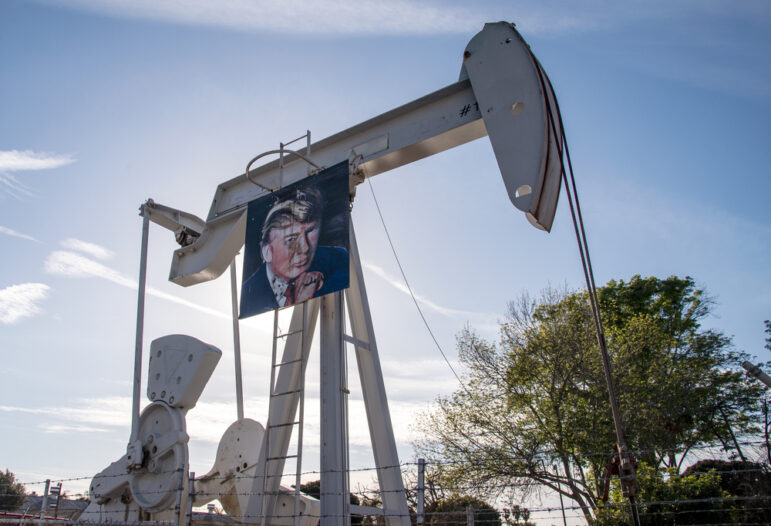
Veteran Environmental Journalists Offer Tips on Covering the Second Trump Administration

There Has Never Been a Better Time for Environmental Journalism

This work is licensed under a Creative Commons Attribution-NoDerivatives 4.0 International License
Republish our articles for free, online or in print, under a Creative Commons license.
Republish this article
This work is licensed under a Creative Commons Attribution-NoDerivatives 4.0 International License
Read Next
Data Journalism
This Nonprofit-Based Data App Could Change How You Cover Wildfires
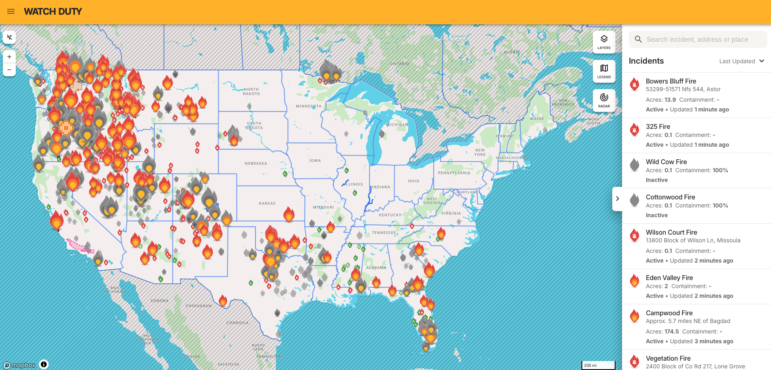
Watch Duty is a NGO nonprofit and its data is sourced from all over: radio scanners, cameras, satellites, and other public sources, including the agencies actually fighting the fires.
Data Journalism
EPA Facilities Database — Gateway to Environmental Investigative Reporting
The US Environmental Protection Agency has a detailed facilities database — and environmental journalists who want to fortify their investigative skills will do well to learn how to use it.
News & Analysis Reporting Tools & Tips
Veteran Environmental Journalists Offer Tips on Covering the Second Trump Administration
Covering Trump 2.0 poses stark challenges for news outlets, but many environmental journalists who reported on Trump between 2016 and 2020 can offer perspective.
News & Analysis
There Has Never Been a Better Time for Environmental Journalism
The press in the US faces daunting challenges with the return of President Donald Trump, but holding his administration accountable makes environmental journalism that much more vital.